Clover in Lawn: Why It Spreads and How to Stop It
White clover spreads through a lawn mainly because the grass is hungry - low soil nitrogen, thin or scalped turf, compaction, and drought stress all give clover the opening it needs. Clover actually makes its own nitrogen, so it thrives exactly where grass is starving. The natural fix is to feed and thicken the lawn so the grass can outcompete it. Some homeowners even leave it on purpose.
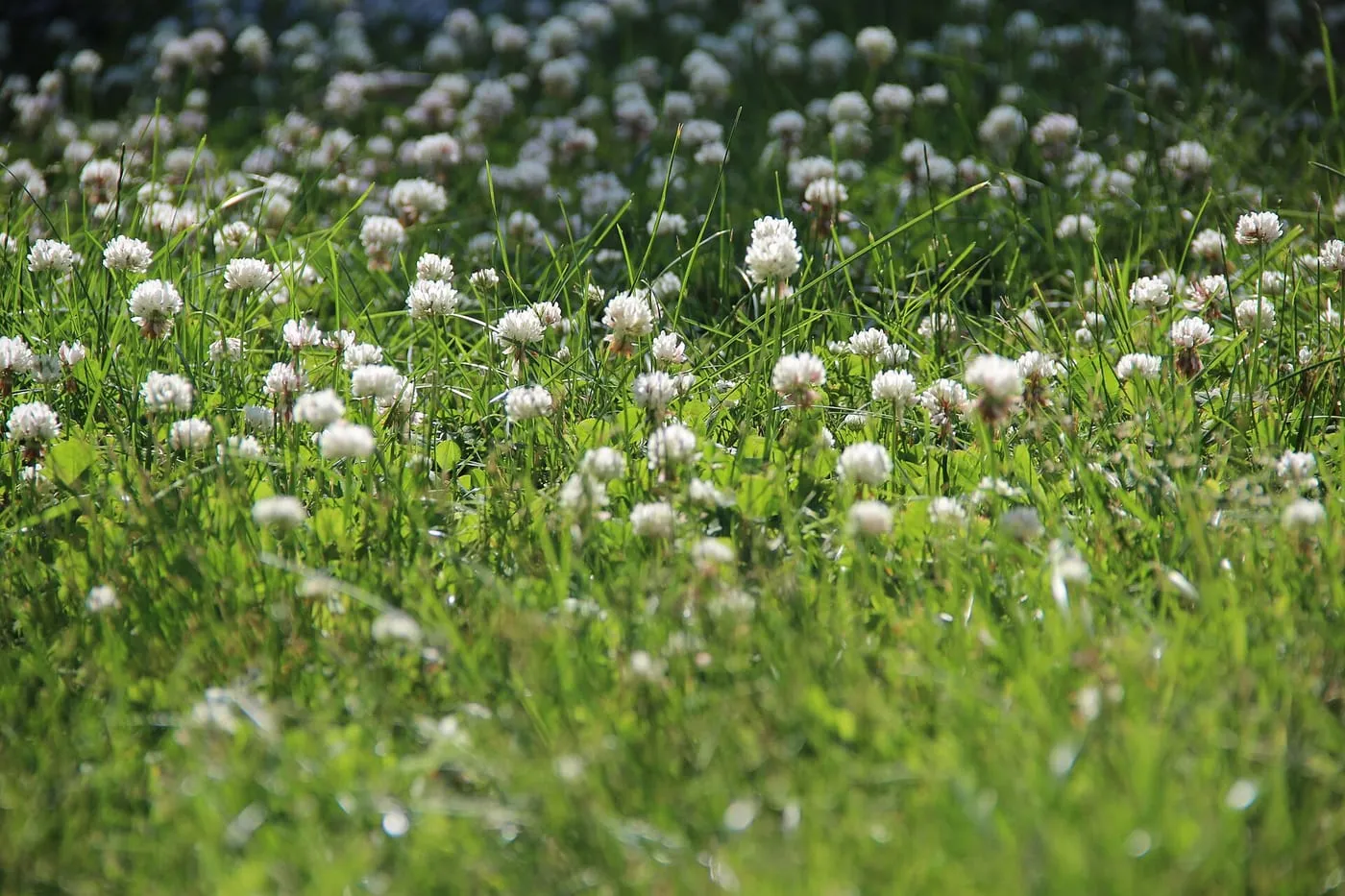
Most likely causes
- Low soil nitrogen - clover makes its own and outgrows hungry grass
- Thin turf or mowing too low - open ground clover creeps into
- Compacted soil - hard ground grass struggles in but clover tolerates
- Drought-stressed grass - clover stays green and spreads while turf browns
- Clover already in your seed mix - it was planted, on purpose or not
Not quite what you're seeing? Answer four quick questions and the clue finder will point you to a closer match.
Compare the possible causes
| Possible cause | Key signs | When it happens | How likely |
|---|---|---|---|
| Low soil nitrogen | Clover spreads through pale, slow-growing grass while the clover patches stay a deep, healthy green | Any growing season, but most obvious in late spring and summer | Very common |
| Thin turf and mowing too low | Clover fills the gaps in sparse grass and the most closely mowed areas | Through the mowing season, spring into fall | Very common |
| Compacted soil | Clover concentrates on hard, worn ground - paths, play areas, and heavy clay | Builds over years of traffic; clover fills in during warm months | Common |
| Drought-stressed grass | Grass goes brown and dormant in summer heat while clover patches stay green and even flower | Hot, dry stretches of summer | Common |
| Clover in the seed mix | Clover appears evenly across the whole lawn from the start, not just in weak patches | From establishment onward | Less common |
Visual clues to check
- Confirm it's white clover: three rounded leaflets, usually with a pale crescent or 'watermark' on each leaf, growing low and spreading by creeping stems
- Look for the flowers: white to pale-pink rounded puffball blooms on short stalks, alive with bees on a warm day
- Rule out lookalikes: oxalis (yellow flowers, heart-shaped leaflets that fold up) and black medic (yellow clover-like flowers, middle leaflet on a tiny stalk) are often mistaken for clover
- Read the grass color: pale, hungry grass beside deep-green clover points straight to low nitrogen
- Check where it's worst: clover in the thinnest, most compacted, or most closely mowed spots is filling ground the grass gave up
- Note the season: clover that stays green and flowering while the lawn browns in summer is winning on drought tolerance
The causes in detail
Low soil nitrogen
This is the big one. Clover is a legume - it pulls nitrogen from the air and fixes it in the soil through its roots, so it doesn't depend on the fertility the grass needs. In a nitrogen-poor lawn the grass grows thin and slow while clover thrives on its own supply and steadily takes over. A well-fed lawn flips this: give the grass the nitrogen it's missing and it grows dense enough to shade clover out. Clover spreading is often the clearest sign a lawn is underfed.
Thin turf and mowing too low
Clover is a ground-hugging plant that spreads by creeping stems, so any bare or thin patch is an open door. Cutting the grass too short makes it worse - low mowing weakens the turf and lets sunlight reach the soil, exactly what clover seedlings need to establish. Raising the mower so grass stays around three inches tall shades the ground, favors the grass, and slows clover noticeably.
Compacted soil
Packed soil starves grass roots of air and water, thinning the turf, while clover's tougher root system copes with the conditions more easily. The result is clover creeping through the compacted zones first. Core aeration relieves the compaction and gives grass a chance to bounce back and close the gaps that clover was using.
Drought-stressed grass
Clover has deeper roots and better drought tolerance than most lawn grasses, so when the turf browns out and stops growing in a dry spell, clover keeps going and gains ground. This is one reason some homeowners actually welcome it - a clover-flecked lawn stays greener through drought with less water. If you'd rather have pure grass, deeper and less frequent watering keeps the turf competitive through summer.
Clover in the seed mix
White clover was a standard part of lawn seed blends for generations and is making a comeback in eco-friendly and 'bee lawn' mixes. If clover showed up uniformly across a new lawn, it may simply have been in the bag. In that case there's nothing wrong with your soil - it's a question of whether you want to keep the clover for its pollinator value and drought resilience or manage it back out over time.
When to worry
- Clover is expanding quickly year over year, a sign the lawn is steadily losing vigor to a nitrogen, compaction, or thinning problem
- Bare, weak patches keep opening up in the grass for clover and other weeds to colonize
- Family members are sensitive to bee stings and the flowering clover is drawing pollinators into a play or barefoot area
- You've pulled clover repeatedly and it keeps returning, meaning the underlying soil condition was never corrected
What to do now
- Feed the lawn with a nitrogen source at the right season - well-fed grass is the single most effective, most natural clover control
- Raise the mowing height to about three inches so the grass shades the soil and outcompetes low-growing clover
- Overseed thin and bare areas to thicken the turf and close the gaps clover uses to spread
- Aerate compacted ground so grass roots recover and can compete again
- Water deeply and less often to keep grass green and vigorous through summer instead of browning and yielding to clover
- For small patches, hand-pull clover when the soil is moist, getting the creeping stems, then reseed the spot
- Consider leaving it: clover feeds pollinators, stays green in drought, and needs little feeding - many homeowners now keep it on purpose
What not to do
- Don't starve the lawn - skipping feeding is what let clover win in the first place, so a bare-soil approach only helps it
- Don't mow short to 'cut the clover down'; scalping weakens grass and opens more ground for clover to fill
- Don't pull clover and leave the bare soil exposed - reseed promptly or clover and weeds will simply move back in
- Don't assume flowers mean an infestation; clover blooms are a pollinator resource, and the decision to keep or remove it is yours to make
- Don't reach for a broadleaf weed killer as your first move when a natural feed-and-thicken routine usually turns the tide on its own
Frequently asked questions
How do I get rid of clover in my lawn without chemicals?
Beat it with healthy grass. Feed the lawn with nitrogen so the grass grows vigorously, raise your mowing height to about three inches, overseed thin spots, and aerate if the soil is compacted. Clover moves into hungry, thin turf, so a dense, well-fed lawn is the most reliable natural way to crowd it out. For small patches, hand-pulling in moist soil works too.
Why is clover taking over my lawn?
Almost always because the grass is undernourished. Clover fixes its own nitrogen from the air, so it thrives in low-fertility soil where the grass is starving and thin. Compaction, drought stress, and mowing too short make it worse by weakening the turf further. The clover is essentially telling you the lawn needs feeding and thickening.
Is clover in a lawn actually bad?
Not necessarily - it's a matter of preference. Clover feeds bees and other pollinators, naturally fertilizes the soil, stays green through drought, and needs little watering or feeding. Plenty of homeowners now keep it or seed it on purpose. The main downsides are that it flowers and attracts bees near bare feet and it doesn't give the uniform look some people want.
How can I tell clover from oxalis or other lookalikes?
White clover has three rounded leaflets, usually with a pale crescent mark, and white puffball flowers. Oxalis has heart-shaped leaflets that fold up and yellow flowers, and black medic has yellow clover-like blooms with the middle leaflet on a tiny stalk. Checking leaf shape and flower color together sorts them out quickly.