Armyworms in Lawn: Why Your Grass Turned Brown Overnight
If a green section of your lawn turned brown in a matter of hours or a day or two, fall armyworms are a likely cause. These caterpillars chew grass blades and advance across turf in a marching front, leaving rapidly expanding brown patches. A simple soap-flush test confirms them, and acting quickly matters because the damage spreads fast.
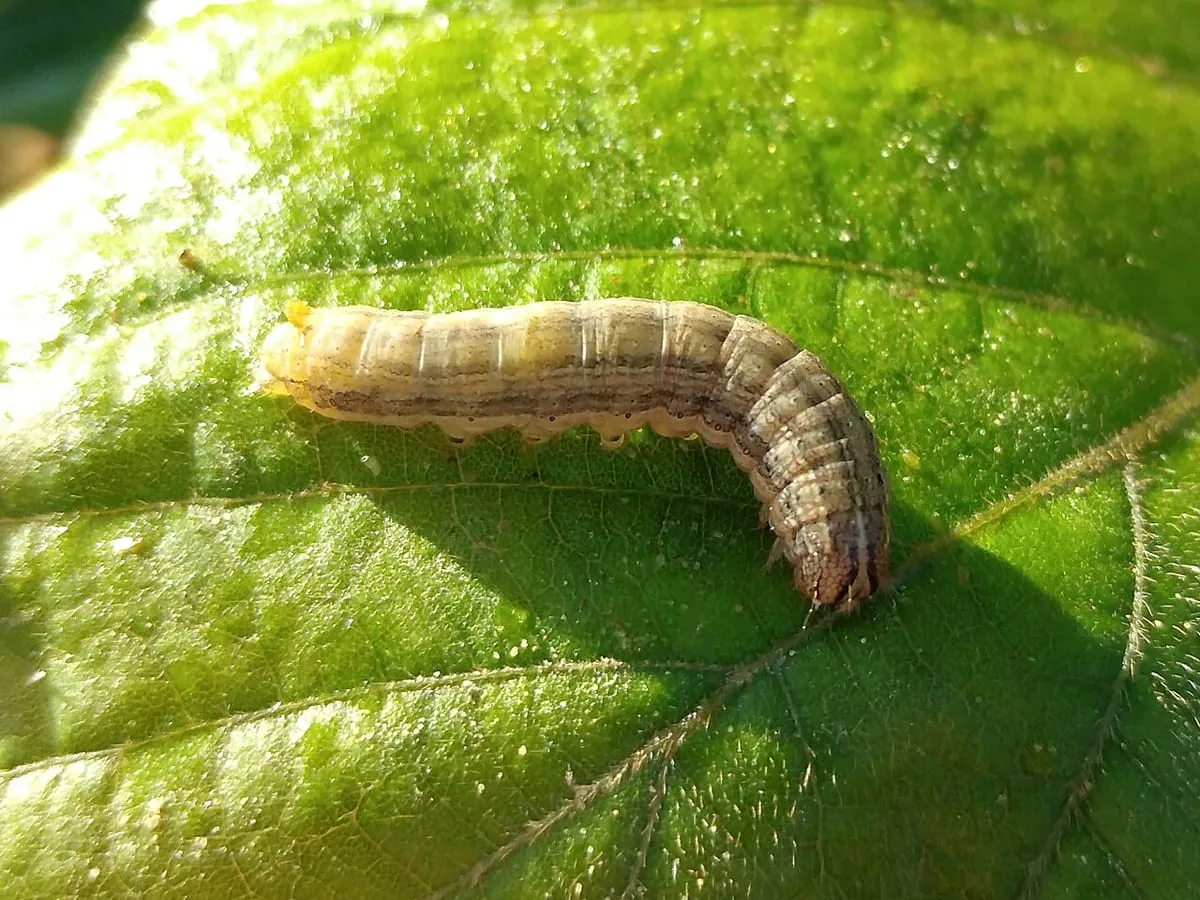
Most likely causes
- Fall armyworms — brown patches that spread across the lawn in hours to days
- Flocks of birds suddenly feeding on one area — an early tip-off
- Green to near-black caterpillars with a pale inverted "Y" on the head
- Chewed, ragged grass blades along a clear advancing edge
Not quite what you're seeing? Answer four quick questions and the clue finder will point you to a closer match.
Compare the possible causes
| Possible cause | Key signs | When it happens | How likely |
|---|---|---|---|
| Fall armyworms | Brown patches with a clear advancing edge that expand quickly, plus 1–1.5 inch caterpillars in the thatch | Late summer into fall, feeding at night and early morning | Very common |
| Birds feeding on the caterpillars | A sudden flock of birds working one part of the lawn, often before you notice the browning | Late summer and fall, usually morning | Common |
| Drought stress (look-alike) | Uniform dulling and browning across the whole lawn rather than a spreading front, with no caterpillars | Hot, dry stretches in summer | Common |
Visual clues to check
- Watch the edge: armyworm damage has a defined advancing front that expands day to day, unlike patchy drought
- Run the soap-flush test: mix a few drops of dish soap in water, pour it over a 1-square-yard patch at the edge of the damage, and caterpillars surface within minutes
- Check the caterpillars: 1–1.5 inches, green to mottled brown or near-black, light stripes down the body, pale inverted "Y" on the head
- Look for birds: a flock suddenly feeding on one area is often the first sign, sometimes before browning shows
- Inspect at dawn: they feed at night and early morning, so early checks catch them active before they retreat into the thatch
- Note the speed: green to brown in hours to a couple of days points to armyworms, not slow-developing stress
The causes in detail
Fall armyworms
Fall armyworms are caterpillars that chew grass blades and move across turf in a coordinated "marching front," which is why a healthy green lawn can be reduced to brown in hours to a couple of days. They feed at night and early morning, then hide down in the thatch during the day. The caterpillars are 1 to 1.5 inches long, green to mottled brown or near-black with light stripes running down the body and a pale inverted "Y" marking on the head. Populations peak in late summer and fall, and extension services often issue warnings when moth traps spike.
Birds feeding on the caterpillars
One of the earliest tip-offs to an armyworm problem is a flock of birds suddenly feeding heavily on a single part of the lawn. The birds aren't the problem — they're after the caterpillars just below the surface. If you see this before any browning appears, it's a good moment to run the soap-flush test and catch the infestation early.
Drought stress (look-alike)
Drought is the most common thing armyworm damage gets confused with, and the mistake costs time. Drought browning tends to appear evenly across sun-exposed areas and improves with water, while armyworm damage advances as a defined front and keeps spreading regardless of watering. When browning shows up fast and marches across the turf, don't just assume it's dryness — confirm with the soap test before you decide.
When to worry
- The brown area is visibly larger than it was the day before — the front is still advancing
- A soap flush brings up many caterpillars in a single square yard
- Multiple sections of the lawn are browning at once during a regional armyworm outbreak
- The infestation returns after an earlier treatment, or covers a large portion of the yard
What to do now
- Confirm first with the soap-flush test at the edge of the damage before treating anything
- Act quickly — armyworms spread fast, so a same-day response limits how much lawn is lost
- Keep the lawn watered and healthy so it can recover once the caterpillars are dealt with
- Treat promptly with a targeted lawn-pest control approach labeled for armyworms, following the label directions
- For a large or repeated infestation, bring in a licensed lawn-care professional to confirm and treat effectively
What not to do
- Don't mistake fast browning for simple drought and just add water — that delay lets the front keep spreading
- Don't wait a few days to "see if it gets better"; armyworm damage rarely does, and speed is everything
- Don't blanket-treat the whole yard before confirming with the soap test
- Don't scalp-mow a lawn that's already stressed and recovering
Frequently asked questions
How fast can armyworms destroy a lawn?
Very fast. Because the caterpillars move across turf in a marching front and feed heavily, a green lawn can be stripped to brown in hours to a couple of days. That speed is exactly why quick confirmation and treatment matter so much.
How do I confirm it's armyworms and not something else?
Use the soap-flush test: mix a few drops of dish soap into water and pour it over a 1-square-yard patch at the edge of the damaged area. Within a few minutes, any caterpillars in the thatch will come to the surface, so you can see and count them.
Will my lawn come back after armyworms?
Often, yes. Armyworms chew the grass blades but frequently leave the crowns and roots alive, so a healthy, well-watered lawn can regrow once the caterpillars are gone. Keeping the lawn watered and treating promptly gives it the best chance to recover.
Are armyworms dangerous to people or pets?
No, armyworms don't bite, sting, or pose a health risk to people or pets. The real concern is how quickly they damage turf, so the urgency is about saving your lawn rather than any safety threat.