Do I Have Grubs in My Lawn? 4 Signs and a Simple Test
The clearest signs of a grub problem are turf that feels spongy and peels back like loose carpet, irregular brown patches that appear in late summer, and skunks, raccoons, or flocks of birds suddenly tearing at the lawn. The only way to know for sure is to lift a square foot of turf and count the white, C-shaped larvae underneath — fewer than five per square foot is normal, ten or more means it's time to act.
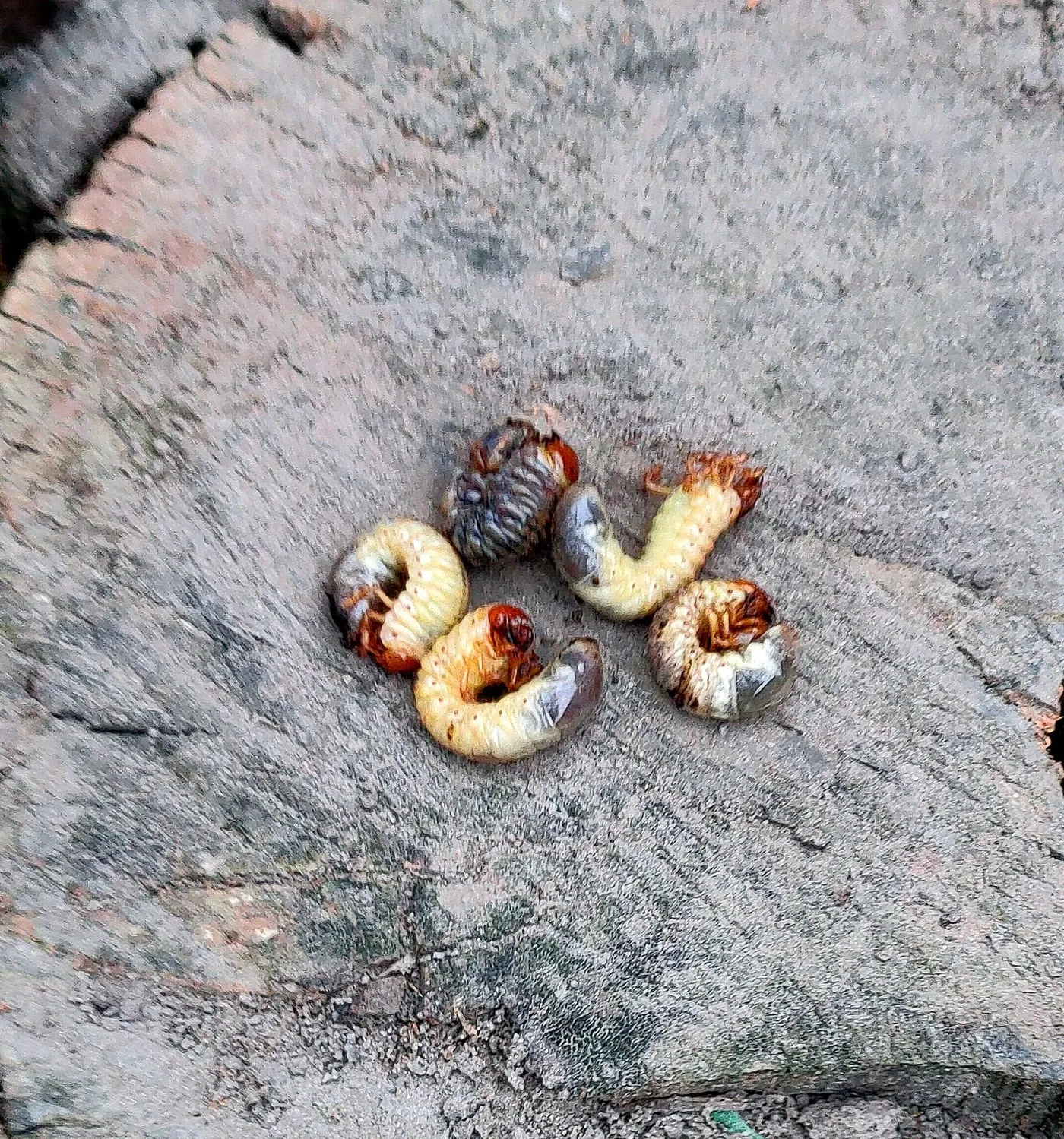
Most likely causes
- Spongy turf that lifts like carpet — grubs have severed the roots below
- Irregular brown patches in late summer — damage peaks August through September
- Skunks, raccoons, or birds suddenly digging — predators hunting grubs at night
- White C-shaped larvae in a soil test — direct confirmation, count them per square foot
Not quite what you're seeing? Answer four quick questions and the clue finder will point you to a closer match.
Compare the possible causes
| Possible cause | Key signs | When it happens | How likely |
|---|---|---|---|
| Turf that lifts like loose carpet | Grass in the damaged area peels back with a gentle tug because the roots have been eaten away | Most obvious in late summer and early fall, when root damage peaks | Very common |
| Irregular brown patches in late summer | Patches with wavy, undefined edges that keep spreading even though you're watering | August through September, after summer beetle eggs hatch and larvae start feeding | Very common |
| Skunks, raccoons, and birds digging suddenly | Overnight patches of flipped or shredded turf, or flocks of starlings and crows working the same spot every morning | Late summer through fall, often literally overnight | Common |
| White C-shaped larvae in a soil sample | Plump, cream-colored grubs about 0.5 to 1 inch long, curled into a C, with brown heads and six small legs | Found near the surface in late summer and fall; deeper in the soil in winter and midsummer | Common |
Visual clues to check
- Do the square-foot test: cut three sides of a 12-by-12-inch flap of turf about 2 inches deep, peel it back, and count the grubs in the soil and root zone
- Read the count: 0–5 grubs per square foot is normal, 6–9 is borderline for a stressed lawn, and 10 or more justifies treatment
- Sample in the right spot: test at the green edge of a brown patch, not the dead center — grubs move outward to living roots
- Time it right: test in August or September, when grubs are small, hungry, and within the top couple inches of soil
- Tug test the turf: grab damaged grass and pull — if it lifts with no resistance and no roots attached, grubs are the prime suspect
- Check after animal digging: flip a piece of torn-up turf and look underneath; skunks rarely bother with a grub-free lawn
The causes in detail
Turf that lifts like loose carpet
Grubs feed on grass roots just below the surface, so heavily infested turf loses its anchor. Grab a handful of grass at the edge of a brown patch and pull: healthy turf resists, but grub-damaged turf rolls back like a rug, often exposing the grubs themselves. This is the single most reliable visual sign, because drought and fungal diseases brown the grass without loosening it.
Irregular brown patches in late summer
Grub patches look a lot like drought stress at first, which is why so many people water harder and see no improvement. The timing is the tell: beetles lay eggs in early summer, the new generation of grubs feeds hardest in August and September, and that's when patches show up and expand. Brown spots that appear in spring or during a heat wave usually have a different cause.
Skunks, raccoons, and birds digging suddenly
Grubs are high-protein food, and predators find them long before most homeowners do. Skunks and raccoons peel back turf in chunks at night, while birds stab hundreds of small conical holes by day. If your lawn was fine last week and now looks rototilled, the animals are almost certainly telling you there's a meal underneath — treat the grubs and the digging stops on its own. See all raccoons signs →
White C-shaped larvae in a soil sample
These are the larvae of scarab beetles — Japanese beetles, June bugs, and chafers among them. Finding one or two grubs when you dig is completely normal; virtually every lawn has some. What matters is density: a healthy lawn tolerates up to about five grubs per square foot without visible damage, while ten or more per square foot will outpace the roots' ability to regrow.
When to worry
- Counts of 10 or more grubs per square foot in several test spots across the lawn
- Brown patches that keep expanding week over week despite normal watering
- Skunks or raccoons returning night after night and shredding larger areas each time
- Large sections of turf that lift freely, meaning the root system is already gone
- A history of heavy Japanese beetle activity on nearby plants earlier in the summer — their eggs became this fall's grubs
What to do now
- Confirm before you treat: run the square-foot test in three or four spots and only act if counts reach the 10-per-square-foot threshold
- Time any treatment for August to September, when young grubs feed near the surface — spring treatments hit large, tough, nearly finished grubs and work poorly
- Consider biological options like beneficial nematodes or milky spore, which target grubs without harming pollinators; nematodes need moist soil and evening application to survive
- Water deeply but infrequently: beetles prefer laying eggs in moist, lush turf in July, so easing off midsummer irrigation makes your lawn less inviting
- Rake out dead patches, then reseed or re-sod in fall once feeding slows — grub-killed turf won't green up again because the roots are gone
- For heavy or recurring infestations, have a licensed lawn care professional confirm the species and handle treatment — the right product and timing depend on which beetle you have
What not to do
- Don't blanket the lawn with insecticide 'just in case' — untargeted treatments waste money, harm bees and beneficial insects, and often miss the grub feeding window anyway
- Don't treat based on brown grass alone; drought, fungus, chinch bugs, and pet urine all mimic grub damage
- Don't assume spring digging or spring brown-up means active grub damage — overwintered grubs finish feeding quickly and treating then rarely helps
- Don't re-sod over an active infestation; the grubs will eat the new roots too
- Don't try to trap or confront the skunks and raccoons doing the digging — remove their food source instead and they move on
Frequently asked questions
Do lawn grubs turn into Japanese beetles?
Some do. White grubs are the larvae of several scarab beetles, including Japanese beetles, June bugs, and masked chafers. In much of the eastern US, Japanese beetle grubs are the most damaging kind — heavy beetle activity on your roses and shrubs in July often predicts a grub problem in the lawn by September.
When is the best time to treat for grubs?
Late summer, generally August into early September in most of the US. That's when newly hatched grubs are small, feeding aggressively, and close to the surface, so treatments actually reach them. By October they burrow deeper for winter, and by spring they're large and hard to kill, so off-season treatments mostly fail.
Are grubs bad for my garden beds too?
Less than you'd think. Grubs overwhelmingly prefer grass roots, so vegetable and flower beds usually escape serious damage, though you'll often turn up a few while digging. Finding grubs in a compost pile or mulch is also normal — some of those are beetle species that feed on decaying matter, not living roots.
Will my lawn recover from grub damage on its own?
Lightly thinned areas usually bounce back once feeding stops in fall, especially with watering and a light overseeding. Areas where the turf lifts freely will not recover, because the roots are gone — those patches need the dead material raked out and new seed or sod, ideally in early fall.
How many grubs per square foot is too many?
The common rule of thumb is that up to 5 grubs per square foot is harmless in a healthy lawn, and 10 or more calls for action. Between those numbers, it depends on the lawn: irrigated, vigorous turf can outgrow moderate feeding, while a drought-stressed lawn shows damage at lower counts.