Crane Fly: The Harmless Giant That Looks Like a Mosquito
That huge, spindly-legged bug that looks like a giant mosquito is almost certainly a crane fly, and it is completely harmless. Adult crane flies don't bite, don't sting, and barely eat — they live only a few days to mate. Their soil-dwelling larvae, called leatherjackets, are the only part that can damage a lawn.
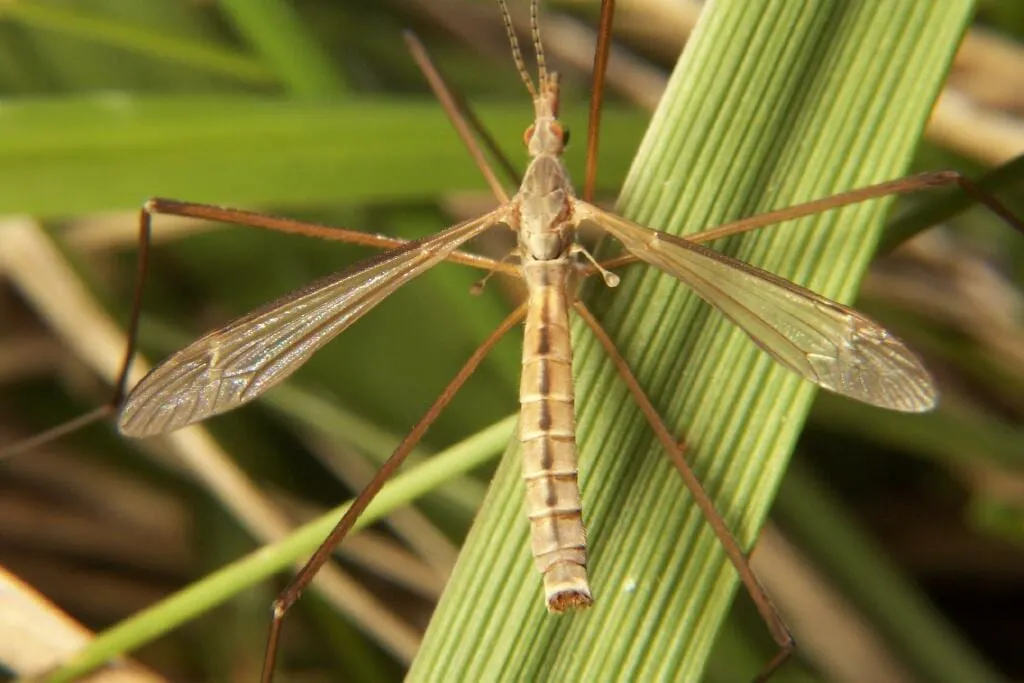
Most likely causes
- Adult crane fly — looks like a mosquito the size of a quarter, totally harmless
- The 'mosquito hawk' myth — despite the nickname, it does not hunt or eat mosquitoes
- Leatherjacket larvae — grey grubs in the thatch that can chew grass roots
- Mix-up with a real mosquito — crane flies have no biting mouthparts
- Mix-up with midges or damsel bugs — smaller insects people lump together
Not quite what you're seeing? Answer four quick questions and the clue finder will point you to a closer match.
Compare the possible causes
| Possible cause | Key signs | When it happens | How likely |
|---|---|---|---|
| Adult crane fly | A slender, tan or grey insect 1 to 1.5 inches long with extremely long, dangling legs and a single pair of narrow wings | Adults emerge in warm, humid stretches of late summer and fall, and again in spring in some regions | Very common |
| The 'mosquito hawk' or 'skeeter eater' myth | The same big harmless fly, just wearing a scary nickname that suggests it hunts mosquitoes | Year-round as a piece of backyard folklore | Very common |
| Leatherjacket larvae | Legless, grey-brown grubs up to about an inch long living in the thatch and top inch of soil, with bare or thinning lawn patches above them | Larvae feed through fall, winter, and especially spring before pupating | Common |
| Confused with a real mosquito | A mosquito is tiny — under half an inch — with a needle-like proboscis and it lands to bite; a crane fly is many times larger and just bumbles around | Any time both insects are active in warm weather | Common |
Visual clues to check
- Measure the adult: a crane fly is roughly 1 to 1.5 inches long, dwarfing a real mosquito of under half an inch
- Count the wings and check the legs: one pair of long narrow wings and six very long, easily detached dangling legs
- Look at the mouth: no needle-like proboscis means it cannot bite — a defining difference from a mosquito
- Check the season: big adults appearing suddenly on warm, humid late-summer or fall evenings are almost always crane flies
- Dig for larvae: peel back a square of suspect turf and look for legless grey-brown leatherjackets in the thatch
- Watch for wildlife: birds, skunks, or raccoons repeatedly digging one lawn area may be feeding on leatherjackets below
The causes in detail
Adult crane fly
The adult crane fly is the bug everyone panics about — it looks like a mosquito that was scaled up to monstrous size. It is harmless in every way. Adults have no working biting mouthparts, so they cannot bite you or drink blood, and most barely feed at all. They live only a few days to a couple of weeks, with a single purpose: to mate and lay eggs before they die.
The 'mosquito hawk' or 'skeeter eater' myth
Crane flies are widely called mosquito hawks, mosquito eaters, or skeeter eaters, and none of it is true. Adults do not hunt, catch, or eat mosquitoes — many don't eat anything at all. Their real purpose in the yard is ecological: they pollinate as they visit flowers, their larvae break down decaying plant matter in the soil, and both stages are important food for birds, frogs, and other wildlife.
Leatherjacket larvae
Leatherjackets are the immature stage of the crane fly, and they are the only part worth watching. They live down in the thatch and chew on grass roots and crowns, which can leave yellowing or bare patches in a heavily infested lawn. A telltale sign is birds, skunks, or raccoons tearing up the turf to eat them. Light populations cause no visible harm and need no treatment.
Confused with a real mosquito
The single most common mistake is seeing a crane fly on a screen or wall and assuming a giant mosquito has come for you. Real mosquitoes are small and carry a sharp proboscis for piercing skin. Crane flies are far bigger, have no piercing mouthpart, and fly weakly on long, trailing legs that often break off. If it's the size of a quarter and clumsy, it can't and won't bite.
When to worry
- Expanding yellow or bare lawn patches in spring that lift easily, exposing grey leatherjackets underneath
- Birds, skunks, or raccoons tearing up the same patches of turf night after night
- More than about a handful of leatherjackets per square foot when you sample the thatch
- New sod or a young, thin lawn showing damage before it has had a chance to root deeply
What to do now
- Leave the adults completely alone — they are harmless pollinators that die within days on their own
- If you find one indoors, gently cup it and release it outside; it isn't a mosquito and won't bite
- To check for larvae, cut and lift a one-square-foot flap of turf in a bare patch and count the leatherjackets
- Treat a confirmed leatherjacket problem the same way you'd treat lawn grubs — keep the lawn healthy and consider overseeding thin areas
- For widespread larval damage, ask a lawn-care professional to confirm the count before any treatment is applied
What not to do
- Don't swat or spray adult crane flies — they cause no harm and are food for birds and other wildlife
- Don't reach for insecticide because you saw a few big flies; adults do no damage and treating them is pointless
- Don't assume every long-legged insect is a mosquito or a threat — most yard 'giant mosquitoes' are crane flies
- Don't treat the lawn for larvae before actually sampling the thatch and confirming a heavy population
Frequently asked questions
Do crane flies bite or sting?
No. Adult crane flies have no biting or piercing mouthparts, so they cannot bite people or animals, and they don't sting. Despite looking like a giant mosquito, they are completely harmless to humans and pets.
What is the purpose of a crane fly?
Crane flies play a genuine role in the ecosystem. Adults help pollinate as they visit plants, their larvae break down decaying organic matter in the soil, and both the larvae and adults are an important food source for birds, frogs, fish, and other wildlife.
What's the difference between a crane fly and a mosquito?
Size and mouthparts are the giveaways. A crane fly is about 1 to 1.5 inches long with very long dangling legs and no proboscis, while a mosquito is under half an inch with a needle-like mouthpart it uses to bite. Only the mosquito can pierce skin and feed on blood.
Do crane flies really eat mosquitoes?
No, that's a myth behind the nicknames mosquito hawk and skeeter eater. Adult crane flies do not hunt or eat mosquitoes, and many species barely eat at all during their short adult lives, which are spent mainly on mating.