Sod Webworm Lawn Damage: Thinning Patches and Lawn Moths
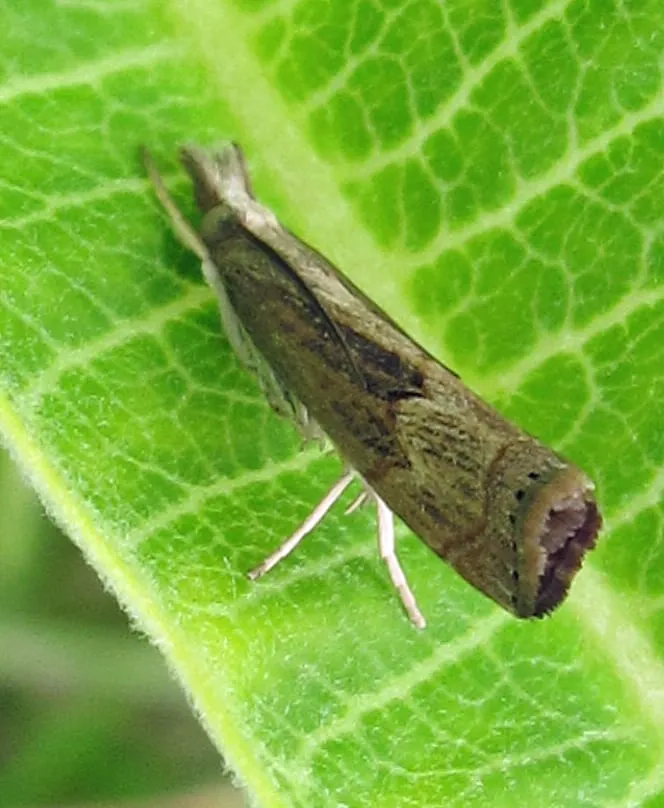
Scattered small brown patches with ragged edges that slowly enlarge over weeks are a classic sign of sod webworms. These small caterpillars chew grass near the base and hide in silk-lined tunnels in the thatch, and the little tan moths flitting up as you walk at dusk are the adults. A soap-flush test confirms them.
Most likely causes
- Sod webworms — ragged brown patches that slowly enlarge over weeks
- Small buff-tan lawn moths flitting up in a zig-zag as you walk at dusk
- Notched, shredded grass blades chewed near the base
- Silk-lined tunnels and green frass pellets in the thatch
Not quite what you're seeing? Answer four quick questions and the clue finder will point you to a closer match.
Compare the possible causes
| Possible cause | Key signs | When it happens | How likely |
|---|---|---|---|
| Sod webworms | Scattered small brown patches with ragged, uneven edges that enlarge gradually, plus ~3/4-inch caterpillars curled in the thatch | Peak in summer heat, with damage building over weeks | Very common |
| Lawn moths (the adults) | Small buff or tan moths that flit up in a zig-zag just ahead of you as you walk or mow at dusk, then dive back into the grass | Summer evenings, ahead of the larval feeding | Common |
| Drought or fungus (look-alikes) | Browning with no chewed blades, no silk tunnels, and no caterpillars in a soap flush | Hot, dry, or humid stretches in summer | Common |
Visual clues to check
- Watch at dusk: small buff-tan moths that zig-zag up ahead of you and dive back into the grass point to sod webworms
- Run the soap-flush test: a few drops of dish soap in water poured over a damaged patch brings caterpillars to the surface within minutes
- Inspect the blades: notched or shredded grass chewed near the base is a webworm sign, not drought
- Part the thatch: look for small silk-lined tunnels and green frass pellets
- Check the caterpillars: about 3/4 inch, tan to gray with dark spots, curling up when disturbed
- Track the pattern: ragged small patches enlarging slowly over weeks, rather than a fast advancing front
The causes in detail
Sod webworms
Sod webworms are small caterpillars that cause gradual thinning rather than the fast, wide sweep of armyworms. You'll see scattered brown patches with ragged, uneven edges that slowly enlarge over weeks, and up close the grass blades look notched or shredded where they've been chewed near the base. The caterpillars are about 3/4 inch long, tan to gray with dark spots, and they curl up in the thatch when disturbed. Look also for small silk-lined tunnels in the thatch and green frass, the pellet-like droppings they leave behind.
Lawn moths (the adults)
A classic tip-off is a scattering of small tan lawn moths that lift off in a jerky zig-zag just ahead of your feet as you walk or mow at dusk, then drop back down into the turf. These moths are the adult stage and don't eat the lawn themselves — their larvae, the sod webworms, do the damage. Seeing a lot of them is a signal to check the thatch for caterpillars before the thinning becomes obvious.
Drought or fungus (look-alikes)
Sod webworm thinning is easy to confuse with drought stress or a lawn disease, since all three produce brown patches in summer. The difference is in the details: webworm damage shows notched or shredded blades, silk-lined tunnels, and green frass in the thatch, and a soap flush brings caterpillars to the surface. If none of those appear, the cause is more likely dryness or fungus, which call for different fixes.
When to worry
- Brown patches keep spreading and merging across a large part of the lawn over several weeks
- A soap flush turns up many caterpillars per square foot
- Heavy nightly moth activity followed by rapidly thinning turf
- The lawn was already stressed by heat or drought and can't keep up with the feeding damage
What to do now
- Confirm with the soap-flush test before treating, so you're not guessing between webworms, drought, and fungus
- Keep the lawn watered and fertilize appropriately to help it outgrow and recover from the feeding
- Treat with a targeted lawn-pest control approach labeled for sod webworms if the caterpillar count is high, following the label
- Focus effort on the patch edges where feeding is most active
- For severe or spreading infestations, bring in a licensed lawn-care professional to confirm and treat
What not to do
- Don't assume it's just drought or fungus without checking the thatch and running the soap test
- Don't scalp-mow a stressed lawn — cutting too short sets back recovery
- Don't blanket the whole yard with treatment before confirming the caterpillars are present
- Don't ignore repeated dusk moth swarms; they're an early warning worth acting on
Frequently asked questions
What's the difference between sod webworms and armyworms?
Sod webworms cause gradual thinning — scattered ragged patches that slowly enlarge over weeks — while armyworms sweep across turf in a fast marching front that can brown a lawn in hours to days. Both are confirmed with the same soap-flush test, but webworm damage develops much more slowly and unevenly.
Are those little moths flying up when I mow a problem?
The moths themselves don't eat your lawn, but they're the adults of sod webworms, and their larvae do. A lot of small tan moths flitting up at dusk is a sign to check the thatch for caterpillars, since it often comes just ahead of the visible thinning.
How do I confirm sod webworms in my lawn?
Use the soap-flush test: mix a few drops of dish soap into water and pour it over a damaged patch. Within minutes the caterpillars will come up out of the thatch, and you can look for the roughly 3/4-inch tan-to-gray caterpillars with dark spots.
Will grass recover from sod webworm damage?
Usually, yes. Sod webworms chew the blades but often leave the crowns and roots, so a well-watered, properly fertilized lawn can fill back in once the caterpillars are controlled. Avoiding scalp-mowing while the lawn is stressed helps it bounce back.