Yellow Jacket Nest in the Ground: How to Know for Sure
A single hole more than an inch across with a steady, busy stream of glossy yellow-and-black wasps flying straight in and out is almost always a yellowjacket ground nest. Watch the traffic from at least 10 feet away, keep everyone back, and leave treatment to a licensed professional — disturbing the nest triggers a mass sting attack.
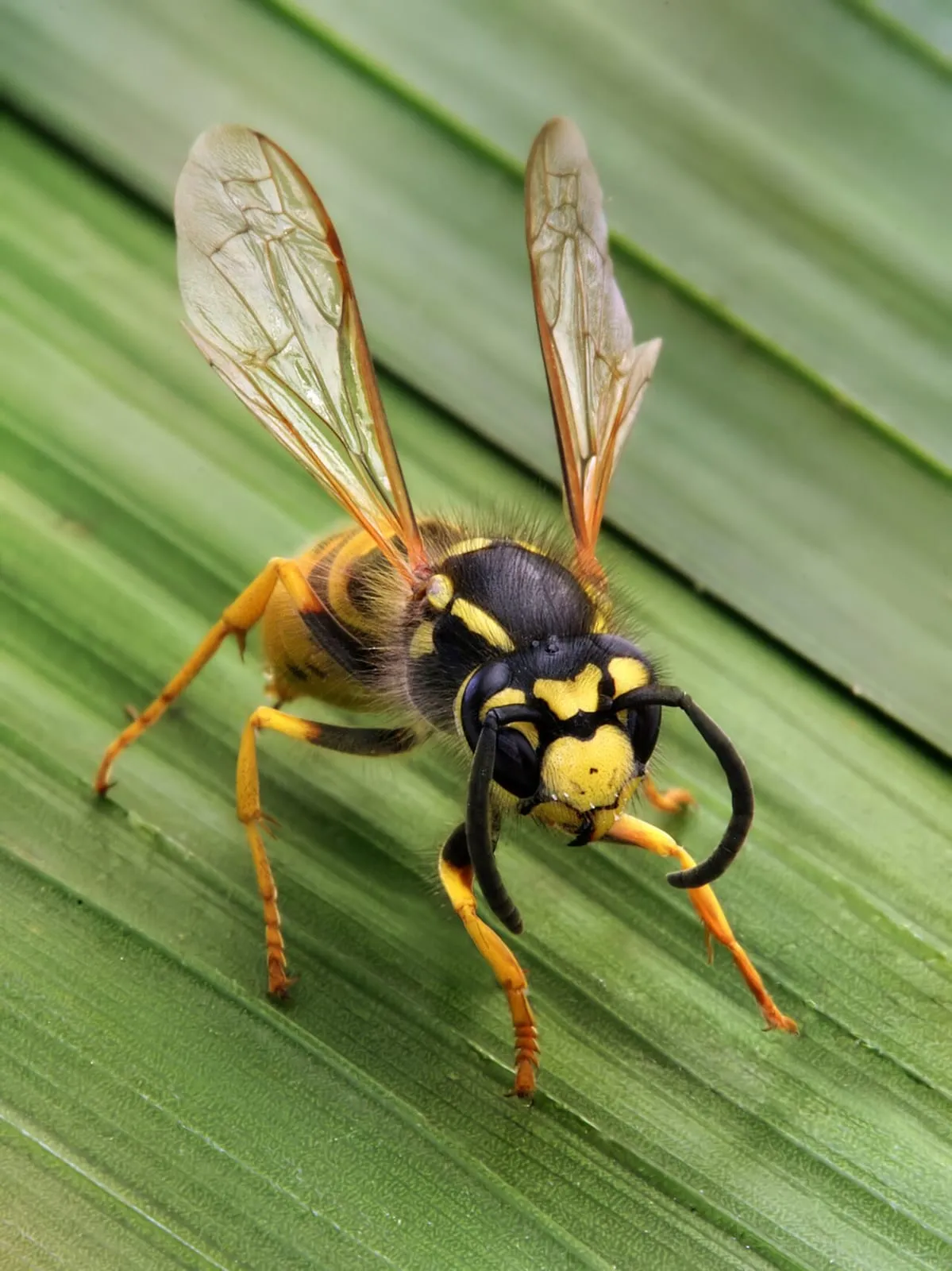
Most likely causes
- Yellowjacket ground nest — one hole over an inch wide, heavy wasp traffic in a straight flight line
- Ground bees — fuzzy, docile bees at a small 1/4-inch hole with a little soil mound
- Cicada killer wasps — a large solitary wasp patrolling a hole with a U-shaped mound of soil
- Bald-faced hornets — aerial paper nest, not a ground hole
Not quite what you're seeing? Answer four quick questions and the clue finder will point you to a closer match.
Compare the possible causes
| Possible cause | Key signs | When it happens | How likely |
|---|---|---|---|
| Yellowjacket ground nest | One entrance hole usually more than an inch across with a constant, busy stream of smooth yellow-and-black wasps flying straight in and out along the same line | Nests grow all summer and peak in late summer and fall, getting more aggressive as food gets scarce | Very common |
| Ground bees | A small hole about a quarter-inch wide with a little cone of soil around it, and a fuzzy, rounded bee flying in and out | Mostly spring, in dry, thin, or sandy turf | Common |
| Cicada killer wasps | A single very large wasp patrolling a wide burrow with a U-shaped mound of excavated soil fanned out at the entrance | Mid to late summer, often in bare, sunny, sandy ground | Less common |
| Bald-faced hornets | A gray, football-shaped paper nest hanging in a shrub, tree, or under an eave — not a hole in the ground | Summer into fall | Less common |
Visual clues to check
- Measure the opening from a distance: a yellowjacket entrance is usually more than an inch across, while ground bees leave only a 1/4-inch hole
- Watch the traffic at midday from 10 or more feet away: a constant two-way stream on the same flight line points to yellowjackets
- Look at the insect's body: smooth, glossy, and hairless means yellowjacket; fuzzy and rounded means a harmless ground bee
- Check for a soil mound: ground bees and cicada killers push out visible soil, while a yellowjacket hole often has none
- Note the location: an abandoned rodent burrow, the base of a slope, or the edge of a foundation are classic yellowjacket sites
- Count the wasps: many wasps sharing one hole is a colony; a single large wasp guarding a burrow is a solitary cicada killer
The causes in detail
Yellowjacket ground nest
Yellowjackets often nest in an abandoned rodent burrow, at the base of a slope, under shrubs, or right beside a foundation. A mature colony can hold thousands of wasps, and they are highly territorial — come within a few feet, or send mower vibration through the ground, and workers pour out to defend it. Each wasp is smooth, glossy, and hairless, and can sting repeatedly. This is the one to treat with real caution.
Ground bees
Ground-nesting (mining) bees are easy to mistake for yellowjackets from a distance, but up close they're fuzzy and hairy rather than smooth and glossy, and their entrance leaves a small soil mound. They are docile solitary bees that rarely sting, are excellent pollinators, and are gone within a few weeks. If the insect is hairy and the hole is tiny with a mound, you can almost always leave it alone.
Cicada killer wasps
Cicada killers are intimidating because of their size, but they are solitary and almost never sting people. One female digs a burrow and drags paralyzed cicadas into it, leaving a distinctive U-shaped pile of soil. The tell-tale difference from yellowjackets is traffic: a cicada killer burrow has one big wasp coming and going, not a steady swarm streaming in and out of the same hole.
Bald-faced hornets
Bald-faced hornets are actually a type of yellowjacket, but they build an enclosed aerial paper nest rather than nesting underground. If your wasps are entering a papery gray nest above ground instead of a hole in the dirt, this is what you're looking at. Like ground yellowjackets, they defend aggressively and are a job for a professional.
When to worry
- Wasps swarm out when you simply walk past or run the mower nearby — the colony is large and defensive
- The nest is beside a walkway, doorway, patio, or anywhere kids and pets pass close by
- Anyone in the household is allergic to stings — a mass attack can be life-threatening
- You see wasps entering a wall void or under the siding rather than open soil, meaning the nest is against the house
- The colony is clearly growing week to week heading into late summer and fall
What to do now
- Confirm it by watching the flight traffic from at least 10 feet away, ideally at midday when foragers are most active
- Mark the spot and rope off the area so no one walks or mows into it by accident
- Keep children and pets well away and stop mowing anywhere near the hole
- Have a licensed pest control professional treat the nest — this is strongly recommended for anyone with a sting allergy
- If a pro is treating it, know that dusk is the safest window because the whole colony is home and less active
What not to do
- Don't mow over the nest or run equipment nearby — the vibration alone can trigger a mass attack
- Don't pour gasoline or boiling water down the hole; it's dangerous, often ineffective, and provokes the colony
- Don't plug or cover the entrance — trapped wasps will find another way out, sometimes into the house
- Don't try to burn the nest out
- Don't spray a ground nest up close in daylight, when foragers are active and defensive
Frequently asked questions
How can I tell yellowjackets from ground bees?
Look at the body and the hole. Yellowjackets are smooth, glossy, and hairless with a large entrance often more than an inch wide and heavy two-way traffic. Ground bees are fuzzy and rounded, use a tiny quarter-inch hole with a small soil mound, and are docile solitary insects that rarely sting.
What time of year are yellowjacket nests most dangerous?
Late summer and fall. Colonies keep growing all season and peak with thousands of wasps as natural food runs short, which makes them more aggressive and more likely to scavenge around people. This is exactly when accidental encounters and stings spike.
Can I get rid of a ground nest myself?
It's not worth the risk. Home methods like flooding, plugging, burning, or daytime spraying tend to provoke a mass attack and often fail. A licensed professional has the protective equipment and knows to treat at dusk when the colony is home, which is far safer and more effective.
Why do yellowjackets nest underground in the first place?
They frequently take over an abandoned rodent burrow or other existing cavity, which saves them digging. Sheltered spots at the base of a slope, under shrubs, or beside a foundation are common because they stay protected and hidden until the colony grows large.