Ground Bees Nest: Bees or Wasps Nesting in the Lawn?
Holes with insects nesting in your lawn or bare soil are usually solitary mining bees, bumblebees, cicada killers, or — the one to take seriously — yellowjackets. Whether you see one busy hole or a patch of many, the season, and how aggressive the traffic is will tell you which you have. The safe first step is always to identify from a distance before deciding what to do.
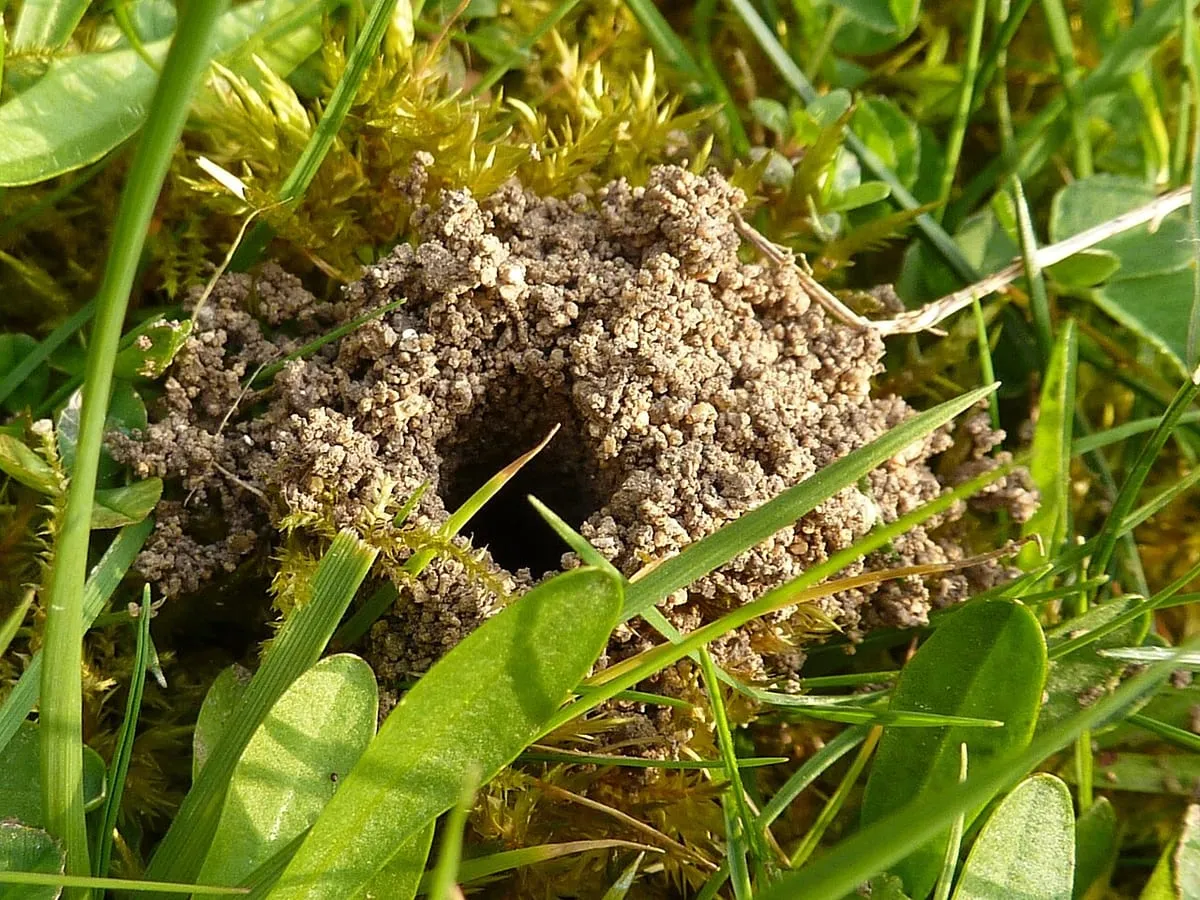
Most likely causes
- Solitary mining bees — many pencil-width holes in thin turf in spring, docile
- Bumblebees — nesting in an old rodent burrow or cavity, defensive if disturbed
- Yellowjackets — heavy aggressive traffic at one hole in late summer
- Cicada killers — big solitary wasps with a U-shaped mound; males can't sting
- Digger and sweat bees — small ground nesters, mostly harmless
Not quite what you're seeing? Answer four quick questions and the clue finder will point you to a closer match.
Compare the possible causes
| Possible cause | Key signs | When it happens | How likely |
|---|---|---|---|
| Solitary mining bees | A patch of many small, pencil-width holes in thin or bare turf, each with a single docile bee | Spring, active for just a few weeks before they disappear | Common |
| Digger and sweat bees | Small individual bees entering tiny soil holes, sometimes metallic green (sweat bees) | Spring through summer in sunny, sparse, or sandy soil | Common |
| Bumblebees | Large fuzzy bees coming and going from a single hidden opening, often an old rodent burrow or a cavity under mulch | Late spring through summer | Less common |
| Yellowjackets | Fast, aggressive traffic in and out of a single hole, with wasps that sting repeatedly if you come close | Building through summer and peaking dangerously in late summer and early fall | Common |
| Cicada killers | Very large solitary wasps beside a U-shaped mound of excavated soil, patrolling low over the lawn | Mid to late summer, when cicadas are active | Less common |
Visual clues to check
- Count the holes: many small holes in one patch usually means solitary bees; one busy hole means a colony
- Check the season: spring activity points to mining bees; late-summer aggression points to yellowjackets
- Watch the traffic: calm, individual comings and goings are bees; fast, defensive swarming at one entrance is wasps
- Look for a mound: a U-shaped pile of soil beside a big hole signals a cicada killer
- Note the insect's build: fuzzy and rounded suggests bees; smooth, bright yellow-and-black and slender suggests yellowjackets
- Test your distance carefully: if insects rush out and follow you when you step near, treat it as an aggressive nest and back away
The causes in detail
Solitary mining bees
Mining bees are the most common ground bees people notice, and they're gentle, non-aggressive, and excellent early-season pollinators. Each female digs her own hole, so you get a cluster of many small entrances rather than one busy nest. They almost never sting and are gone within a few weeks — the best move is simply to leave them alone, and thickening thin grass helps deter them next year.
Digger and sweat bees
Like mining bees, these are solitary ground nesters that pose little threat. Sweat bees can land on skin to sip perspiration and may give a mild pinch if pressed against you, but they don't defend their nests the way social wasps do. They're valuable pollinators best left in place.
Bumblebees
Bumblebees sometimes nest underground in abandoned rodent burrows or cavities under sheds and mulch. They're important pollinators and usually mild-mannered, but a colony will defend itself if you disturb the entrance or run a mower over it. Give a known bumblebee nest a wide berth and it will die off naturally by fall.
Yellowjackets
This is the ground nester to respect. Yellowjackets are social wasps that build large underground colonies, and by late summer a single entrance can have heavy, aggressive in-and-out traffic. Unlike bees, they sting repeatedly and defend the nest fiercely, so a lawnmower or foot traffic nearby can trigger a mass response. Mark the spot from a safe distance and keep people and pets away.
Cicada killers
Cicada killers look alarming — up to two inches long — but they're solitary and remarkably unaggressive. The males patrol and can't sting at all, and the females sting only if handled. Each burrow throws up a distinctive U-shaped or horseshoe-shaped mound of soil. Despite their size, they're far less of a threat than yellowjackets.
When to worry
- Fast, aggressive traffic in and out of a single hole in late summer — the signature of a yellowjacket nest
- Wasps that follow or dive at you when you walk near the opening
- A ground nest near a doorway, path, play area, or anywhere kids and pets pass regularly
- Anyone in the household with a known stinging-insect allergy and a nest they can't avoid
What to do now
- Identify first from a safe distance — the response is completely different for docile bees versus yellowjackets
- Leave solitary mining bees alone; they're harmless pollinators gone within a few weeks
- Thicken thin or bare turf with overseeding so mining bees find it less inviting next spring
- Give bumblebee and cicada killer nests space and simply avoid the area until they die off naturally
- Mark a suspected yellowjacket nest from a distance and keep everyone away from it
- For a yellowjacket colony near living areas, call a licensed pest control professional rather than treating it yourself
What not to do
- Never pour gasoline, bleach, or boiling water into a ground nest — it's dangerous, illegal in many places, and poisons the soil
- Don't plug or seal the entrance of an aggressive nest; the wasps will dig out and defend it
- Don't mow over or disturb a known ground nest, which can trigger a mass stinging response
- Don't kill harmless solitary mining bees, which are valuable pollinators that leave on their own
- Don't attempt DIY removal of a large yellowjacket colony, especially if anyone in the home is allergic
Frequently asked questions
Are ground bees in my lawn dangerous?
Usually not. The most common ground bees — solitary mining, digger, and sweat bees — are docile pollinators that rarely sting and disappear within a few weeks. The real hazard is yellowjackets, which are wasps, not bees, and show fast, aggressive traffic at a single hole in late summer.
How do I tell ground bees from yellowjackets?
Look at the pattern and the attitude. A patch of many small holes in spring, each with a calm fuzzy bee, means solitary bees. One hole with fast, defensive, in-and-out traffic in late summer — from smooth, bright yellow-and-black insects that chase you — means yellowjackets.
Should I get rid of ground bees?
In most cases, no. Solitary mining bees are gone in a few weeks and thickening the lawn discourages them from returning, so there's rarely any need to act. Yellowjackets are the exception: a colony near doors, paths, or play areas is a safety issue best handled by a licensed professional.