Spotted Lanternfly: Egg Masses, Nymphs & Adults
A gray, putty-like smear that looks like dried mud on a trunk, rock, or furniture is very likely a spotted lanternfly egg mass — and if you're seeing the insect itself, the black-and-white or red white-spotted nymphs (spring to summer) and gray spotted-winged adults (late summer) belong to the same pest. Spotted lanternfly is a highly invasive species under quarantine in many eastern states, so the right move at any stage is to confirm the ID, destroy what you find, and report the sighting rather than ignore or move it.
Most likely causes
- Spotted lanternfly egg mass — gray, mud-like smear about an inch long, laid fall through spring
- Spotted lanternfly nymphs — black (later red) with white spots, spring into summer
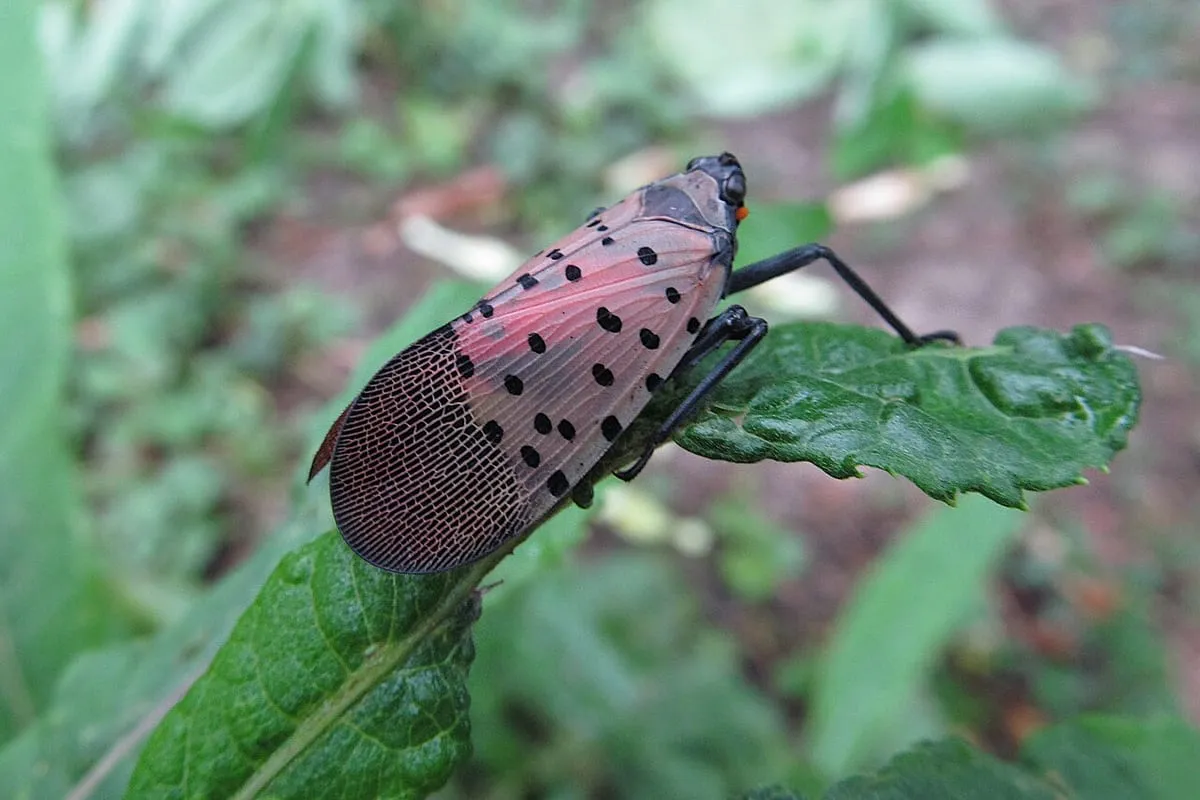
- Adult spotted lanternflies — inch-long, gray spotted wings with a red underwing flash, late summer
- Old mud dauber wasp nest — hard, ridged mud tube, not a flat smear
- Weathered sap or lichen on bark — natural and unmoving, no eggs underneath
Not quite what you're seeing? Answer four quick questions and the clue finder will point you to a closer match.
Compare the possible causes
| Possible cause | Key signs | When it happens | How likely |
|---|---|---|---|
| Spotted lanternfly egg mass | A gray to tan, putty-like smear about 1 to 1.5 inches long that looks like a smudge of dried mud or a patch of cracked bark | Laid September through November; overwinters on surfaces and hatches in May | Very common |
| Spotted lanternfly nymphs | Small wingless insects that are black with bright white spots early on, then turn red with white spots and black patches as they grow | Hatch in May and develop through mid-summer | Common |
| Adult spotted lanternflies | Inch-long planthoppers with gray, black-spotted forewings at rest and a startling flash of red-and-black underwing when they move | Late July through September | Common |
| Honeydew and sooty mold from feeding | A sticky, shiny film on leaves, decks, and furniture that later grows a black, soot-like coating and draws wasps and bees | Mid-summer through fall while nymphs and adults are feeding | Common |
Visual clues to check
- Look at the shape: a true egg mass is a flat, 1 to 1.5 inch smear that sits on the surface, not a raised tube or lump
- Scratch a corner gently: dried mud crumbles to dirt, but an egg mass reveals rows of seed-like eggs underneath
- Check the season: gray putty smears from fall through spring are egg masses; spotted insects appear late spring through fall
- Inspect flat surfaces at eye level and lower on trunks, plus the underside of furniture, wheel wells, and firewood
- Watch for a sticky, blackened deck or leaves below a tree, which points to feeding insects above
- Note the color of any insects: black with white spots early, red with white spots later, gray spotted wings as adults
The causes in detail
Spotted lanternfly egg mass
Each mass hides 30 to 50 eggs beneath a waxy gray coating, and the female will lay them on almost any flat surface: tree trunks, branches, rocks, outdoor furniture, firewood, grills, and even vehicles. Fresh masses look shiny and gray like wet putty; older ones dry, crack, and turn tan so they blend into bark. Because the eggs survive the winter outdoors, a mass you find in January is just as important to destroy as one you find in October.
Spotted lanternfly nymphs
The young stages cannot fly but are strong jumpers, so you often see them scattered up a trunk or clustered on stems. Early nymphs are easy to mistake for tiny ticks or beetles because of the black-and-white speckling. By late summer the last nymph stage is unmistakable: bright red with white dots and black markings, roughly the size of a pea.
Adult spotted lanternflies
Adults are the stage most people recognize because they gather in large numbers on favored plants, especially the invasive tree-of-heaven, as well as grapevines, maples, and fruit trees. At rest they look like a plain gray moth, but a disturbed adult hops and briefly shows the red hindwing. This is when females begin laying the egg masses that start the cycle over again.
Honeydew and sooty mold from feeding
Lanternflies feed by tapping into plant sap and excrete the excess as a sugary liquid called honeydew. It coats everything beneath the insects and quickly grows black sooty mold, which is harmless to touch but stains surfaces and attracts stinging insects. A sudden sticky, blackened patio under a tree in August is often the first clue an infestation is overhead.
When to worry
- You confirm any egg mass or live insect, since even one sighting should be reported in quarantine and newly infested areas
- You find masses on firewood, a vehicle, a trailer, or outdoor gear you're about to move to another county or state
- Large numbers of adults are swarming a tree, which stresses the plant and drops heavy honeydew
- Sooty mold and swarming wasps make a patio or play area unusable
- You live near an active quarantine zone and start seeing the insects for the first time
What to do now
- Confirm the identification against your state department of agriculture's spotted lanternfly photos before acting
- Scrape egg masses off the surface with a stiff card into a bag or container of rubbing alcohol or hand sanitizer, then seal it
- Kill nymphs and adults you can reach — knocking them into a jar of soapy water works well — since every one removed means fewer egg masses later
- Report your sighting to your state department of agriculture, which tracks the spread and may follow up
- Check your vehicle, trailer, firewood, and outdoor items for egg masses before you travel, especially out of a quarantine zone
What not to do
- Don't just scrape egg masses onto the ground — they can still hatch, so they must go into alcohol or a sealed bag
- Don't move firewood, plants, mulch, or outdoor furniture that may carry egg masses, since that's exactly how the pest spreads
- Don't assume a car wash kills the eggs; the masses often survive being sprayed
- Don't hang homemade sticky traps you saw online without a wildlife guard, because bare tree traps can catch birds and small animals
- Don't ignore a mass because it looks like old mud — when in doubt, scrape it and report it
Frequently asked questions
How can I tell a lanternfly egg mass from dried mud or a wasp nest?
An egg mass is a flat, gray, putty-like smear about an inch long that sits flush against the surface, while a mud dauber nest is a raised, ridged tube. If you gently scratch a corner and find neat rows of small seed-like eggs under the coating, it's a lanternfly mass. Dried mud simply crumbles into dirt with nothing underneath.
Are spotted lanternflies dangerous to my family or pets?
No. Spotted lanternflies don't bite, sting, or spread disease to people or pets. The concern is agricultural and environmental: they weaken trees and vines and are a serious threat to grapes and fruit crops, which is why control and reporting matter.
What is the correct way to destroy the egg masses?
Scrape each mass off the surface with a stiff card or putty knife directly into a bag or container of rubbing alcohol or hand sanitizer, then seal it. Do not scrape them onto the ground, because the eggs can still hatch. Report the location to your state department of agriculture afterward.
Why does it matter if I move firewood or potted plants?
Females lay egg masses on almost any flat outdoor surface, including firewood, furniture, vehicles, and plant pots. Moving those items to a new area carries hidden eggs with them, which is one of the main ways the insect spreads to new regions. Inspect anything before transporting it out of an infested area.
Do spotted lanternfly nymphs bite?
No. The nymphs — the black-and-white early stages and the bright red, white-spotted later stage — don't bite, sting, or carry disease, and neither do the adults. They only feed on plant sap. You can safely squash them or knock them into soapy water, and every nymph removed is one less egg-laying adult in the fall.