White Mushrooms in Your Lawn: Why They Appear, What to Do
White mushrooms popping up in a lawn are the fruiting bodies of fungi that are already living in your soil, usually feeding on decomposing roots, old stumps, or thatch. They surge after rain or heavy watering, and in most cases they're a sign of biologically healthy soil — not a lawn disease. The main job is keeping kids and pets from eating them.
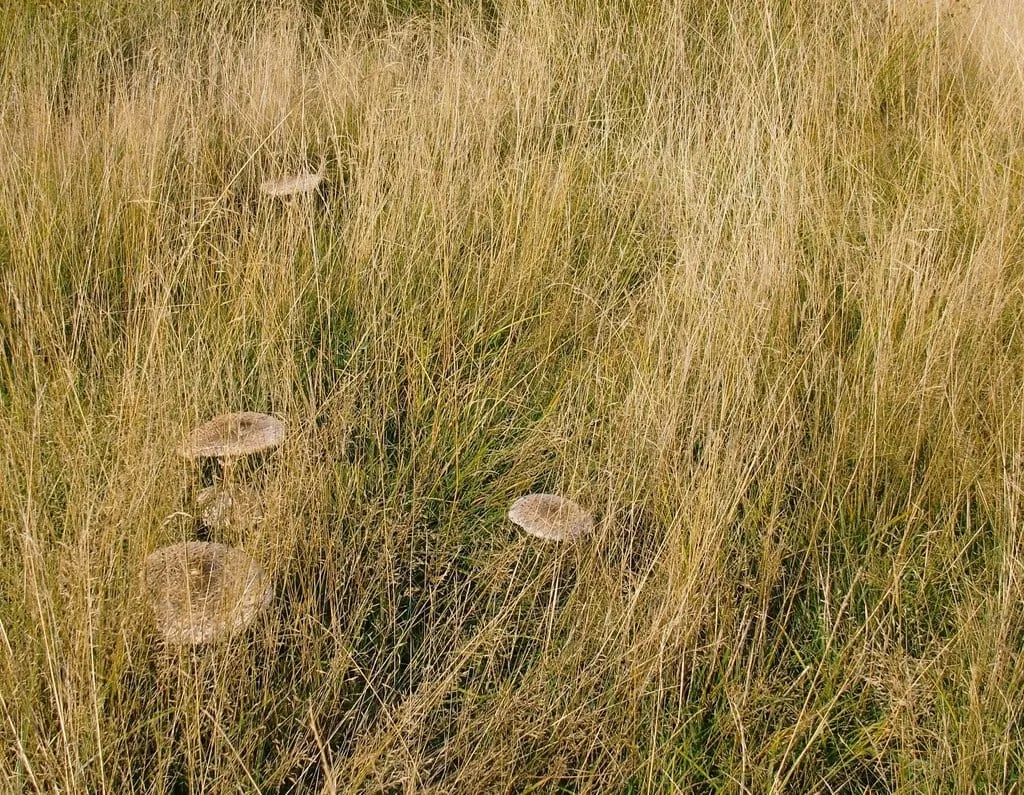
Most likely causes
- Decomposing tree roots or an old stump — mushrooms clustered in one recurring area
- Rain or overwatering — a lawn-wide flush that appears within a day or two of wet weather
- Rich, organic soil — scattered mushrooms as a byproduct of healthy decomposition
- Fairy ring fungus — mushrooms emerging in an arc or circle
Not quite what you're seeing? Answer four quick questions and the clue finder will point you to a closer match.
Compare the possible causes
| Possible cause | Key signs | When it happens | How likely |
|---|---|---|---|
| Buried wood: old roots, stumps, or construction lumber | Mushrooms return to the same spot or line every year, often where a tree once stood or along the path of its old roots | Late summer and fall after rain, for as many years as the wood lasts underground | Very common |
| Wet weather or overwatering | Mushrooms appear across the lawn within a day or two of extended rain, then shrivel and vanish as things dry out | After any prolonged wet spell — spring rains, fall rains, or a summer of nightly irrigation | Very common |
| Healthy, organic-rich soil doing its job | Scattered individual mushrooms here and there in an otherwise good-looking lawn, with no pattern and no dead grass | Any warm, damp stretch from spring through fall | Common |
| Fairy ring fungus | Mushrooms emerging in a distinct arc or full circle, often along a band of darker green grass that widens year over year | Late summer and fall after rain, in the same expanding ring each season | Less common |
Visual clues to check
- Map where they emerge: the same spot or line every year suggests buried wood; everywhere at once suggests weather; a curve suggests a fairy ring
- Check the weather trail: mushrooms within 48 hours of rain or heavy irrigation are moisture-triggered and temporary
- Look at the grass around them: healthy green turf means the mushrooms are decomposers, not a lawn disease
- Count the days: most lawn mushrooms collapse and disappear within two to five days of appearing
- Look for white threads: peeling back soil or thatch near a cluster often reveals the white, root-like mycelium that's the actual fungus
- Note your watering schedule: mushrooms without rain usually mean the sprinklers run too often for too little time
The causes in detail
Buried wood: old roots, stumps, or construction lumber
Fungi are nature's demolition crew for wood, and a removed tree leaves years of meals behind underground. The mycelium — the actual fungus, a network of white threads in the soil — quietly digests the buried wood, then sends up mushrooms to release spores when moisture allows. If your mushrooms keep coming back along an invisible line or cluster, you're likely tracing an old root. They'll stop on their own once the wood is consumed, which can take five to ten years for a large stump.
Wet weather or overwatering
Moisture is the trigger. The fungi live in your soil year-round, but they only fruit — send up mushrooms — when conditions are damp enough for spores to survive. A sudden lawn full of mushrooms after a rainy week is normal and temporary. If they show up constantly without rain, your irrigation schedule is doing the raining: frequent shallow evening watering keeps the surface wet and mushroom-friendly, and cutting back usually cuts the crop.
Healthy, organic-rich soil doing its job
Soil rich in organic matter — decaying grass clippings, thatch, compost, manure from before the house was built — supports fungi that break that material into nutrients grass can use. Occasional mushrooms are the visible receipt for that underground work. Gardeners actually read mushrooms as a compliment to their soil. They don't harm the grass, don't spread disease to plants, and typically last only a few days each.
Fairy ring fungus
When mushrooms trace a curve instead of appearing at random, you're seeing the leading edge of a fairy ring — a fungus colony expanding outward from a central starting point. The ring itself is mostly cosmetic and can persist for years. It's worth recognizing because the mushroom placement isn't random and will recur; see our fairy ring guide for the details on the three types and how to live with them.
When to worry
- You have toddlers or pets that mouth things in the yard — remove mushrooms promptly rather than waiting for them to shrivel
- A child or pet may have eaten any part of a wild mushroom — treat it as an emergency, not a wait-and-see
- Mushrooms grow directly from the base or trunk of a living tree, which can signal internal decay worth an arborist's opinion
- Mushrooms come with a spreading ring of dead or dark green grass — fairy ring behavior that changes how you manage the lawn
What to do now
- Put on gloves and pick mushrooms by hand — twist or pluck them, bag them, and put them in the trash, not the compost
- Do a fresh sweep of the lawn before letting pets or small children out, especially after rainy nights
- Mow or rake mushrooms off if the crop is large; removing them doesn't kill the fungus but does remove the poisoning risk and the spores
- Water deeply but less often, and in the early morning, so the surface dries out between waterings
- Dethatch and aerate if your lawn has a thick spongy layer — less dead organic matter at the surface means fewer mushrooms
- If mushrooms sprout from a living tree's trunk or roots, have an ISA-certified arborist assess the tree rather than just removing the growths
What not to do
- Never eat a wild mushroom or let anyone taste-test one — several deadly species are plain white and look harmless
- Don't rely on folk identification rules (silver spoons, peeling caps, animals eating them) — none of them are reliable, and identification is a job for experts
- Don't apply lawn fungicide to kill mushrooms; it doesn't reach the fungus in the soil and wastes money on what's usually a beneficial organism
- Don't kick mushrooms apart across the lawn — you'll scatter spores and leave fragments that pets can still find and eat
- Don't dig up the whole area to chase the mycelium; the network is far larger than the mushrooms and the digging does more damage than the fungus
Frequently asked questions
Are white lawn mushrooms poisonous to dogs?
Assume they could be. Most lawn mushrooms are harmless, but a few white species — including the destroying angel — are lethally toxic, and no one can tell them apart at a glance. If your dog eats a lawn mushroom, call your veterinarian or a pet poison hotline immediately and bring a photo or sample of the mushroom. The safe routine is sweeping the yard and removing mushrooms before letting dogs out after wet weather.
Do mushrooms in my lawn mean my soil is healthy or diseased?
Healthy, in almost every case. Mushrooms mean your soil hosts active fungi breaking down organic matter into nutrients — the same decomposition that makes compost work. They are not a lawn disease and don't attack living grass. The exceptions worth noting are mushrooms in an expanding ring (a fairy ring) and mushrooms growing from a living tree, which can indicate decay inside the trunk.
How do I stop mushrooms from coming back?
You manage moisture and food rather than the fungus itself. Water deeply but infrequently in the morning, fix drainage in soggy spots, dethatch if the dead layer is thick, and let more sun in where you can. If they return to one spot every year, buried wood is feeding them, and they'll stop when it's fully decomposed — or sooner if you dig out what's reachable.
Can I just mow over the mushrooms?
For an adults-only yard, mowing them off is fine — the fungus below is unharmed either way, and mushrooms are mostly water. If children or pets use the lawn, hand-picking with gloves is better, because mowing scatters fragments that a curious dog can still eat. Either way, expect a fresh crop after the next rain until conditions change.