Orange Fungus in Mulch: Stinkhorns, Slime, and Siding Spots
Orange growths in mulch are almost always fungi feeding on the wood itself — most often stinkhorns (the smelly orange fingers), orange peel fungus, or a slime mold. They're harmless to plants and people who leave them alone. The one mulch fungus that costs money is artillery fungus, which shoots tar-like black dots onto siding and cars.
Most likely causes
- Stinkhorn — orange finger- or horn-shaped growth with a rotten smell and flies around it
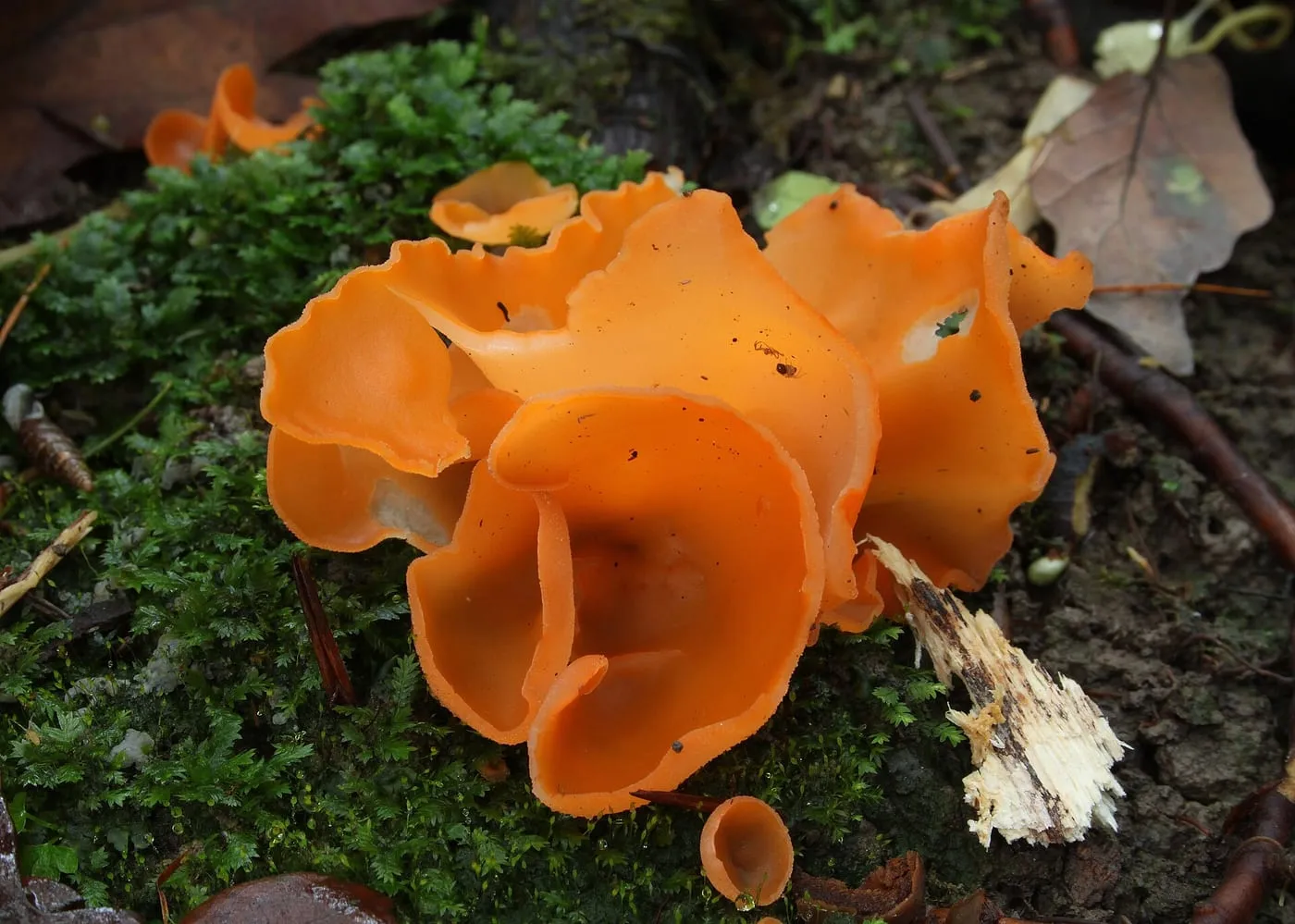
- Orange peel fungus — bright orange, cup-shaped discs sitting on soil or mulch
- Slime mold — a spreading orange, yellow, or tan blob or crust on top of the mulch
- Artillery fungus — tiny cream-orange cups in mulch plus sticky black specks on nearby siding
Not quite what you're seeing? Answer four quick questions and the clue finder will point you to a closer match.
Compare the possible causes
| Possible cause | Key signs | When it happens | How likely |
|---|---|---|---|
| Stinkhorns | An orange to reddish finger, horn, or lattice a few inches tall that emerges from an egg-like sac in the mulch and smells like rotting meat, often with flies on it | Warm, wet weather from summer into fall; each stinkhorn lasts only a day or two | Very common |
| Orange peel fungus | Bright orange, cup- or bowl-shaped discs up to a few inches across, sitting directly on mulch or disturbed soil, with no stem and no odor | Late summer and fall, especially on newer landscaping and recently disturbed ground | Common |
| Slime molds | A flat, spreading patch — orange, yellow, or tan — that seems to sit on top of the mulch like spilled batter, sometimes in a new position from one day to the next | Warm, humid stretches from late spring through fall, usually on mulch under a year old | Common |
| Artillery fungus | Tiny cream-to-orange cups a tenth of an inch across in the mulch, paired with sticky black specks like tar dots on nearby siding, windows, gutters, and cars | Cool, moist weather in spring and fall; the black spots accumulate over weeks | Less common |
Visual clues to check
- Follow your nose: a rotten-meat smell with flies means a stinkhorn, even before you spot the orange horn
- Check the shape: upright fingers are stinkhorns; flat cups or bowls are orange peel fungus; spreading blobs are slime mold
- Watch it for a day: a blob that changes position or shape overnight is a slime mold, not a true fungus
- Inspect nearby siding and cars: sticky black specks that won't wipe off point to artillery fungus in the adjacent mulch
- Look for the 'egg': stinkhorns emerge from a whitish, golf-ball-like sac half-buried in the mulch
- Note the mulch age: most orange growths appear in the first year after fresh wood mulch goes down
The causes in detail
Stinkhorns
Stinkhorns are the mulch fungus people call about most, because you smell them before you see them. The odor is a deliberate strategy: the slimy tip carries the spores, and the carrion smell recruits flies to spread them. They grow shockingly fast — from buried 'egg' to full height in a matter of hours — and collapse within a couple of days. They don't harm plants, pets rarely bother them more than once, and picking them out (bag over your hand, like a dog walker) removes the smell immediately.
Orange peel fungus
Orange peel fungus looks exactly like its name — as if someone dropped fresh orange rinds in the bed. It's a harmless decomposer that favors disturbed soil and wood mulch, showing up along new walkways, fresh beds, and construction edges. It doesn't smell, doesn't spread to plants, and fades on its own. Despite the tempting look, the standing rule applies: nothing from the yard goes in anyone's mouth, because convincing lookalikes exist.
Slime molds
Slime molds aren't true fungi — they're amoeba-like organisms that creep slowly across mulch consuming bacteria, and the brightly colored blob stage can genuinely relocate a few inches overnight. The famous 'dog vomit' species is usually yellow but weathers to orange-tan, so plenty of orange mulch blobs are slime molds mid-fade. They're harmless to plants, pets, and people; they dry into a dusty crust within days and can be raked out or hosed apart whenever you're tired of looking at them.
Artillery fungus
Artillery fungus is the one mulch fungus with a real cost attached. Its minuscule cups aim toward light and reflective surfaces and shoot spore packets up to 20 feet — and the glue-like black dots bond to vinyl siding, white cars, and windows so firmly that they're nearly impossible to remove without damaging the finish. The fungus itself is tiny and easy to miss; most people discover the spots first. If you find fresh tar-like specks on the house, check the mulch within 10 to 20 feet, and consider switching that band of mulch to stone, rubber, or bark nuggets, which it colonizes far less readily.
When to worry
- Black tar-like dots are accumulating on siding, gutters, or vehicles — artillery fungus damage gets worse and harder to remove the longer it continues
- A pet has chewed or swallowed any mulch growth — call your veterinarian rather than waiting for symptoms
- Fungal shelves or mushrooms are growing from the trunk or roots of a nearby living tree, not just the mulch — that's a tree health question
- Growths keep flushing constantly in a bed that stays wet, which usually means irrigation or drainage is keeping the mulch soggy
What to do now
- Identify before acting — most orange mulch fungi are cosmetic, short-lived decomposers that need no treatment at all
- Remove stinkhorns by hand with a bag or gloves, including the buried egg sacs, and seal them in the trash to stop the smell
- Rake and fluff the mulch every few weeks so it dries between rains — most of these organisms need constant surface moisture
- Water beds in the morning and aim emitters at plants, not at broad mulch areas
- For artillery fungus, replace the mulch within about 20 feet of the house with stone, rubber mulch, or large bark nuggets, and clean spots off siding quickly while they're fresh
- If growths keep returning heavily, remove the top layer of old mulch before adding new instead of piling fresh mulch on top
- For anything sprouting from a living tree rather than the mulch, have an ISA-certified arborist take a look
What not to do
- Don't eat or taste anything growing in mulch, and don't let curious kids handle growths — bright colors are not a safety signal in either direction
- Don't spray fungicides on mulch; they don't eliminate decomposer fungi and just add chemicals where kids and pets play
- Don't power-wash artillery fungus spots on vinyl at full pressure — you can drive the spores in and scar the siding; test gentle methods first
- Don't smash stinkhorns where they stand; you'll spread the spore slime and the smell — bag them whole instead
- Don't pile new mulch over an active fungus flush; you're feeding it a fresh layer
Frequently asked questions
What is the orange finger-like thing growing in my mulch that smells terrible?
That's a stinkhorn — a fast-growing fungus that emerges from an egg-like sac in the mulch and produces a rotten-meat odor to attract flies, which spread its spores. It's harmless to plants and collapses on its own within a day or two. If the smell bothers you, pull it out with a bag over your hand, grab the buried egg too, and seal it in the trash.
What are the black dots all over my siding, and are they from the mulch?
Sticky black specks that appear on siding, windows, and cars near mulch beds are usually spore packets from artillery fungus, a tiny decomposer that fires them toward light-colored surfaces from up to 20 feet away. They bond like glue and are extremely hard to remove once cured. The long-term fix is replacing the nearby wood mulch with stone or large bark nuggets.
Why did fungus appear right after I put down fresh mulch?
Fresh wood mulch is a banquet: shredded, moist, high-surface-area wood is exactly what decomposer fungi and slime molds eat. Most beds get their showiest flush of fungi in the first year after mulching, especially in warm, wet weather, then settle down as the easy food is used up. It's a normal part of the mulch breaking down into soil.
Will orange fungus in mulch hurt my plants or spread to my lawn?
No — these organisms feed on dead wood and bacteria, not on living plants or grass. They aren't plant diseases and won't infect your shrubs or turf. The only real property concern in the group is artillery fungus staining nearby surfaces; the rest are cosmetic and temporary.