Mole Crickets in Your Lawn: Signs, Tunnels, and Damage
Raised, ridge-like soil trails that look like tiny earthquake fissures, turf that feels spongy underfoot, and spreading straw-colored patches usually point to mole crickets, especially in warm southern lawns. They tunnel just under the surface and sever grass roots as they go. A simple soap flush will drive them up so you can confirm before treating.
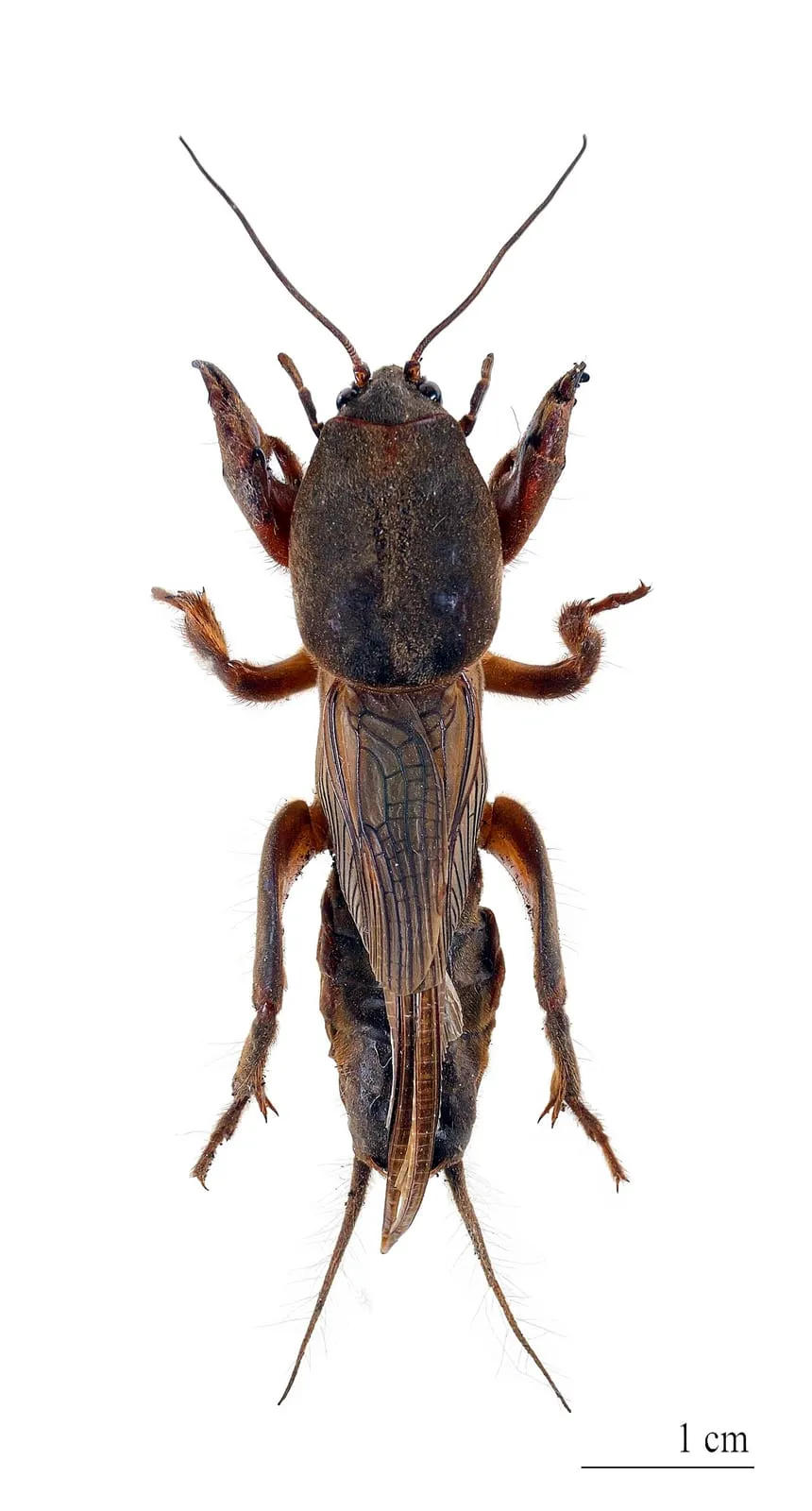
Most likely causes
- Mole crickets — raised surface tunnels and spongy, springy turf
- Small scattered dirt mounds pushed up from shallow tunneling
- Straw-colored to brown patches that mimic drought stress
- Odd tan insects with mole-like front claws seen at night or after rain
Not quite what you're seeing? Answer four quick questions and the clue finder will point you to a closer match.
Compare the possible causes
| Possible cause | Key signs | When it happens | How likely |
|---|---|---|---|
| Mole crickets tunneling near the surface | Raised, ridge-like soil trails resembling tiny fissures, with turf that feels loose and springy where roots are severed | Summer into fall, worsening through late summer as the insects grow | Very common |
| Feeding damage that mimics drought | Irregular straw-colored to brown patches that look dry even when you're watering | Late summer and fall, when populations and feeding peak | Common |
| The insect itself | A tan cricket about 1 to 1.5 inches long with shovel-like front claws, like a tiny mole | Warm months; occasionally seen on the surface at night or after rain | Less common |
Visual clues to check
- Look for raised soil trails that resemble tiny earthquake fissures winding across the lawn
- Press the turf: a spongy, springy feel means roots have been severed underneath
- Check for scattered small dirt mounds along the tunnel lines
- Note the color: straw-brown patches that spread through late summer and fall
- Try a soap flush — mix dish soap with water and pour it over a suspect area to drive mole crickets to the surface
- Look at any insect you flush: tan, about an inch long, with mole-like front claws confirms it
The causes in detail
Mole crickets tunneling near the surface
Mole crickets burrow through the top 1 to 2 inches of soil, pushing up raised trails that look like little earthquake cracks across the lawn. Because their tunneling cuts grass roots away from the soil, the turf feels spongy and springy when you walk on it. You'll often see scattered small dirt mounds where they've worked, and the damage spreads steadily as the season goes on. See all moles signs →
Feeding damage that mimics drought
Between tunneling and feeding on roots, mole crickets thin out the turf until patches turn a straw-brown color that's easy to mistake for drought stress. The giveaway is that the grass doesn't green up no matter how much you water, and you can find the raised surface tunnels running through the bad areas. This is most common in warm-season lawns like Bermuda, Bahia, and centipede grass.
The insect itself
Mole crickets are odd-looking insects, roughly an inch to an inch and a half long, tan, with broad front claws built for digging. You may spot one crawling on the surface at night or after a heavy rain drives them up. Seeing the insect confirms the diagnosis, but you usually notice the tunnels and spongy turf long before you catch one in the open.
When to worry
- Raised tunnels and brown patches keep spreading despite good watering
- Turf lifts or feels spongy across a large or growing area
- Damage returns each summer, signaling an established population
- A soap flush brings up several mole crickets from a small area
- Warm-season turf like Bermuda or Bahia is thinning out over wide sections
What to do now
- Confirm with a soap flush before treating so you're sure it's mole crickets and not moles or grubs
- Scout in early summer, when nymphs are small — that's the easiest stage to control
- Keep the lawn healthy with proper mowing and watering so turf can outgrow light damage
- Map the worst tunnel areas so any treatment targets where the insects actually are
- For heavy or spreading infestations, have a licensed lawn care professional confirm and treat
What not to do
- Don't assume it's just drought and only add water — that won't stop the tunneling
- Don't confuse the raised surface tunnels with mole runs; moles push up larger ridges and volcano-shaped mounds
- Don't treat blindly before a soap flush confirms mole crickets are present
- Don't wait until fall — mature mole crickets are much harder to control than early-summer nymphs
Frequently asked questions
How do I know if I have mole crickets or moles?
Mole crickets make small, raised surface tunnels that look like tiny fissures and leave spongy turf, because they feed on and cut grass roots. Moles push up much larger raised ridges and volcano-shaped mounds, and they eat grubs and worms rather than roots. If the tunnels are shallow, narrow, and the grass turns brown, mole crickets are the likelier culprit.
What is a soap flush and how does it confirm mole crickets?
A soap flush is a simple test: mix dish soap with water and pour it over a suspect patch of lawn. The soapy water irritates mole crickets and drives them up to the surface within a few minutes, so you can see and count them. It's the most reliable way to confirm them before you treat.
Could my spongy lawn be grubs instead of mole crickets?
It might be. Grubs make the turf spongy enough to peel back like carpet, but they don't create raised surface tunnels the way mole crickets do. If you see the tunnel trails, lean toward mole crickets; if the turf peels up with no tunnels, check for white C-shaped grubs underneath.
When is the best time to deal with mole crickets?
Early summer, when the nymphs are small and easiest to control. By late summer and fall the insects are mature, the damage is worse, and they're much harder to manage. Scouting and confirming early gives you the best results.