Dirt Mounds in Lawn: Mole, Gopher, or Ant? Read the Shape
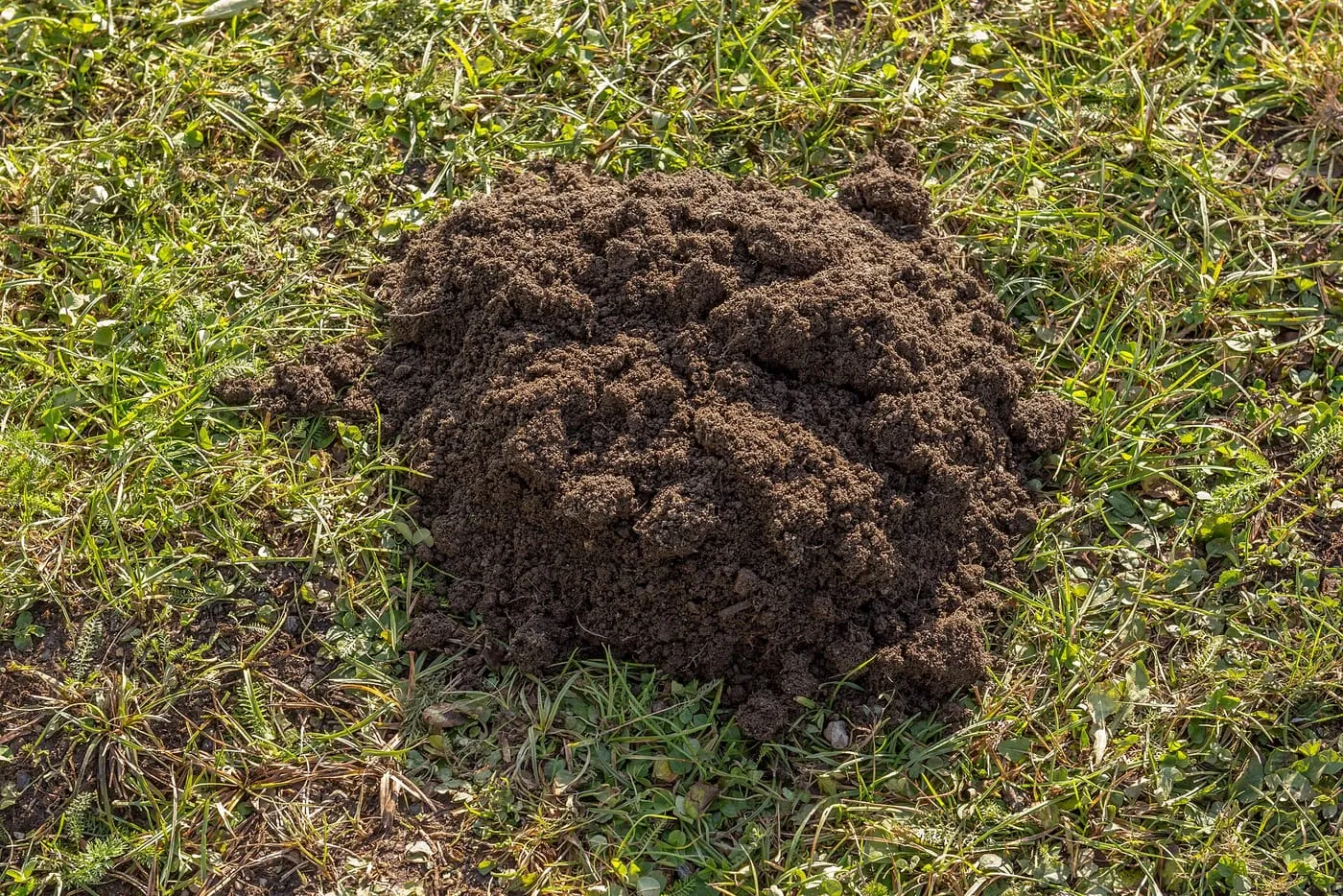
The shape of a dirt mound is the fastest identification tool in the yard: moles build round volcano-shaped mounds with no visible hole, pocket gophers build fan- or crescent-shaped mounds with a plugged hole to one side, and ants, earthworms, and digger bees leave much smaller piles. Match your mound to one of those shapes and you've usually named the animal.
Most likely causes
- Moles — circular volcano mounds of cloddy soil, hole hidden underneath the center
- Pocket gophers — fan or crescent-shaped mounds with a plugged hole at one edge
- Ants — small granular piles, often many, sometimes with visible ant traffic
- Earthworms — marble-size crumbly casting piles after rain
- Digger bees — mini soil volcanoes the size of a quarter with a pencil hole in the middle
Not quite what you're seeing? Answer four quick questions and the clue finder will point you to a closer match. Or measure the hole and compare it in our yard hole size chart.
Compare the possible causes
| Possible cause | Key signs | When it happens | How likely |
|---|---|---|---|
| Moles | Symmetrical, volcano-shaped mounds 6 to 24 inches across made of chunky clods, pushed straight up with no open hole | Year-round, but most active in spring and fall when soil is moist and worms are shallow | Very common |
| Pocket gophers | Fan-, kidney-, or crescent-shaped mounds of finer soil with a visible dirt plug at one side, and often chewed-off plants nearby | Spring and fall peaks; active all year west of the Mississippi and in parts of the Southeast | Common |
| Ants | Small piles of fine, granular, uniform soil, from an inch to several inches across, often between grass blades or along pavement | Late spring through summer, especially in dry weather; piles multiply after mating flights | Very common |
| Earthworm castings | Marble- to golf-ball-size piles of dark, crumbly, squiggly-looking soil dotted across the lawn | Cool, wet stretches in spring and fall, most visible in the morning | Very common |
| Digger bees | Dozens of quarter-size soil mounds, each with a single pencil-width hole in the center, in thin or sandy turf | A few weeks in early to mid spring | Common |
Visual clues to check
- Study the shape first: symmetrical volcano = mole; one-sided fan or crescent with a plug = gopher
- Pinch the soil: coarse clods point to moles; fine, sifted soil points to gophers, ants, or bees
- Look for an open hole: mole and fire ant mounds have none visible; digger bee mounds have a neat center hole
- Scan for raised ridges of lifted turf nearby — surface feeding tunnels confirm moles
- Check plants around the mounds: clipped or vanished plants and gnawed roots indicate gophers, not moles
- Note mound size and count: many quarter-size mounds in spring are bees; a few dinner-plate mounds are mammals
- In southern states, disturb nothing until you've ruled out fire ants — flick a pebble at the mound edge and watch from a distance
The causes in detail
Moles
Moles tunnel deep and shove excess soil straight up a vertical shaft, so the mound builds evenly in all directions like a little volcano — the exit is under the center and stays plugged. Mounds often appear in a rough line marking a deep tunnel, and many yards also show raised ridges from shallow feeding runs. Moles eat earthworms and grubs, not plants; the damage is cosmetic, though tunnels can dry out grass roots above them. See all moles signs →
Pocket gophers
Gophers push soil out of a tunnel that meets the surface at an angle, so the dirt sprays to one side in a fan with the plugged hole at the narrow end — the classic contrast to a mole's symmetrical volcano. Unlike moles, gophers are vegetarians: they pull whole plants down into tunnels and clip roots, so mounds plus vanishing plants or wilting shrubs points to gopher. One gopher can build several mounds a day. See all gophers signs →
Ants
Ant mounds are built grain by grain, so the soil looks sifted and uniform rather than cloddy. Most lawn ants are harmless soil-turners whose hills brush away with a broom or rake. The exception is the South and Southeast: fire ant mounds are larger, dome-shaped with no visible entrance hole, and boil with aggressive ants the moment they're disturbed — those you leave alone.
Earthworm castings
Night-crawler castings are digested soil deposited at the burrow mouth, and a healthy lawn can be polka-dotted with them after a rainy week. They can make a lawn bumpy and briefly muddy, but they're concentrated nutrients. Rake or drag them level when dry — treating a lawn to eliminate worms trades away the best soil engineers you have.
Digger bees
Mining and digger bees nest in sun-warmed, sparse turf, each female building her own miniature volcano. A colony can pepper a bank or thin lawn with mounds, which alarms people, but these solitary bees are docile, sting only if handled, and finish their season in three to four weeks. Thickening the turf discourages them next year better than any spray.
When to worry
- Fan-shaped mounds plus disappearing garden plants — gophers can strip a vegetable bed and girdle young trees from below
- A dome-shaped mound in the South that erupts with ants when touched — likely fire ants; keep kids and pets well away
- Mounds and tunnels spreading toward septic drain fields, irrigation lines, or under pavers and walkways
- New mounds appearing daily across a large area, which means an established animal, not a passerby
- Pets that dig frantically at mounds — they can take a face full of fire ant stings or corner an animal
What to do now
- Photograph a fresh mound from directly above — shape is easier to judge in a photo than on your knees
- Level a few mounds with a rake and check which get rebuilt within 48 hours; that tells you where the active runs are
- For moles, reduce the food supply gradually by managing grubs, and simply rake mounds out — many mole visits are temporary
- For confirmed gophers, protect what matters first: wire baskets around new plantings and buried hardware cloth around beds
- Sweep small ant hills flat on dry days; healthy turf outcompetes most lawn ants
- Leave digger bee patches alone for the few weeks they're active, then overseed to thicken the turf
- For persistent gophers, suspected fire ants, or mole damage beyond what raking handles, hire a licensed wildlife or pest professional — trapping done correctly beats every home remedy
What not to do
- Don't use gasoline, car exhaust, or smoke bombs in tunnels — dangerous, illegal many places, and largely ineffective
- Don't rely on vibrating stakes, chewing gum, or home-remedy repellents; none holds up in testing
- Don't kick or probe a mound in fire ant country — stings come by the dozen and start within seconds
- Don't poison the lawn to kill earthworms because of castings; you'll trade minor bumps for compacted, lifeless soil
- Don't set traps for moles or gophers without checking your state's wildlife regulations first
Think you know the suspect?
These animals commonly cause this clue — see their full sign profiles:
Frequently asked questions
How do I tell a mole mound from a gopher mound?
Shape and soil. A mole mound is a symmetrical volcano of coarse clods pushed straight up, with the plugged exit hidden under the center. A gopher mound is a lopsided fan or crescent of finer soil with a visible dirt plug at one edge, because the tunnel meets the surface at an angle. Gophers also eat plants; moles don't.
Do dirt mounds mean my lawn has grubs?
Not directly. Mounds are excavation, and the animals that make them — moles, gophers, ants, bees — aren't proof of a grub problem. Moles do eat grubs along with earthworms, so heavy mole activity is a reason to check, but the reliable grub test is peeling back a square foot of turf and counting the white C-shaped larvae underneath.
Will moles or gophers damage my house or pipes?
Moles won't — their tunnels are shallow or in open soil and they avoid structures. Gophers occasionally gnaw buried irrigation lines and utility cables and can undermine walkway edges, so an established gopher near hardscape or a drip system is worth addressing sooner rather than later.
What's the fastest way to get rid of mounds in the lawn?
Identify first, because the fixes differ: mole and worm mounds get raked level and often stop on their own, ant hills get swept and outcompeted by thick turf, bee mounds expire in weeks, and gophers realistically require trapping. For gophers and any suspected fire ant mound, a licensed professional is faster and safer than trial-and-error remedies.