Signs of Gophers in Your Yard (and What to Do)
The signature signs of pocket gophers are fan- or crescent-shaped mounds of soil with a visible dirt plug off to one side, and plants that wilt or disappear as if pulled underground — because they were. Mole mounds, by contrast, are symmetric volcano cones with no plug, and moles never eat plants.
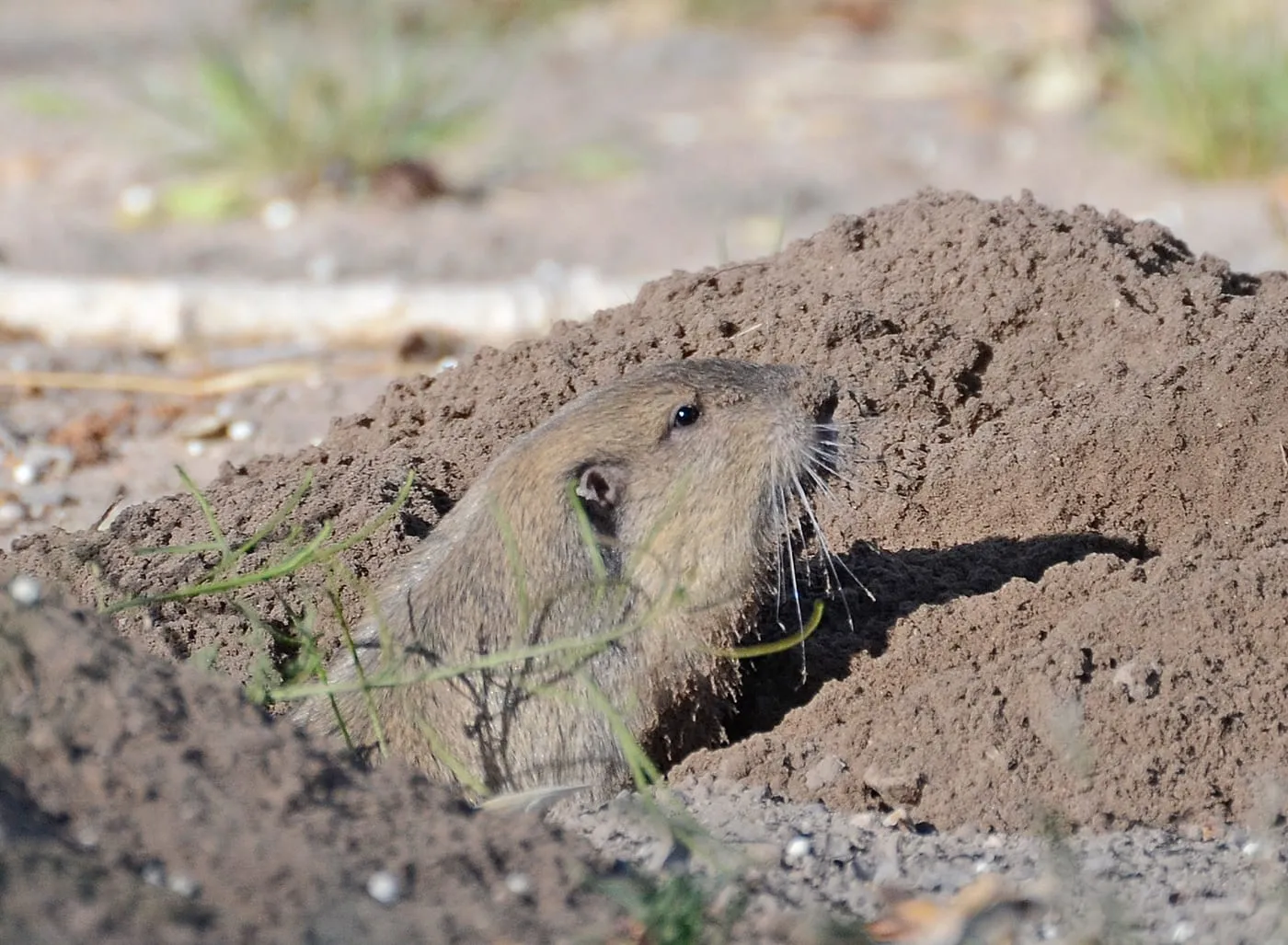
Key signs of gophers
- Fan- or crescent-shaped mounds of fresh soil, typically 8–24 inches across, with a round soil plug offset to one side
- No open hole — gophers plug their tunnel entrances with soil after each digging session
- Plants pulled partly or completely underground, sometimes visibly wobbling before they vanish
- Vegetables, roots, and bulbs eaten from below; whole rows of a garden failing in sequence
- Fresh mounds appearing in a line or cluster as the gopher extends one tunnel system
- Gnawed plastic irrigation lines or buried drip tubing in the tunnel zone
Compare gophers with other visitors in our animal tracks chart and yard hole size chart.
What the evidence looks like
| Sign | What it looks like | Where you'll find it |
|---|---|---|
| Fan-shaped mound | A half-moon or fan of soil spread out from a low point, with a round plug of dirt at the flat side — not a symmetric cone | Lawns, gardens, orchards, and field edges; often several mounds along one tunnel line |
| Soil plug | A circle of packed soil about 2–3 inches across, slightly off-center at the edge of the mound, capping the tunnel | On the flatter side of each fresh mound |
| Disappearing plants | A plant that wilts overnight, tips sideways, or is pulled straight down into the soil, roots first | Vegetable gardens, flower beds, and around young trees and vines |
| Chewed buried lines | Tooth-marked or severed drip lines, irrigation tubing, or utility wire insulation underground | Anywhere tunnels cross buried lines, often found when a leak appears |
Habits worth knowing
Pocket gophers — named for the fur-lined cheek pouches they use to carry food — are burrowing rodents found mostly in the western two-thirds of the US, with the highest densities in California, the Southwest, the Great Plains, and the Pacific Northwest. If you live in the Northeast, mounds in your lawn are far more likely to be moles.
Gophers live alone in extensive sealed tunnel systems that can cover several hundred to a couple thousand square feet, with feeding tunnels 6–12 inches down and deeper chambers below. They eat roots they encounter while digging and pull entire plants down from below — they're strict vegetarians, unlike insect-eating moles.
One gopher can build one to three mounds a day when actively digging, and activity continues year-round, typically peaking in spring and fall. Because they're solitary and territorial, removing the resident animal often solves the problem — until a neighbor's gopher finds the vacant tunnel system.
Often confused with
- Moles — Mole mounds are symmetric volcano-shaped cones with no plug, paired with raised surface ridges; gopher mounds are fans or crescents with an offset soil plug and no ridges. Moles eat grubs and worms, gophers eat your plants.
- Voles — Voles work at the surface — chewed runways through the grass and open 1–1.5 inch holes with no mounds. Gophers work from below, leaving large plugged mounds and pulling plants underground.
What to do now
- Confirm gophers by mound shape: look for the fan or crescent with an offset soil plug, and no raised surface ridges anywhere
- Find the active tunnel: knock open a fresh mound's plug and check back — a gopher usually reseals a breached tunnel within a day, confirming residence
- Protect what matters most with underground barriers: line raised beds with 1/2-inch hardware cloth and plant young trees and prized plants in wire gopher baskets
- Level old mounds and reseed so they don't smother the grass beneath them
- Consider tolerating activity at the far edges of a large property — gopher digging aerates and mixes soil, and one animal's range is limited
- For active damage in lawns or gardens, call a licensed wildlife or pest control professional about trapping — the most reliable, targeted control, and one regulated differently by state
What not to do
- Don't use poison baits casually — misplaced bait and poisoned gopher carcasses kill pets, owls, and other wildlife, and several states restrict these products to certified applicators
- Don't try gas-cartridge or engine-exhaust fumigation near your house, deck, or any structure — it's dangerous and often illegal in residential settings
- Don't waste money on sonic spikes, chewing gum, or repellent home remedies; controlled testing shows little to no effect
- Don't flood the burrow system near foundations or slopes — you'll saturate the soil and risk erosion long before you evict the gopher
Frequently asked questions
How do I tell a gopher mound from a mole mound?
Shape and plug. A gopher mound is a fan or crescent with a round soil plug offset to one side; a mole mound is a symmetric volcano cone with no plug. Moles also leave raised surface ridges, which gophers never do.
How many gophers do I have?
Usually one per tunnel system — gophers are solitary and territorial. Even a yard with a dozen fresh mounds may host a single animal, since one gopher can push up several mounds a day. Multiple animals show up as separate mound clusters spaced well apart.
Will gophers damage my irrigation or utility lines?
They can. Gophers gnaw buried drip lines, sprinkler tubing, and occasionally cable or wire insulation as they tunnel. An unexplained wet spot or pressure drop in an irrigation zone with fresh mounds nearby is worth investigating.
Do gophers ever leave on their own?
Rarely, as long as food and diggable soil remain. And because tunnel systems outlast their owners, a vacated system is often claimed by a new gopher within weeks. Barriers around beds and trees are the durable fix; trapping handles the current resident.