Signs of Voles in Your Yard (and What to Do)
The telltale signs of voles are narrow runways chewed through the grass at the surface, small open holes about 1–1.5 inches across with no mound of soil, and bark gnawed from the base of trees and shrubs. Unlike moles, voles eat plants — bulbs, roots, stems, and bark — and they travel on the surface, not in raised tunnels.
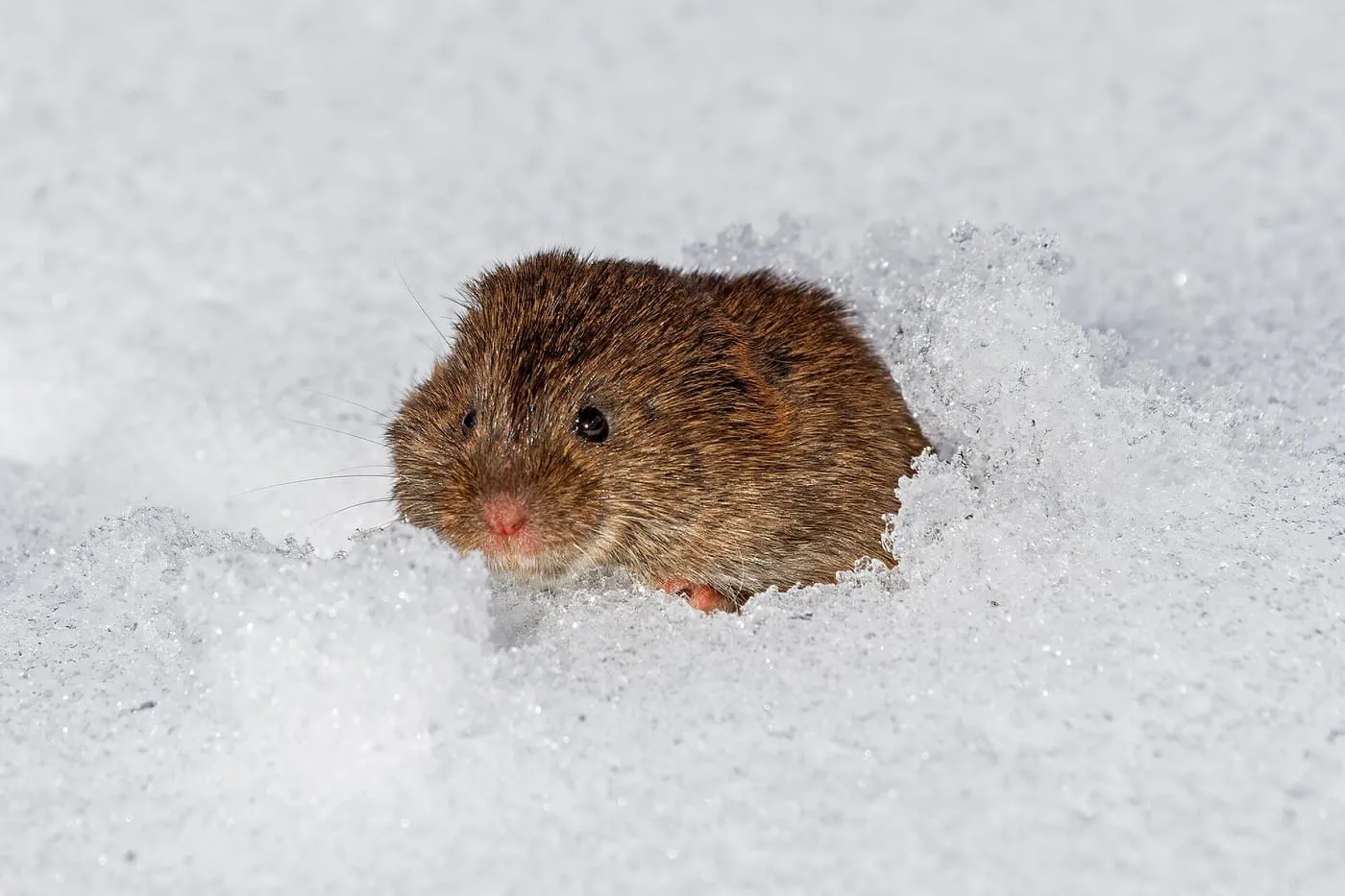
Key signs of voles
- Surface runways about 1–2 inches wide chewed through grass and thatch, like a miniature trail network
- Clean, open holes 1–1.5 inches in diameter with no soil mound beside them, often where runways meet
- Bark gnawed from the base of young trees and shrubs in a band at or just above the old snow line — a spring discovery after the melt
- Tulip, crocus, and other bulbs eaten or vanished, sometimes with the plant top left sitting loose
- Plants that wilt suddenly because the roots below have been eaten
- Runway damage that appears worst in spring when snow melts and reveals a winter's worth of trails
Compare voles with other visitors in our animal tracks chart and yard hole size chart.
What the evidence looks like
| Sign | What it looks like | Where you'll find it |
|---|---|---|
| Surface runways | Bare, trampled paths 1–2 inches wide winding through the grass, with clipped stems and sometimes droppings along them | In taller grass, under mulch, along fences, and beneath anything that offers cover |
| Open burrow holes | Neat round holes 1–1.5 inches across with no dirt mound — like someone pushed a broom handle into the lawn | Along runways, in flower beds, and under shrubs and groundcover |
| Girdled bark | Bark chewed away in an irregular band near the ground, exposing pale wood with tiny paired tooth marks | Base of young fruit trees, ornamentals, and shrubs — most visible after snowmelt |
| Missing or hollowed bulbs | Bulbs gone or gnawed hollow from below; plants pull out of the soil with no roots attached | Flower beds and vegetable gardens, especially near dense mulch |
| Snowmelt trail network | A maze of dead, matted trails across the lawn revealed as snow recedes | Open lawn areas that were snow-covered all winter |
Habits worth knowing
Voles (often called meadow mice) are small, stocky rodents that live at the surface and just below it, eating grass, seeds, roots, bulbs, and bark. They are active day and night, year-round — including under snow, which is why girdled trees and lawn trails show up as unpleasant spring surprises.
Vole populations boom and crash on a roughly 3–5 year cycle. In a peak year a yard can host dozens, since a female can raise several litters between spring and fall. That's the opposite of moles, which live alone — heavy, widespread plant damage points to voles.
Voles rarely enter houses (that's mice) and rarely dig deep tunnels of their own. They love cover: tall grass, dense groundcover, heavy mulch, and abandoned mole tunnels, which they happily take over as ready-made highways to your plants.
Often confused with
- Moles — Moles leave raised ridges and volcano-shaped mounds and eat only insects and worms; voles leave open holes and chewed surface trails with no mounds, and they eat plants, bulbs, and bark.
- Mice — Mice are slimmer with big ears and long tails, and they head indoors for food and shelter; voles are chunky, short-tailed, and stay outside eating your lawn and garden. Droppings inside the house mean mice, not voles.
What to do now
- Confirm voles with the apple test: place a slice of apple under an upside-down flower pot along a runway and check for tooth marks within a day
- Cut off their cover — mow tall grass, pull mulch back 3 feet from tree trunks, and keep a mowed buffer around beds; voles avoid open ground where hawks and owls can see them
- Protect young trees with hardware-cloth cylinders (1/4-inch mesh) sunk a few inches into the soil and rising above the expected snow line
- Plant bulbs in wire baskets or add sharp gravel to planting holes to protect them
- Repair the lawn in spring: rake out dead trail grass and overseed — runway damage almost always grows back
- For a heavy infestation or repeated tree girdling, call a licensed wildlife or pest control professional about a trapping program
What not to do
- Don't scatter rodenticide baits in the open — they're a serious hazard to pets, children, and the owls and hawks that eat voles, and many products are restricted to enclosed bait stations by law
- Don't rely on sonic spikes or repellent granules alone; evidence for both is weak, especially at high vole populations
- Don't pile mulch against tree trunks ('mulch volcanoes') — you're building a covered vole diner around the bark
- Don't assume one dramatic-looking trail network means an army forever; populations crash naturally, and habitat cleanup does most of the work
Frequently asked questions
How do I tell vole damage from mole damage?
Look for what's missing and what's raised. Moles raise ridges and push up mounds but never touch plants; voles leave flat, chewed trails and open holes with no mounds, and plants, bulbs, or bark show tooth marks. If both signs appear, you may have both — voles often move into mole tunnels.
Will voles kill my trees?
They can. If voles girdle bark all the way around a trunk, the tree can't move nutrients and may die. Young fruit trees and thin-barked ornamentals are most at risk over winter, which is why mesh trunk guards and pulled-back mulch matter most in fall.
How many voles are in my yard?
It varies wildly with the population cycle — from a handful to dozens in a peak year. A dense runway network with fresh grass clippings and droppings in the trails suggests a high population; a few old trails after snowmelt may be just a few animals that have already moved on.
Do voles ever come inside the house?
Almost never. Voles are outdoor grass specialists. If you have droppings, nesting material, or scratching sounds indoors, you're dealing with mice — a different problem with a different fix.