Signs of Mice in Your Yard and Home (and What to Do)
The classic mouse signs are tiny droppings about 1/4 inch long with pointed ends, a stale musky smell in enclosed spaces, shredded paper or insulation gathered into nests, and light scratching in walls at night. Rat sign is the same story at twice the scale; outdoors-only trail damage in the grass points to voles instead.
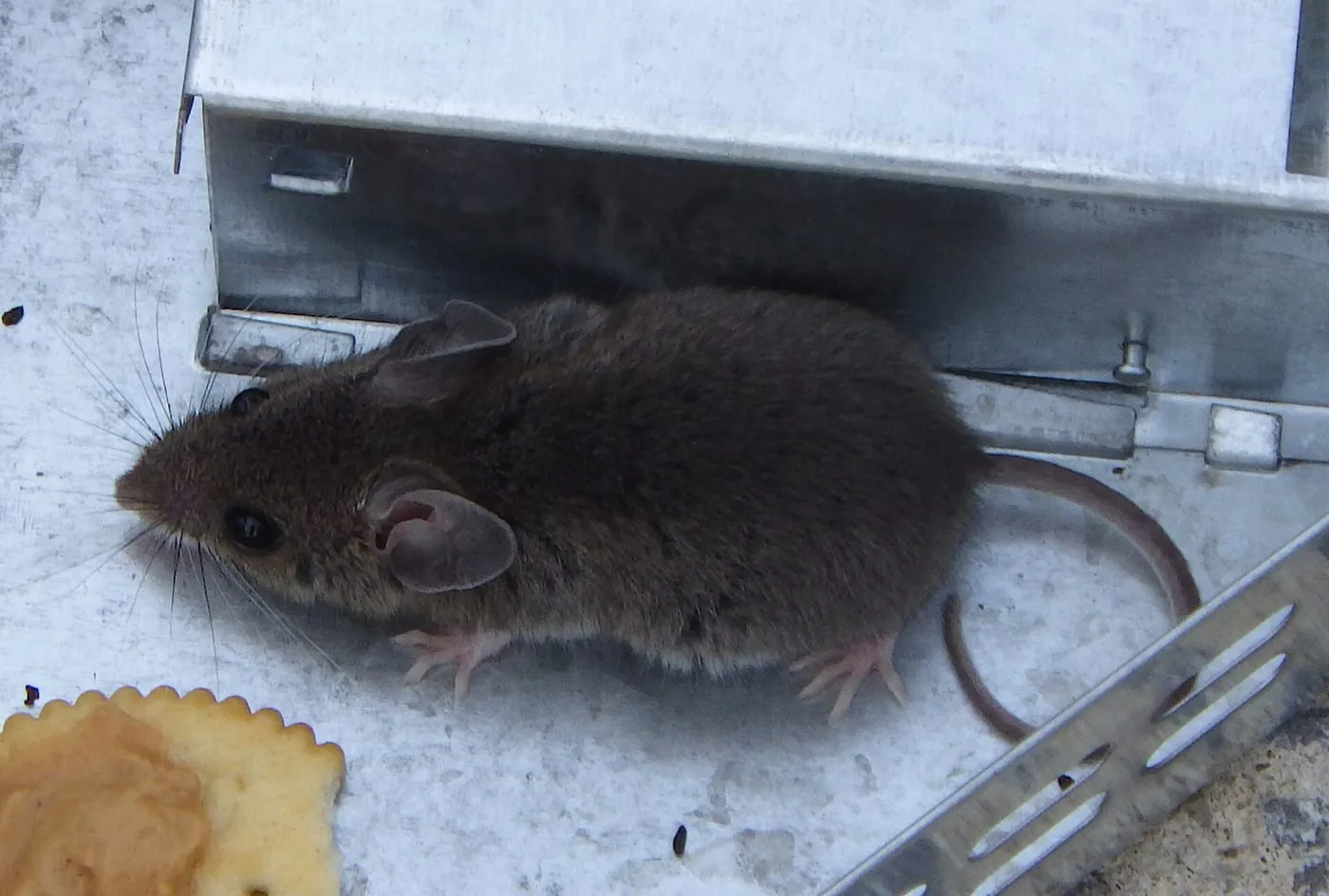
Key signs of mice
- Droppings about 1/4 inch long with pointed ends — rice-grain size — concentrated in drawers, under sinks, along garage walls, and in the shed
- A musky, stale ammonia smell in closed spaces like cabinets, garages, and storage boxes
- Nests of shredded paper, fabric, or fluffed insulation packed into hidden cavities, drawers, or stored gear
- Gnaw marks and small chewed holes about the size of a dime in food packaging, boxes, and door corners
- Light scratching, gnawing, or skittering in walls and ceilings at night, especially in fall as weather cools
- Greasy smudges and tracks along baseboards and sill plates on habitual routes
- Entry gaps as small as 1/4 inch — around pipes, cables, garage door corners, and foundation vents
Compare mice with other visitors in our animal tracks chart and yard hole size chart.
What the evidence looks like
| Sign | What it looks like | Where you'll find it |
|---|---|---|
| Pointed 1/4-inch droppings | Dark pellets the size of a grain of rice with tapered ends; fresh ones are soft and glossy, old ones gray and crumbly | Cabinet corners, drawers, under sinks, garage and shed walls, pantry shelves |
| Musky odor | A stale, ammonia-like smell that hits when you open a cabinet, storage bin, or seldom-used room | Enclosed, low-ventilation spaces where mice nest and urinate repeatedly |
| Shredded nest | A loose softball-size wad of shredded paper, string, fabric, or insulation, often with droppings and food debris around it | Wall voids, drawers, stored boxes, grills, vehicle engine bays, and under appliance bases |
| Dime-size gnaw holes | Small, rough-edged holes with fine tooth marks in cereal boxes, seed bags, and soft wood | Pantries, garages where birdseed and pet food are stored, shed corners |
| Night scratching | Faint scrabbling and gnawing after dark, quiet during the day | Inside walls, ceilings, and floors, often near the kitchen or an exterior wall |
Habits worth knowing
The house mouse is the main indoor culprit nationwide, joined by deer mice and white-footed mice in suburban and rural areas — the native species that nest in sheds, garages, woodpiles, and stored campers. All are nocturnal, which is why the evidence (droppings, gnawing, smell) usually shows up long before the animal does.
Mice live within a tiny range — often 10 to 30 feet of the nest — and breed extremely fast: a female can produce a litter of 5–6 pups every month or so in good conditions. A few droppings in October can be a full infestation by January, which is why early sealing and trapping beat waiting.
Fall is invasion season. As nights cool, mice move from yards into structures through gaps as small as 1/4 inch — a pencil-width opening is enough. Outdoors they eat seeds and insects; indoors they nibble many small meals a night from crumbs, pet food, and pantry goods, contaminating far more than they eat.
Often confused with
- Rats — Rat sign is mouse sign scaled up: droppings 1/2–3/4 inch with blunt ends instead of 1/4 inch and pointed, louder noises, bigger gnaw holes, and worn burrows outside. If droppings look bigger than a grain of rice, treat it as rats.
- Voles — Voles stay outdoors, carving runways through grass and gnawing bark and bulbs — they don't nest in walls or pantries. Indoor droppings, musky smell, and shredded nests mean mice, not voles.
What to do now
- Confirm activity: sweep up (safely — see the warning) or mark existing droppings, then check for fresh dark glossy ones in a day or two; a flashlight held low will also reveal tracks and smudges along baseboards
- Remove food: store pantry goods, pet food, and birdseed in sealed metal or heavy plastic containers, wipe up crumbs nightly, and don't leave pet bowls out overnight
- Seal the building: stuff gaps around pipes and cables with copper mesh or steel wool backed by caulk, install door sweeps and garage-door corner seals, and screen vents — check everything a pencil could slip through
- Trap along walls: snap traps set perpendicular to baseboards with the trigger against the wall, baited with peanut butter, in the areas with droppings; expect the first nights to matter most and keep trapping until a week passes with no catches
- Tidy the yard perimeter: move woodpiles and dense vegetation off the foundation, elevate stored lumber, and keep grass short along walls so mice lose their covered approach
- If catches keep coming after two weeks, droppings appear in new rooms, or you can't find the entry points, bring in a licensed pest control professional for a full exclusion and trapping program
What not to do
- Don't sweep or vacuum dry droppings — that can aerosolize hantavirus from deer mouse droppings; wet everything first with disinfectant and wear gloves
- Don't put rodenticide bait around the house casually — poisoned mice die in walls and smell for weeks, and loose bait endangers children, pets, and wildlife; if bait is warranted, it belongs in tamper-resistant stations, ideally placed by a professional
- Don't rely on ultrasonic plug-in repellers — controlled testing shows mice habituate quickly and keep right on nesting
- Don't use glue traps if you can avoid them; they're inhumane, catch non-targets, and a stuck live mouse is a miserable problem to face
- Don't seal entry points while mice are still active inside — trap first, seal as activity ends, or you'll drive them deeper into the walls
Frequently asked questions
How do I know if it's one mouse or an infestation?
Count locations, not mice. Droppings in one cabinet suggest a new arrival; droppings in multiple rooms, a persistent smell, or noise from several walls indicate an established, breeding population. Mice multiply monthly, so treat even 'one mouse' as urgent.
How small a gap can a mouse fit through?
About 1/4 inch — the width of a pencil. If a pencil slips under a door or into a gap around a pipe, a young mouse can follow. That's why exclusion means crawling the foundation line and garage with a flashlight, not just closing the obvious holes.
What's the difference between mouse and rat droppings?
Mouse droppings are 1/4 inch or less with pointed ends, like dark rice grains. Rat droppings are two to three times bigger — 1/2 to 3/4 inch — thick and blunt-ended, like raisins. The distinction matters because rat control requires heavier traps and different tactics.
Do mice in the yard mean mice in the house?
Not necessarily — deer mice and white-footed mice live outdoors year-round and may never come in. But every fall cold snap sends some looking for warmth, so outdoor sign near the foundation is your cue to seal gaps and secure garage food before the migration, not after.
Will a cat solve my mouse problem?
Usually not. Cats catch the bold mice and suppress activity in open rooms, but they can't reach nests in walls and voids where breeding continues. Cats are a deterrent at best; sealing entry points and removing food are the actual fix.