Signs of Moles in Your Yard (and What to Do)
The two telltale signs of moles are volcano-shaped mounds of fluffy soil with no visible entry hole, and raised ridges of turf that feel soft when you step on them. Moles are insect-eaters, not plant-eaters — so if something is also chewing your plants, you're likely dealing with voles or another animal instead.
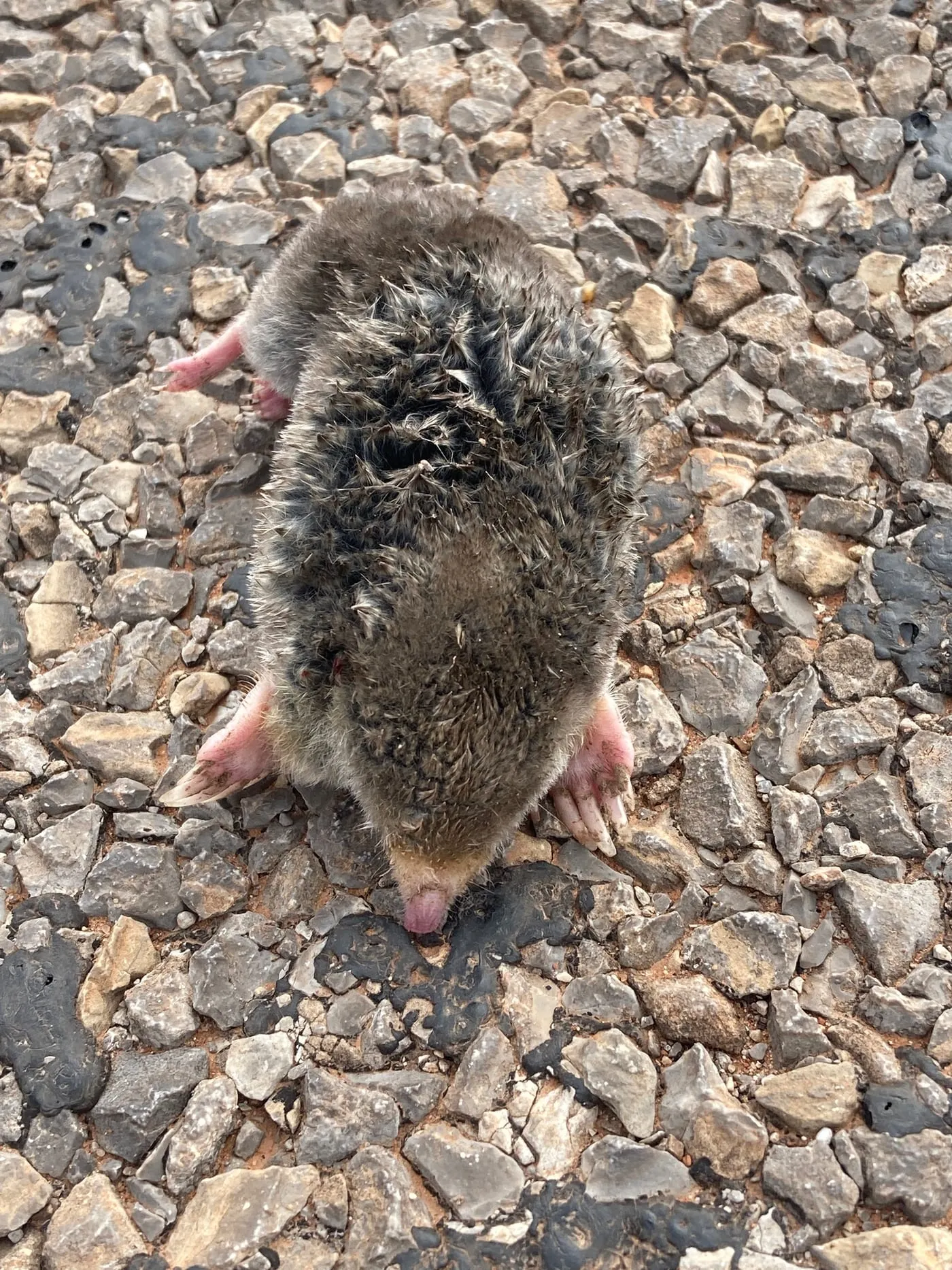
Key signs of moles
- Volcano- or cone-shaped mounds of loose, fluffy soil, 4–8 inches tall, with no open hole on top
- Raised surface ridges snaking across the lawn that collapse slightly underfoot
- Mounds and ridges that multiply after rain, when digging is easier and grubs ride high
- Spongy, uneven turf in the tunneled areas
- No chewed plants or gnawed bark — moles eat grubs and earthworms, not vegetation
- Activity concentrated in moist, shaded, worm-rich areas of the lawn
Compare moles with other visitors in our animal tracks chart and yard hole size chart.
What the evidence looks like
| Sign | What it looks like | Where you'll find it |
|---|---|---|
| Volcano-shaped mound | A cone of fluffy, clod-free soil pushed straight up, like a tiny volcano with no crater hole | Scattered across the lawn, often in lines following a deep tunnel |
| Raised feeding tunnels | A snaking ridge of lifted turf about 2 inches wide, soft when pressed | Just under the grass surface, especially in moist or shaded areas |
| Spongy lawn | Ground that gives or sinks slightly with each step | Anywhere the shallow tunnel network runs |
| Fresh soil after rain | New mounds appearing overnight following wet weather | Same tunnel lines reactivated again and again |
Habits worth knowing
Moles are solitary insectivores that spend almost their entire lives underground, eating earthworms, grubs, and soil insects — an adult can eat close to its own body weight daily. They dig two kinds of tunnels: shallow surface runs used for feeding (the raised ridges you see) and deeper permanent tunnels connected to the mounds.
A typical yard hosts only one to three moles, even when the damage looks like an army. Activity peaks in spring and fall when soil is moist and worms are near the surface; in summer heat and winter cold, moles simply follow the worms deeper, which is why damage seems to vanish and return.
Because moles don't eat plants, their damage is cosmetic — tunnels and mounds — though their digging can disturb roots and their runways are often taken over later by voles, which do eat plants.
Often confused with
- Voles — Voles leave open 1–1.5 inch holes and surface runways chewed through the grass itself, with no mounds — and they eat plants, bulbs, and bark, which moles never do.
- Gophers — Pocket gophers build fan- or crescent-shaped mounds with a visible soil plug to one side; mole mounds are symmetric volcanoes with no plug. Gophers also pull whole plants underground.
What to do now
- Confirm it's moles: press a section of raised ridge flat, mark it, and check within a day or two — reopened ridges mean an active feeding tunnel
- Rake out mounds and press ridges back down so grass roots re-contact the soil; most turf recovers
- Reduce the food supply gradually — a heavily grub-infested lawn keeps the buffet open (check for grubs under any dead patches)
- Tolerate light activity if you can: moles aerate soil and eat lawn pests, and populations are naturally small
- For persistent damage, contact a licensed wildlife control professional about trapping — the only consistently effective control, and regulated differently by state
What not to do
- Don't use chewing-gum, glass, or home-remedy tricks — none have any evidence behind them
- Don't buy grub killer solely to starve moles; earthworms (which you want) are their main food, so results are often disappointing
- Don't flood tunnels with a hose near your foundation — you'll soak the soil and rarely evict the mole
- Don't use poison baits or fumigants without checking local law; many are restricted, and misuse endangers pets and wildlife
Frequently asked questions
How many moles are actually in my yard?
Almost always fewer than you think — usually one to three. Moles are solitary and territorial, and a single animal can dig up to 100 feet of tunnel in a day, so one mole can look like an infestation.
Do moles eat plant roots or bulbs?
No. Moles are insectivores that eat earthworms, grubs, and soil insects. If bulbs are disappearing or roots are gnawed, suspect voles — they frequently use mole tunnels as ready-made highways to your plants.
Will the mole damage go away on its own?
Activity often fades in mid-summer and mid-winter when moles follow worms deeper, then returns in spring and fall. The tunnels themselves are easy to repair: press ridges down, rake mounds out, and overseed thin spots.
Do the sonic spikes and repellent granules work?
Independent testing has found little to no lasting effect from sonic devices. Castor-oil-based repellents show mixed results and need frequent reapplication. Trapping by someone experienced remains the most reliable option.