Little Red Bugs: What They Are and Whether They Bite
Tiny red bugs are usually clover mites, chiggers, red velvet mites, or red aphids, and where you find them tells you which. Bright-red specks massing on sunny walls, windowsills, and concrete are harmless clover mites that do not bite. Itchy welts after sitting in grass point to chiggers, the one type in this group whose bite you'll actually feel.
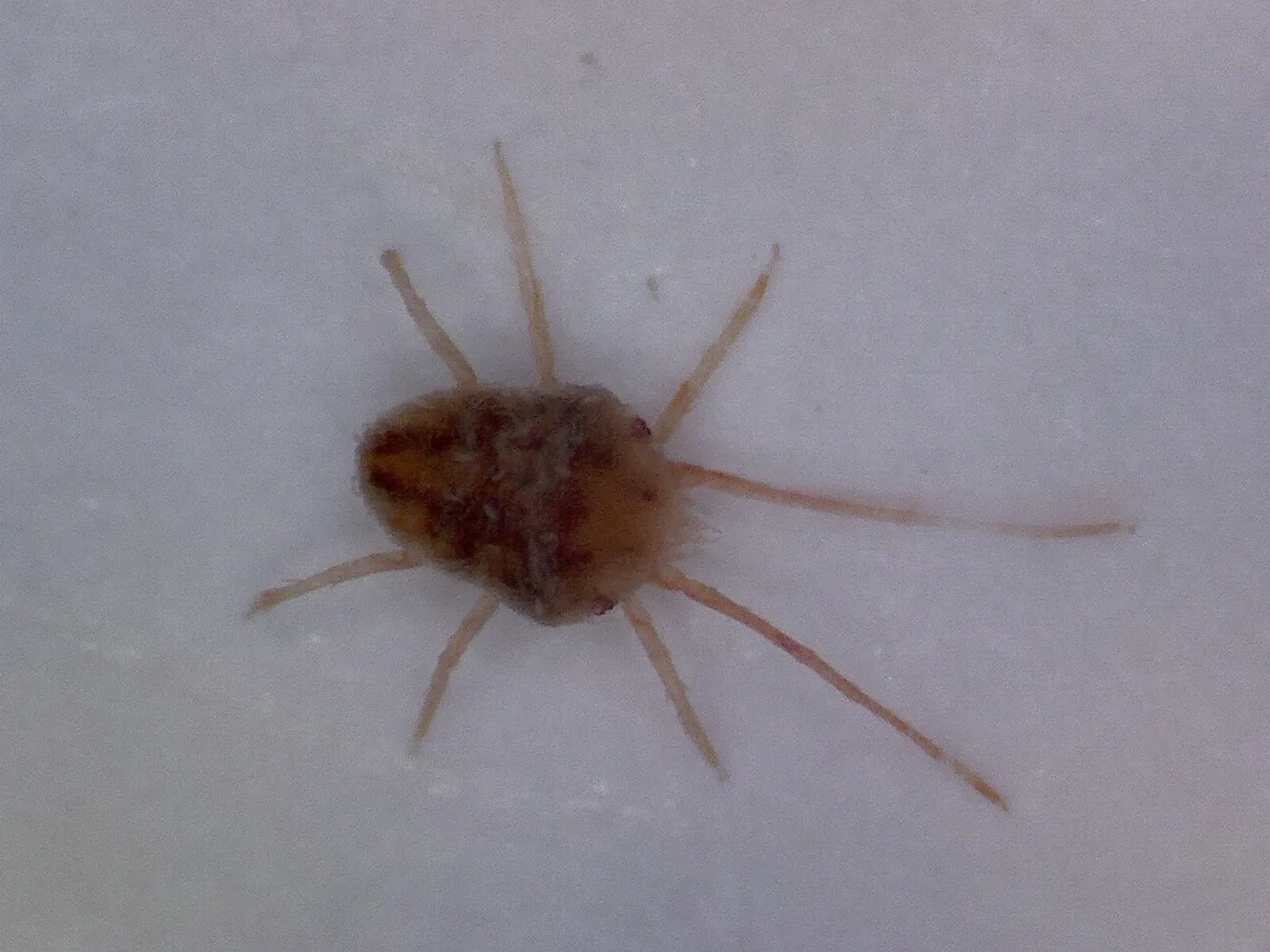
Most likely causes
- Clover mites — bright-red specks swarming sunny walls, windowsills, and concrete
- Chiggers — nearly invisible larvae in grass and weeds that cause itchy bites
- Red velvet mites — larger, plush-looking red mites in soil and mulch, harmless
- Red aphids — soft red bugs clustered on plant stems and leaf undersides
- Boxelder bug nymphs — small red-and-black young bugs near boxelder trees
Not quite what you're seeing? Answer four quick questions and the clue finder will point you to a closer match.
Compare the possible causes
| Possible cause | Key signs | When it happens | How likely |
|---|---|---|---|
| Clover mites | Pinhead-sized bright-red or rust-colored specks moving in large numbers across sunny south- and west-facing walls, windowsills, patios, and driveways | Peaks in cool weather of spring and again in fall | Very common |
| Chiggers | You rarely see them — the first sign is clusters of intensely itchy red welts on ankles, legs, or the waistline after time in grass or weeds | Warm, humid weather from late spring through summer and early fall | Common |
| Red velvet mites | A larger, plush, brilliant-red mite the size of a pinhead or bigger, moving slowly across soil, mulch, or a garden path — usually seen alone | Emerge in warm, damp weather, often after rain in spring and summer | Less common |
| Red aphids | Soft, pear-shaped red or orange bugs clustered tightly on stems and the undersides of leaves, sometimes with sticky residue nearby | Spring through summer during active plant growth | Common |
| Boxelder bug nymphs | Small, wingless young bugs that are mostly bright red with dark markings, gathering on warm surfaces near boxelder, maple, or ash trees | Spring and summer as the young develop | Less common |
Visual clues to check
- Check the location first: red specks on sunny concrete, brick, or windowsills almost always mean clover mites
- Note whether you felt a bite: harmless mites don't bite, so itchy welts after grass or weeds point to chiggers
- Look at the size: pinhead specks in a mass are clover mites; a single larger, velvety-red mite is a red velvet mite
- Inspect your plants: red bugs clustered on stems and leaf undersides with sticky residue are aphids
- Try the smear test carefully: clover mites leave a red streak when wiped, which confirms the ID but also stains
- Look for black markings: red bugs with dark spots near a boxelder or maple tree are likely boxelder bug nymphs
The causes in detail
Clover mites
Clover mites are the number-one answer when the 'bugs' are tiny red dots massing on concrete or around windows. They feed on grass and clover, not on people, and they do not bite or damage the home. Their only nuisance is numbers and the fact that they leave a red stain if you crush them, so wipe rather than squash. They wander indoors through gaps but soon die without their plant food.
Chiggers
Chiggers are the microscopic larvae of a type of mite, and they are the one red bug in this group that truly bites. They latch onto skin in tall grass, weedy edges, and brush, feeding for a day or two before dropping off and leaving small itchy welts. They do not burrow into skin or live in your home. If a reaction is severe, spreading, or looks infected, that's a question for a doctor, not a website.
Red velvet mites
Red velvet mites look striking with their fuzzy, vivid-red bodies, and they're one of the good guys. They live in soil and leaf litter, where they eat other small insects and their eggs, helping keep pest numbers down. They don't bite people, don't harm plants, and are best left alone when you spot one crossing the garden.
Red aphids
If the little red bugs are on your plants rather than your walls, they're most likely aphids — often the red or oleander type. They gather in colonies on tender new growth and leaf undersides, sucking sap and leaving a sticky film called honeydew. A strong spray of water or encouraging ladybugs usually keeps them in check without reaching for chemicals.
Boxelder bug nymphs
Immature boxelder bugs are more red than the black-and-red adults, so a cluster of them is easy to mistake for a generic red-bug outbreak. They feed on tree seeds and are a harmless nuisance, though they can gather in large numbers on sunny walls. The adults are the familiar black bugs with red lines you see swarming homes in fall.
When to worry
- Itchy welts that are spreading, blistering, or showing warmth, swelling, or other signs of infection
- Clover mites entering the home in large numbers through gaps around windows and doors
- Aphid colonies exploding on prized plants, curling new growth, and coating leaves in sticky honeydew
- Repeated chigger bites every time you use the yard, suggesting heavy activity in the grass and weedy edges
What to do now
- For clover mites, seal cracks and gaps around windows, doors, and the foundation to keep them outside
- Wipe clover mites up with a damp cloth or vacuum them rather than crushing them, since they leave red stains
- Reduce lush, well-watered growth right against the foundation, which is where clover mites tend to build up
- Shower and change clothes after time in tall grass to remove chiggers before they can bite
- Knock aphids off plants with a firm spray of water and encourage natural predators like ladybugs before considering anything stronger
- If itchy bites are severe or you're unsure what bit you, that's a conversation for a doctor
What not to do
- Don't crush clover mites on light-colored walls, carpet, or countertops — they leave a stubborn red stain
- Don't scratch chigger bites; scratching prolongs the itch and can lead to infection
- Don't blanket the yard or home with pesticide before you've identified which red bug you actually have
- Don't assume all tiny red bugs bite — most in this group are harmless, and only chiggers cause the itchy welts
Frequently asked questions
Do little red bugs bite?
It depends on which one you have. The clover mites and velvet mites that swarm walls and soil do not bite and are harmless. The exception is chiggers, tiny mite larvae in grass and weeds, which bite and leave itchy welts.
What are the tiny red bugs on my concrete and windowsills?
Bright-red specks massing on sunny concrete, brick, patios, and around windows are almost always clover mites. They feed on grass and clover, not on people or the house, and they simply wander onto warm surfaces in spring and fall. They don't bite, but they leave a red stain if crushed, so wipe or vacuum them up instead.
Are little red bugs dangerous to people or pets?
The common ones are not. Clover mites, red velvet mites, and aphids don't bite people or pets and carry no known disease. Chigger bites are itchy and annoying but not dangerous for most people, though a severe or infected reaction is worth a doctor's attention.
How do I get rid of little red bugs on my house?
For clover mites on the exterior, seal cracks around windows and doors, vacuum any that get inside, and cut back lush vegetation against the foundation where they build up. Avoid crushing them so you don't create red stains, and skip broad pesticide spraying, which usually isn't needed for a temporary seasonal nuisance.