Jumping Worms in Soil: Coffee-Ground Dirt and Thrashing
Worms that thrash violently and whip side to side like a snake when uncovered, plus soil that looks like dry coffee grounds, are the two dead giveaways of invasive Asian jumping worms. They're harmless to people and pets but strip nutrients and ruin soil structure, so the goal is to confirm them, remove them, and avoid moving your soil or mulch elsewhere.
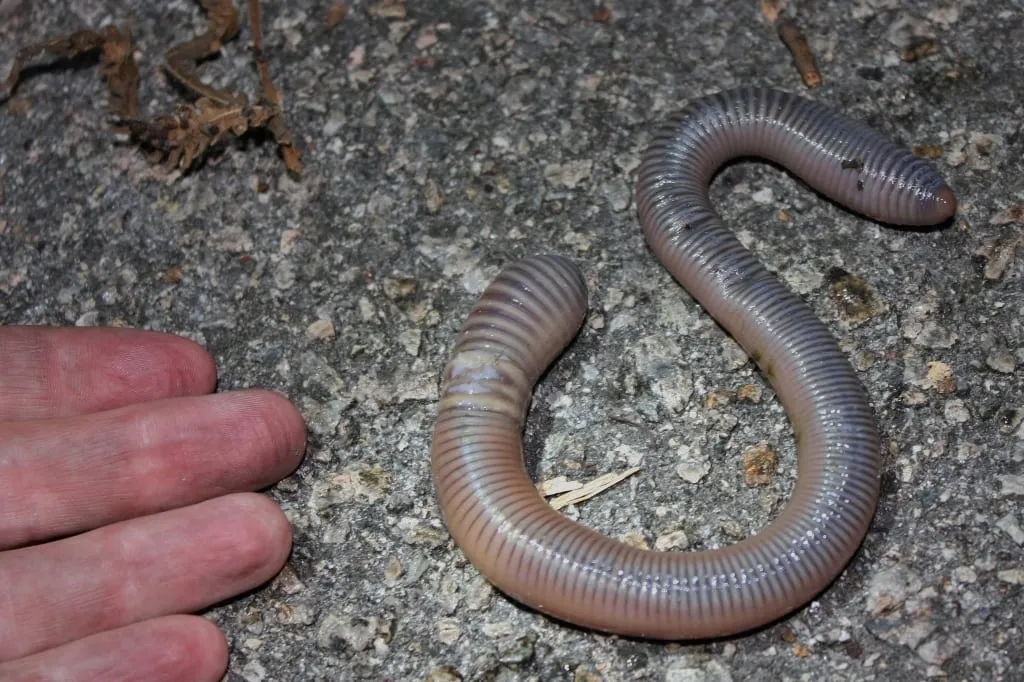
Most likely causes
- Asian jumping worms — thrash like a snake, leave coffee-ground soil, band is white and flush with the body
- Nightcrawlers — slower, with a raised pinkish saddle band, not the thrashing behavior
- Coffee-ground castings on the surface — dry, uniform, granular top layer in beds and mulch
- Loose, depleted soil — structure breaks down and turns crumbly where jumping worms feed
Not quite what you're seeing? Answer four quick questions and the clue finder will point you to a closer match.
Compare the possible causes
| Possible cause | Key signs | When it happens | How likely |
|---|---|---|---|
| Asian jumping worms (crazy or snake worms) | When uncovered they thrash violently and whip from side to side like a small snake, and may shed the tip of their tail to escape | Present all season but most obvious and mature in late summer and fall | Very common |
| The band (clitellum) test | A milky-white to gray band that is smooth, flush with the body, and completely encircles the worm close to the head | Visible on mature worms, which show up in late summer and fall | Common |
| Coffee-ground castings in the soil | A uniform, dry, granular layer on the surface that looks exactly like coffee grounds or spent hamster bedding | Builds up through summer and is most noticeable by fall | Very common |
| Loose, depleted soil | Soil that has lost its crumb structure and become loose, grainy, and stripped of nutrients where plants once grew well | Progresses over a season, worst in heavily infested beds by fall | Common |
Visual clues to check
- Uncover a worm and watch it move: violent side-to-side thrashing like a snake means a jumping worm, not a nightcrawler
- Look at the band: pale, smooth, and encircling the body means jumping worm; raised, pink, and saddle-shaped means nightcrawler
- Check the soil surface for a dry, uniform, coffee-ground or hamster-bedding texture
- Dig only the top 3 inches: jumping worms stay shallow in soil, leaf litter, and mulch
- Note the season: these worms are hardest to miss in late summer and fall when they're mature
- Feel the skin and color: jumping worms are smooth, glossy, and dark gray-brown, sometimes with a metallic sheen
The causes in detail
Asian jumping worms (crazy or snake worms)
These invasive earthworms, in the Amynthas group, are 1.5 to 8 inches long, smooth, glossy, and dark gray-brown, sometimes with a faint metallic sheen. The wild, snake-like thrashing is unlike any native worm and is the fastest way to know what you're dealing with. They live in the top few inches of soil, in leaf litter, and especially in mulch.
The band (clitellum) test
The band is the single most reliable feature for telling a jumping worm from a common nightcrawler. On a nightcrawler the band is raised, saddle-shaped, and pinkish, sitting only on the top of the body. On a jumping worm it is pale, smooth, flush with the skin, and wraps all the way around, sitting closer to the head.
Coffee-ground castings in the soil
This is often the first thing gardeners notice before they ever see a worm. Jumping worms process organic matter so aggressively that they leave behind a loose, pebbly top layer with no structure. Beds and mulched areas take on a fluffy, dry, coffee-ground texture that erodes easily and holds water poorly.
Loose, depleted soil
By racing through leaf litter and topsoil, jumping worms consume the organic matter that plants and beneficial fungi depend on. The result is soil that looks tilled but is actually depleted, so plantings and lawns can struggle even with normal watering. Unlike helpful earthworms, these worms degrade soil rather than build it.
When to worry
- You confirm the snake-like thrashing and coffee-ground soil, since jumping worms spread quickly through a yard
- You're about to move soil, mulch, compost, or potted plants to a new bed or share them with neighbors
- You recently added bulk mulch or compost that wasn't heat-treated and are now seeing the worms
- Established plantings start declining in soil that suddenly looks loose and grainy
- You buy or trade worms for composting or fishing and aren't sure they're a safe species
What to do now
- Confirm the identification by the snake-like thrashing and the coffee-ground castings before doing anything else
- Hand-pick the worms into a bag, then seal it and leave it in the sun or drop the worms into rubbing alcohol
- Keep your soil, mulch, and potted plants in place instead of moving them to a new area of the yard
- Buy only heat-treated mulch and compost, which kills the tiny cocoons that spread the worms
- Rinse soil off tools, boots, and tires before moving between beds or properties to avoid carrying cocoons
What not to do
- Don't move infested soil, mulch, or potted plants to a new spot — that's the main way jumping worms spread
- Don't buy, share, or dump worms for composting or fishing if they might be jumping worms
- Don't assume every worm helps your garden; jumping worms damage soil rather than improve it
- Don't till infested beds and haul the soil elsewhere, since you'll carry cocoons with it
- Don't accept free bulk compost or mulch of unknown origin for a clean bed without checking that it's heat-treated
Frequently asked questions
How do I tell a jumping worm from a regular earthworm?
Two features give them away. Jumping worms thrash violently and whip side to side like a snake when disturbed, and their band is pale, smooth, and wraps completely around the body close to the head. A nightcrawler moves slowly and has a raised, pinkish, saddle-shaped band that sits only on top.
What does the soil from jumping worms look like?
It looks like dry, uniform coffee grounds or spent hamster bedding sitting on the surface of beds and mulch. The worms process organic matter so fast that the soil loses its crumb structure and becomes loose, grainy, and depleted. That coffee-ground texture is often the first sign people notice.
Are jumping worms harmful to my garden?
They don't harm people or pets, but they are hard on gardens and lawns. By devouring leaf litter and topsoil organic matter, they strip nutrients and ruin the soil structure that plants and beneficial fungi rely on. Plantings can struggle even when you water and feed normally.
How do jumping worms spread to new areas?
They and their tiny cocoons hitch a ride in moved soil, mulch, compost, and potted plants, and even on dirty tools and tires. That's why the key precautions are keeping your soil in place, using only heat-treated mulch and compost, and not sharing worms or plants from an infested yard.