What Is Eating My Petunias? Finding the Hidden Feeder
When something is eating your petunias, the number one suspect is the tobacco budworm — a small caterpillar that chews into buds so the flowers open full of holes or never open at all. Slugs, earwigs, rabbits, and deer are the other common culprits, and a five-minute flashlight check at dusk will usually reveal which one you have.
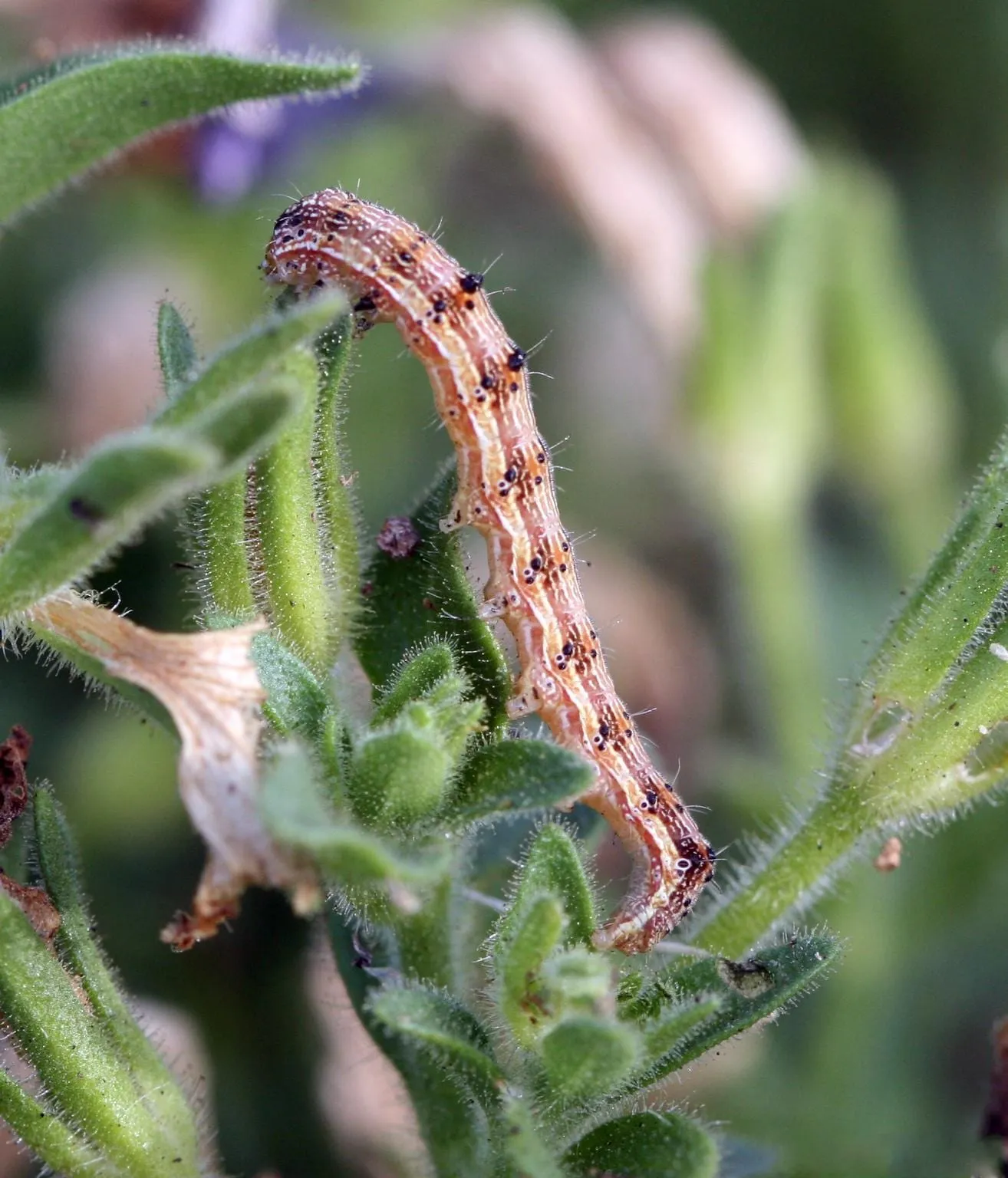
Most likely causes
- Tobacco budworms — holes chewed in buds, flowers that fail to open, worst mid to late summer
- Slugs and snails — ragged holes on lower leaves with shiny slime trails
- Earwigs — nighttime petal damage, insects hiding deep inside blooms by day
- Rabbits — whole plants clipped down to stubs, cleanly cut
- Deer — plants grazed flat or pulled from containers, ragged bites
Not quite what you're seeing? Answer four quick questions and the clue finder will point you to a closer match.
Compare the possible causes
| Possible cause | Key signs | When it happens | How likely |
|---|---|---|---|
| Tobacco budworms | Round holes bored into flower buds, blooms that open pre-shredded or never open, and small dark droppings on the leaves below | Mid to late summer, getting steadily worse from July into September | Very common |
| Slugs and snails | Irregular ragged holes concentrated on lower leaves and blooms, with dried silvery slime trails on foliage, pots, or nearby pavement | Damp spells in spring and summer, on nights after rain or heavy watering | Common |
| Earwigs | Petals with small ragged chew marks after warm nights, and slim brown insects with rear pincers hiding deep inside blooms or under pot rims by day | Early to mid-summer nights, especially in mulched beds and crowded containers | Common |
| Rabbits | Entire stems and plants clipped off cleanly an inch or two above the soil, often overnight, with pea-sized round droppings nearby | Any time in the growing season; new spring plantings are hit hardest | Common |
| Deer | Plants grazed down to ragged stubs or yanked partly out of the ground, sometimes with heart-shaped hoofprints in the bed | Overnight or early morning, year-round wherever deer pressure is high | Less common |
Visual clues to check
- Go out at dusk with a flashlight and check the blooms — budworms and earwigs feed openly in the evening and are easy to spot then
- Inspect the buds: a small round hole bored in the side of an unopened bud is the tobacco budworm's calling card
- Look for pepper-like black droppings on leaves below the flowers — fresh budworm frass means caterpillars are active right above it
- Scan for slime: silvery dried trails on leaves, pot sides, or pavement point to slugs or snails, not insects
- Shake a damaged bloom over your palm — earwigs hiding inside will drop out
- Judge the scale of loss: holes and failed blooms mean insects; entire plants clipped to stubs mean rabbits or deer
- Match caterpillars to blooms: budworms take on their food's color, so check purple flowers for purplish caterpillars, not just green ones
The causes in detail
Tobacco budworms
This is THE classic petunia pest. Budworm caterpillars grow to about three-quarters of an inch and take on the color of what they eat — greenish, tan, even pinkish on red blooms — which makes them remarkably hard to spot in daylight. They bore into buds and eat the flower from the inside, so the plant looks healthy but simply stops blooming. They emerge to feed openly at dusk, which is exactly when to hunt them. Petunias, geraniums, and nicotiana are their favorite targets.
Slugs and snails
Slugs work from the ground up, so damage that starts low and heavy is their signature — a budworm attacks the top of the plant, a slug attacks the bottom. They shelter by day under pots, mulch, and boards, then rasp holes in leaves and petals overnight. The glistening trail is definitive: no insect leaves one. Container petunias on a shady, frequently watered patio are prime territory.
Earwigs
Earwigs are night feeders that adore the tight crevices a trumpet-shaped petunia bloom provides. Shake a damaged flower over your hand and one may tumble out. Their damage is shallower and more scattered than budworm boring — nibbled petal edges rather than holed buds. Despite the menacing pincers, they don't sting and are harmless to people; in modest numbers they even eat aphids.
Rabbits
When petunias vanish wholesale rather than developing holes, think mammal, not insect. Rabbits snip stems at a neat 45-degree angle with their paired incisors and can level a fresh flat of annuals in one night. Ground-level beds and low borders suffer most — rabbits rarely bother hanging baskets or tall containers, which is a useful diagnostic in itself. See all rabbits signs →
Deer
Petunias aren't a deer favorite, but hungry deer eat them readily, especially in late summer when wild forage dries up. Deer tear rather than snip, leaving mashed, ragged stem ends, and they can reach window boxes and raised planters that rabbits can't. Tracks and large oval droppings settle the question quickly. See all deer signs →
When to worry
- The plant has stopped blooming entirely — budworms can eat every bud faster than the plant makes new ones
- Damage is spreading to your geraniums, calibrachoa, or snapdragons, which budworms also favor
- Whole plants keep disappearing within days of replanting, meaning a rabbit or deer has your bed on its nightly route
- Slug numbers keep climbing in a bed where pets play — heavy hand-baiting temptation is a hazard sign to slow down and choose pet-safe methods
- Container plants collapse suddenly — check whether feeding is happening at the roots or crown rather than the flowers
What to do now
- Hand-pick budworms at dusk for several evenings in a row and drop them in soapy water — with a small planting, this is genuinely the most effective control
- Pinch off and discard any bud with a bore hole; the caterpillar is often still inside it
- Trap earwigs by laying a loosely rolled, dampened newspaper near the pots overnight, then shake the sheltering earwigs into soapy water each morning
- Reduce slug habitat: water in the morning instead of evening, elevate pots, and clear boards, dense mulch, and debris where slugs hide by day
- Deadhead heavily after a budworm wave — petunias rebloom fast once the caterpillars are removed
- Protect beds from rabbits with a 2-foot fence of 1-inch mesh, or switch vulnerable spots to hanging baskets and tall planters
- If the plants are being destroyed faster than you can respond, have a local extension office or garden professional confirm the pest before any treatment is chosen
What not to do
- Don't reach for a general insect spray expecting it to fix budworms — these caterpillars are resistant to many common contact insecticides, and killing them inside a closed bud is nearly impossible anyway; physical removal works better
- Don't spray blooming petunias during the day; open flowers draw bees and butterflies, and daytime spraying hits them instead of the night feeders
- Don't scatter slug bait where dogs or children play without confirming it's a pet-safe formulation — traditional metaldehyde baits are seriously toxic to pets
- Don't squash every earwig on sight; in small numbers they eat aphids and other soft pests, and only nighttime petal damage justifies trapping them
- Don't keep replanting the same spot after rabbit losses without adding a barrier — you're restocking their salad bar
Frequently asked questions
Why do my petunia buds have holes and never open?
That combination is the signature of the tobacco budworm, a small caterpillar that bores into unopened buds and eats the developing flower inside. The plant looks healthy but blooms stall out. Check at dusk with a flashlight and look for pepper-like droppings on leaves below the buds to confirm.
What eats petunias at night?
Most petunia feeders are nocturnal: tobacco budworms and earwigs come out at dusk, slugs and snails feed overnight in damp weather, and rabbits and deer typically visit between dusk and dawn. A flashlight inspection about an hour after sunset usually catches the culprit in the act.
Why isn't my bug spray stopping the caterpillars on my petunias?
Tobacco budworm populations across much of the US have developed resistance to several widely used contact insecticides, and a caterpillar feeding inside a closed bud is shielded from sprays regardless. That's why hand-picking at dusk and pinching off infested buds outperforms spraying for this particular pest in home plantings.
Will my petunias bloom again after being eaten?
Usually, yes. Petunias are vigorous rebloomers, and once the feeding stops — budworms removed, slugs controlled, or a barrier installed — new buds typically appear within a couple of weeks. Deadhead damaged blooms, trim leggy stems, and feed lightly to speed the recovery. Budworm pressure also drops naturally in fall.