Holes in Tree Bark: Woodpeckers, Borers, or Bees?
Holes in tree bark are most often made by woodpeckers (either neat rows of shallow sap wells or scattered pits where they hunt insects), wood-boring beetles that leave round exit holes with sawdust-like frass, or carpenter bees drilling bare limbs. The pattern, the hole size, and whether you see frass or oozing sap tell you which one — and whether the tree is truly in trouble.
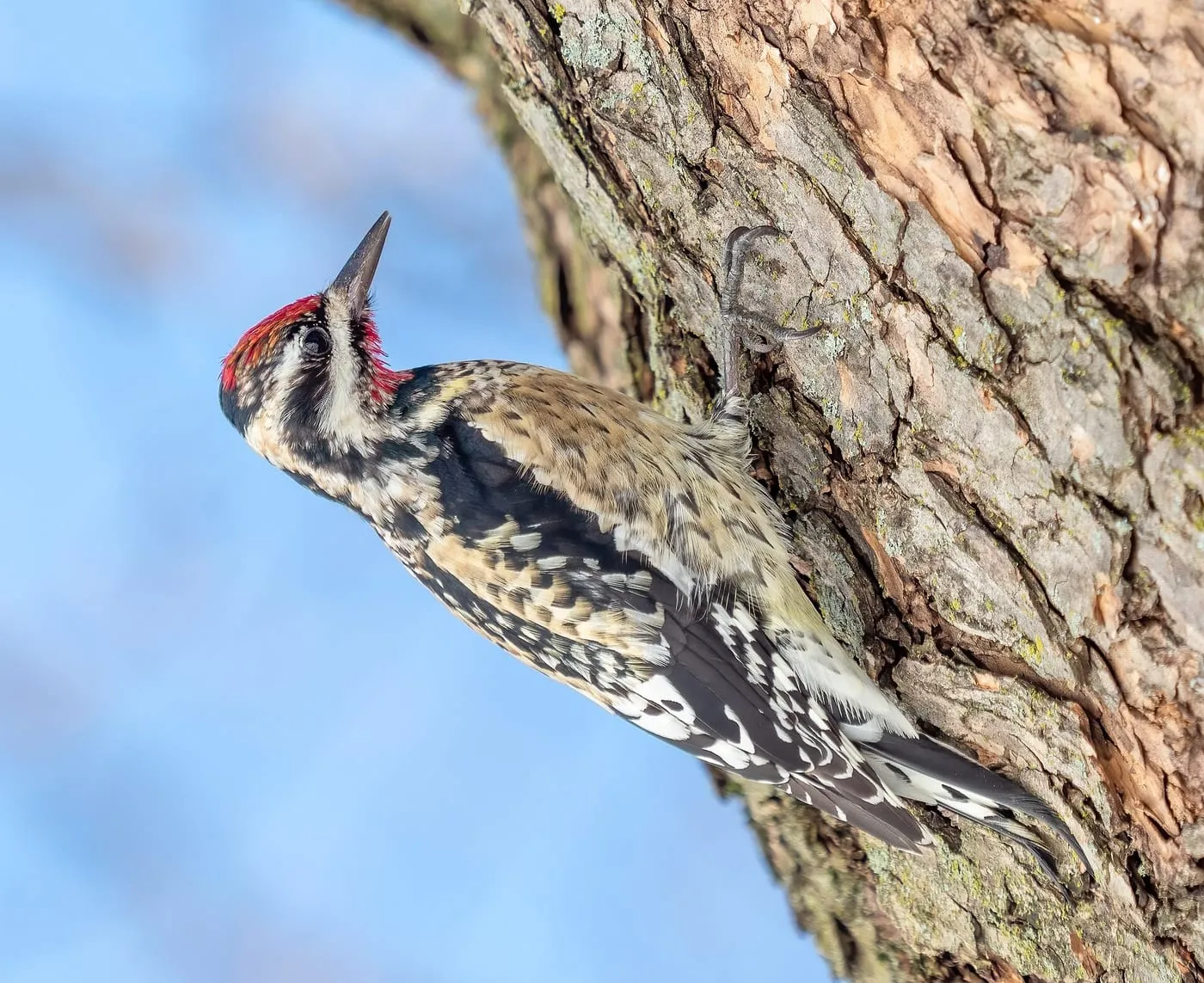
Most likely causes
- Yellow-bellied sapsucker — neat horizontal rows of shallow, evenly spaced holes
- Insect-hunting woodpeckers — scattered larger holes chipped into the wood
- Wood-boring beetles (borers) — round 1/8–3/8 inch exit holes with frass
- Carpenter bees — perfectly round 1/2 inch holes in bare limbs with sawdust
- Bark beetles — many tiny shot-holes, often oozing on a stressed tree
Not quite what you're seeing? Answer four quick questions and the clue finder will point you to a closer match.
Compare the possible causes
| Possible cause | Key signs | When it happens | How likely |
|---|---|---|---|
| Yellow-bellied sapsucker wells | Neat horizontal (and sometimes vertical) rows of shallow, evenly spaced holes that weep sap | Spring and summer, repeated on the same favored trees year after year | Common |
| Woodpeckers hunting insects | Scattered, irregular holes chipped deeper into the wood, often with bark flaked off around them | Year-round, but noticeable in fall and winter when birds forage for overwintering larvae | Common |
| Wood-boring beetles (borers) | Round or D-shaped exit holes about 1/8–3/8 inch across, with sawdust-like frass in bark crevices or at the base | Adults emerge late spring through summer; damage builds over one or more seasons | Common |
| Carpenter bees | A single perfectly round hole about 1/2 inch wide in bare, unpainted wood, with coarse sawdust below it | Spring into early summer, when females excavate nesting galleries | Less common |
| Bark beetles | Many tiny shot-hole-sized punctures, sometimes with pinhead beads of oozing sap or fine reddish dust | Warm months, especially on drought-stressed or declining trees | Less common |
Visual clues to check
- Read the pattern first: neat straight rows point to a sapsucker; random pits mean insect hunting; a lone clean hole means a carpenter bee
- Measure the hole: 1/8–3/8 inch round or D-shaped suggests borers; a crisp 1/2 inch circle suggests carpenter bees; tiny shot-holes suggest bark beetles
- Look for frass or sawdust: fine sawdust-like frass in bark cracks or at the base points to borers; coarse sawdust below a hole points to carpenter bees
- Check for oozing sap or beads of pitch, which can mean sapsucker wells or a tree defending against bark beetles
- Note the tree species: D-shaped exit holes on an ash tree are a serious warning sign for emerald ash borer
- Scan the whole canopy for thinning or dead branches above the holes, which suggests something is damaging the tree, not just its bark
The causes in detail
Yellow-bellied sapsucker wells
Despite the name, the yellow-bellied sapsucker is a woodpecker that drills orderly rows of small holes, called sap wells, to feed on the sap and the insects it attracts. The tidy, repeating pattern is the giveaway — no other cause makes such straight lines. It's usually cosmetic on an otherwise healthy tree, though a heavily ringed young trunk is worth watching.
Woodpeckers hunting insects
When a woodpecker digs random, ragged holes rather than neat rows, it is usually chasing insects living inside the wood. In that case the bird is a symptom, not the problem: it often signals a borer or beetle infestation under the bark. Treating the woodpecker is pointless — the real question is what it is eating.
Wood-boring beetles (borers)
Borers spend most of their life as larvae tunneling under the bark, then chew their way out, leaving small round exit holes and pushing out frass (a mix of sawdust and droppings). On ash trees, D-shaped exit holes are a red flag for emerald ash borer, a highly destructive pest. Borers most often attack trees already stressed by drought, injury, or disease.
Carpenter bees
Carpenter bees bore clean, near-perfect half-inch holes into bare limbs, dead branches, and untreated wood, then tunnel sideways to nest. You'll often see a pile of coarse sawdust beneath the entrance and a large bee hovering nearby. In living trees they usually favor dead or exposed wood, so the damage is typically minor — see round-holes-in-wood-with-sawdust for the same holes in structures and fences.
Bark beetles
Bark beetles are small and attack in numbers, riddling the trunk with pinhole-size entries. Healthy trees often 'pitch out' the invaders, leaving little beads of sap, but stressed or dying trees can be overwhelmed. Widespread shot-holes on a thinning, discolored tree usually mean the tree was already in decline.
When to worry
- D-shaped exit holes combined with canopy thinning or dieback, especially on ash — a possible emerald ash borer sign; contact a certified arborist
- Rapid decline: leaves yellowing, branches dying back, or bark splitting over a single season
- Woodpeckers working the same trunk intensely, which often means an active insect infestation underneath
- Many holes ringing a young or newly planted trunk, which can girdle and weaken it
- Sawdust, frass, or sap flow that increases week over week rather than staying stable
What to do now
- Identify the pattern and hole size before acting — rows, random pits, one clean hole, or many shot-holes each point to a different cause
- Keep the tree healthy: water deeply during drought, mulch properly (not against the trunk), and avoid wounding the bark, since stressed trees attract borers
- Photograph the holes with something for scale and note the tree species so you can compare against borer and beetle guides
- For any borer signs, D-shaped holes, or a large or valuable tree, get an assessment from an ISA-certified arborist
- Leave sapsucker wells alone on a healthy tree; if you want to protect a favored young trunk, loosely wrap burlap during peak spring activity
What not to do
- Don't move firewood from an affected tree to another property — this is how borers like emerald ash borer spread to new areas
- Don't fill borer holes with putty or spray a random insecticide before the pest is identified; timing and product depend entirely on the species
- Don't try to kill the woodpecker or seal it out with tar or sticky repellents — it is a clue to an insect problem, and harming it is illegal for native species
- Don't carve, gouge, or paint over the holes to 'clean them up,' which only wounds the tree further
Frequently asked questions
Are woodpecker holes in my tree bad for the tree?
Neat rows of shallow sapsucker holes are usually cosmetic on a healthy tree. Scattered, deeper holes are more concerning — not because of the bird, but because they often mean the woodpecker is digging out insects living in the wood. In that case the underlying borer or beetle problem is what matters.
How can I tell borer holes from carpenter bee holes?
Borer exit holes are small, roughly 1/8 to 3/8 inch, often round or D-shaped, and come with fine sawdust-like frass. Carpenter bee holes are larger and strikingly round — about a half inch — with coarse sawdust below and often a big bee nearby. The size and the type of debris are the quickest tells.
What do D-shaped holes in ash tree bark mean?
D-shaped exit holes on an ash tree are a classic sign of emerald ash borer, one of the most destructive tree pests in North America. Paired with canopy dieback or bark splitting, they warrant a call to a certified arborist or your extension office right away, and you should never move the wood.
Should I fill the holes in my tree bark?
No. Filling or sealing holes traps moisture and can worsen decay without stopping the cause. Focus on identifying what made the holes and keeping the tree vigorous; a healthy tree compartmentalizes minor wounds on its own.