Round Holes in Wood With Sawdust: Bees, Ants, or Beetles?
A perfectly round hole about 1/2 inch across with a pile of coarse sawdust beneath it is the signature of carpenter bees, especially on bare or weathered wood. Fine sawdust-like debris coming from cracks and seams rather than a drilled hole points to carpenter ants, while clusters of much smaller holes are usually old wood-boring beetle exits. The hole's size, the texture of the sawdust, and whether you see insect traffic will tell you which one you have.
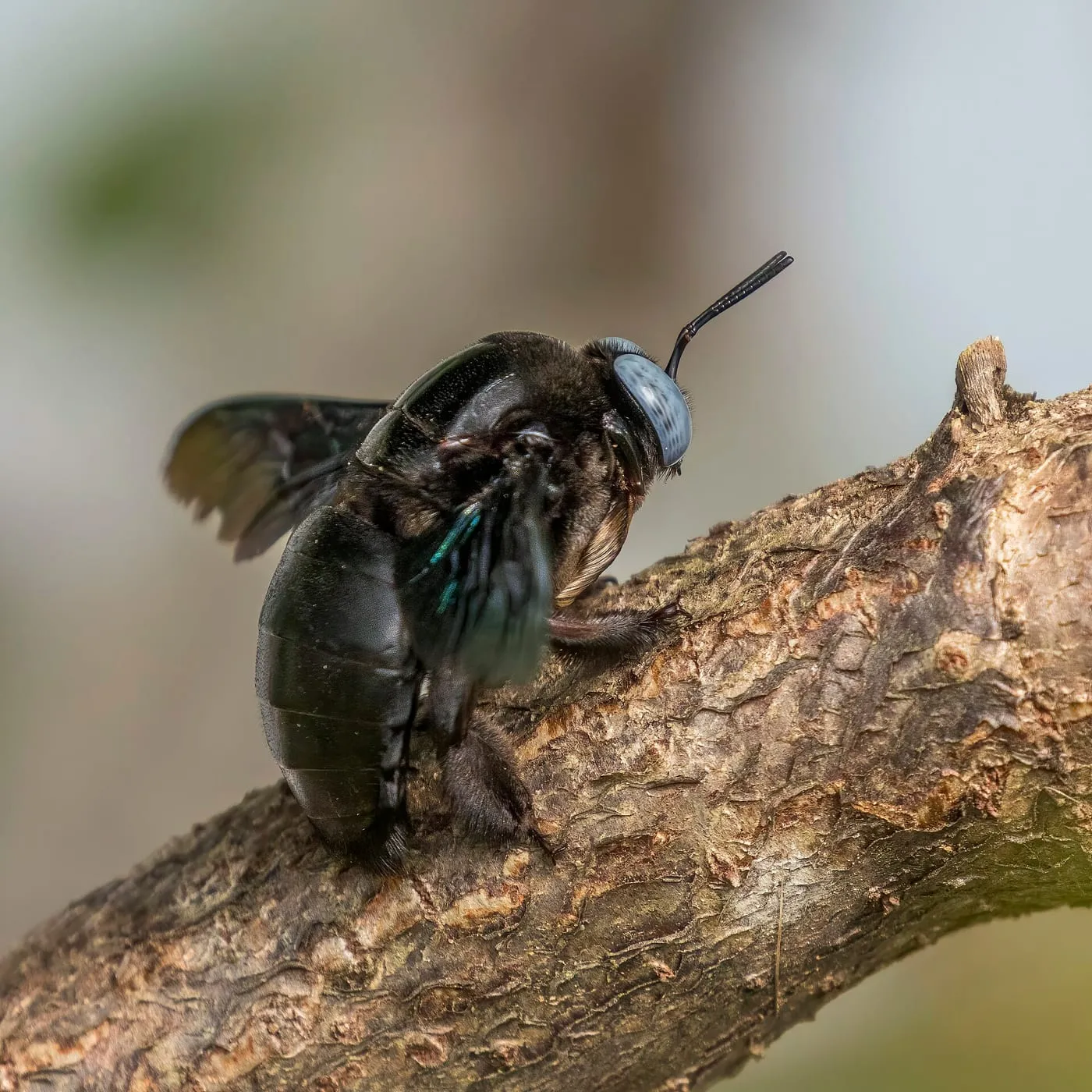
Most likely causes
- Carpenter bees — clean, drilled-looking 1/2-inch round holes with coarse sawdust and hovering black-and-yellow bees
- Carpenter ants — fine, fluffy frass pushed out of cracks and joints, not a neat round entrance
- Wood-boring beetles — scattered pinhead-to-1/8-inch exit holes with powdery dust, often in older wood
- Woodpeckers enlarging bee tunnels — ragged gouges tracing a line along a board that once had tidy holes
Not quite what you're seeing? Answer four quick questions and the clue finder will point you to a closer match.
Compare the possible causes
| Possible cause | Key signs | When it happens | How likely |
|---|---|---|---|
| Carpenter bees | Perfectly round entrance holes almost exactly 1/2 inch in diameter, usually on the underside of fascia, deck rails, or siding, with coarse sawdust and yellow staining below | Spring through early summer, when large bees hover around eaves and rails | Very common |
| Carpenter ants | Cone-shaped piles of fine, fibrous frass — sawdust mixed with insect parts — appearing below cracks, window frames, or trim seams rather than below a single round hole | Spring through summer, with large black ants trailing at dusk and after dark | Common |
| Wood-boring beetles (powderpost and old-house borers) | Many small round exit holes from pinhead size up to about 1/4 inch, scattered across a board, sometimes with talcum-fine powder sifting out | Adults emerge in late spring and summer; the holes themselves persist for decades | Less common |
| Woodpeckers opening up bee tunnels | Ragged, pecked-out gashes following a straight line along a board where neat round holes used to be, with wood chips rather than fine sawdust below | Any season, most often fall through spring | Common |
Visual clues to check
- Measure the hole: 1/2 inch and perfectly round means carpenter bee; 1/4 inch or smaller and scattered means beetles; no neat hole at all means look for carpenter ants
- Pinch the sawdust: coarse, gritty shavings point to carpenter bees; fine fluffy frass with insect fragments points to carpenter ants; talcum-like powder points to beetles
- Check the surface: carpenter bees hit bare, weathered, or stained wood far more than sound painted surfaces
- Look up from the pile: carpenter bee holes are usually on the underside of the board directly above the sawdust
- Watch in spring: large black-and-yellow bees hovering at face height near the holes confirm carpenter bees; the hoverers are stingless males
- Listen at dusk near frass piles: a faint dry rustling inside the wall or trim can indicate an active carpenter ant colony
- Test beetle holes: vacuum the powder and tape paper below the holes — new dust within a few weeks means the infestation is active
The causes in detail
Carpenter bees
A female carpenter bee bores a hole so clean it looks machine-drilled, then turns 90 degrees and tunnels along the grain for several inches to lay eggs. The bees strongly prefer bare, weathered softwood — painted and sealed surfaces get far less attention. The hovering, dive-bombing bees you see are almost always males, which cannot sting at all; females can but rarely bother. The bigger issue is reuse: tunnels get extended and re-nested every spring, and a board hit for several years running can be honeycombed inside.
Carpenter ants
Carpenter ants don't eat wood; they excavate galleries in it and push the debris out through existing gaps, so you see the sawdust without an obvious drilled entrance. Their frass looks softer and finer than carpenter bee sawdust and often contains bits of dead insects. They favor moist or previously water-damaged wood, so a frass pile near a leaky gutter, window sill, or door frame deserves real attention — the colony may extend well into the structure, and finding the main nest usually takes a professional.
Wood-boring beetles (powderpost and old-house borers)
Beetle larvae feed inside wood for one to several years, and the round holes you see are where the adults chewed their way out. In most homes these are old, inactive exit holes in barn wood, rustic beams, or older flooring. The test is fresh powder: dust that keeps reappearing after you vacuum it away, or holes with light-colored, freshly cut edges, suggest an active infestation worth a professional evaluation. Old gray-edged holes with no new dust are history, not a problem.
Woodpeckers opening up bee tunnels
Woodpeckers can hear carpenter bee larvae moving inside their tunnels, and they will tear open a board lengthwise to eat them — which is why a fascia board with a few tidy 1/2-inch holes in June can look shredded by October. The bird is a symptom, not the cause: it is telling you exactly where the larvae are. Fixing the bee problem is what ends the pecking.
When to worry
- Sawdust or frass reappearing within days of cleaning it up — the insects are active right now
- Multiple carpenter bee holes accumulating along the same fascia, rail, or beam over more than one season
- Carpenter ant frass indoors, near bathrooms, or below wood you know has had water damage
- Woodpecker damage tracing long lines along a board — the tunnels behind it are extensive
- Wood that sounds hollow, flexes underfoot, or crumbles when probed with a screwdriver
What to do now
- Photograph the holes and the debris with a coin for scale, and note which boards are affected
- Probe suspect wood gently with a screwdriver — solid wood with a few entrance holes is a very different repair than a hollowed board
- For a light carpenter bee problem on a fresh hole in fall, plug the entrance with a wooden dowel and wood filler after the season ends, then paint the board
- Paint or seal bare and weathered wood — a sound painted surface is the single best carpenter bee deterrent there is
- Fix the moisture first for carpenter ants: repair the leak or drainage problem feeding the damp wood they need
- Vacuum beetle powder and monitor with paper below the holes before assuming the worst — most beetle holes are long inactive
- Call a licensed pest control professional for carpenter ant frass, recurring beetle powder, or bee damage across multiple boards — locating nests and treating galleries is not a guess-and-spray job
What not to do
- Don't caulk carpenter bee holes in spring while bees are active — trapped females and next year's brood chew new exits right beside the patch
- Don't spray insecticide overhead into holes from a ladder; treating blind above your face is how people get stung and fall
- Don't swat at the hovering bees — they're stingless males doing guard duty, and they'll be gone in a few weeks
- Don't repaint or fill carpenter ant areas without addressing the colony and the moisture source; you're hiding the evidence, not solving the problem
- Don't tear into a board to see how bad it is before you have a repair plan — opened galleries invite water and more insects
Frequently asked questions
How can I tell carpenter bee holes from beetle holes?
Size and count. A carpenter bee makes one clean, round hole about 1/2 inch across, usually on the underside of a board, with coarse sawdust below. Wood-boring beetles leave many much smaller holes — pinhead to 1/4 inch — scattered across the surface with fine powdery dust. If you can comfortably fit a pencil eraser in the hole, think bee, not beetle.
Do carpenter bees sting?
The bees you actually encounter usually can't. The males that hover near the holes and buzz at your face have no stinger at all. Females can sting but are docile and only do so if grabbed or pinned. The real risks from carpenter bees are the tunneling damage and the woodpecker damage that follows it, not stings.
Does sawdust always mean the insects are still there?
No. Old carpenter bee holes and beetle exits persist for years after the insects are gone. The reliable test is fresh debris: clean everything up, then check again over the following days and weeks. New sawdust, frass, or powder means activity; a hole that stays clean is history.
Will painting the wood really stop carpenter bees?
It's the most effective prevention available. Carpenter bees overwhelmingly choose bare, weathered, or thinly stained softwood, and a maintained coat of paint or solid sealant makes boards far less attractive. Fill and paint old holes too — existing tunnels act as an invitation for next spring's females, which prefer to reuse and extend old galleries rather than drill new ones.
When is this beyond a DIY fix?
Three situations: carpenter ant frass appearing indoors or repeatedly outdoors, since the colony and its moisture source need to be found and treated at the nest; beetle powder that keeps coming back, which may mean an active infestation in structural wood; and bee damage spread across multiple boards or seasons. All three call for a licensed pest control professional rather than more caulk.