Signs of Squirrels in Your Yard (and What to Do)
Squirrel signs are shallow, golf-ball-size digging divots scattered across the lawn (nut caching), stripped bark on branches, emptied bird feeders, and — the expensive one — daytime scurrying or gnawing sounds at the roofline. Squirrels work in daylight; the same signs at night point to rats.
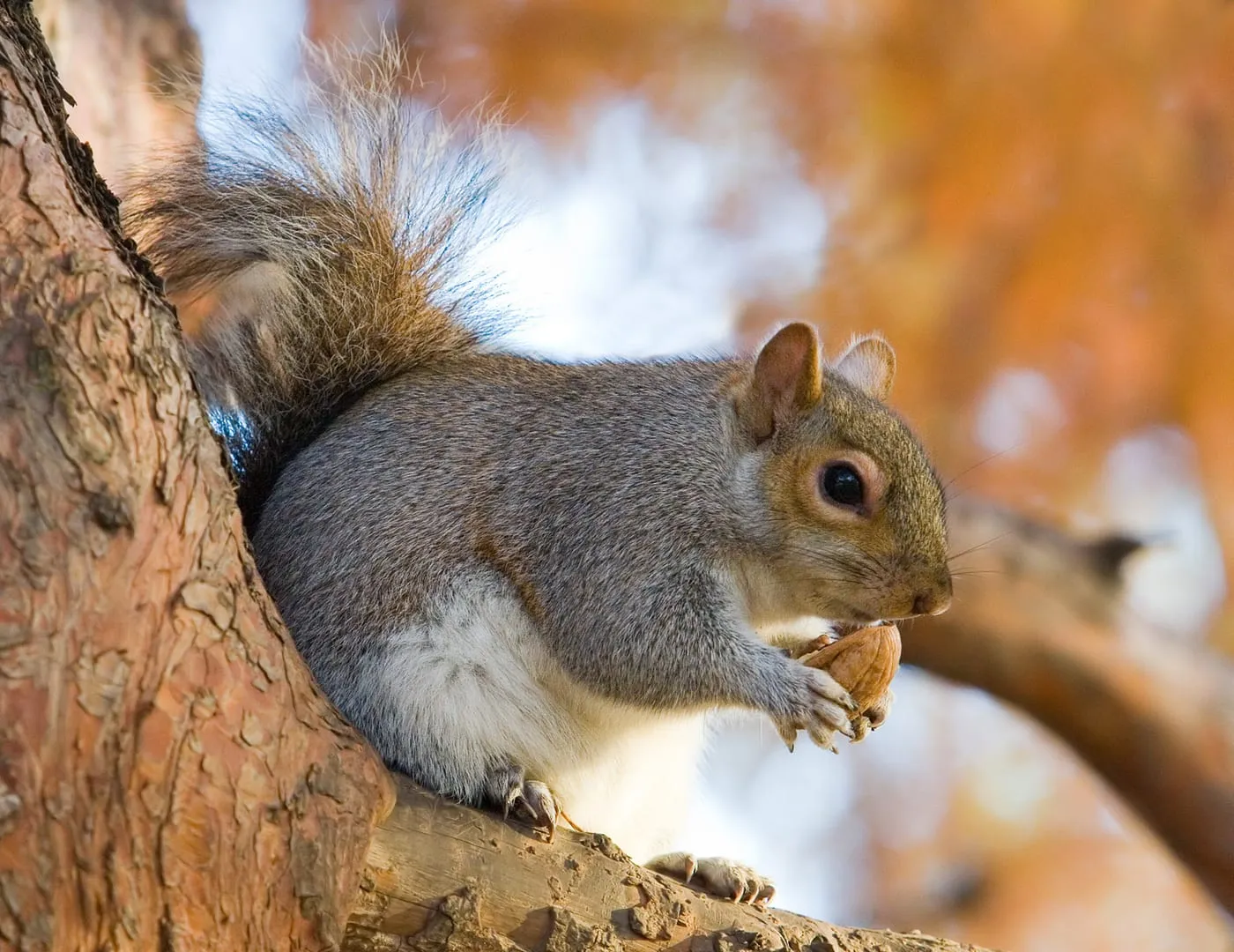
Key signs of squirrels
- Shallow divots 1–3 inches across scattered over the lawn and beds — dig-and-refill nut caching, not tunnel entrances
- Bird feeders emptied fast, hanging crooked, or chewed, with seed hulls scattered below
- Bark stripped in patches from branches and trunks, especially maples, and twig ends clipped and dropped in quantity
- Chewed holes in ripening tomatoes, corn, and fruit, often one bite taken and the rest dropped
- Scampering, rolling, or gnawing sounds overhead in early morning and daytime — squirrels are strictly diurnal
- A chewed gap at the roofline: fascia, soffit corners, gable vents, or a builder's gap by the gutter, often with gnaw marks flaring the opening
- Leaf nests (dreys) — messy basketball-size balls of leaves high in tree forks
Compare squirrels with other visitors in our animal tracks chart and yard hole size chart.
What the evidence looks like
| Sign | What it looks like | Where you'll find it |
|---|---|---|
| Caching divots | Shallow cone-shaped digs 1–3 inches wide and an inch or two deep, often loosely refilled, with no tunnel below | Scattered randomly across lawns, mulch beds, and potted plants, heaviest in fall |
| Stripped bark and clipped twigs | Patches of bark peeled from limbs exposing pale wood; green twig ends littering the ground under a tree | Upper branches and trunks of maples, elms, and fruit trees |
| Feeder raids | Feeders drained in hours, bent perches, chewed plastic ports, an acrobat hanging upside down at breakfast | Any feeder within a 10-foot leap of a tree, fence, or roof |
| Roofline entry hole | A gnawed opening 1.5–3 inches or larger with fresh chew marks, sometimes with grease or hair at the edges | Fascia boards, soffit returns, gable and ridge vents, and gaps where roof planes meet |
| Daytime attic noise | Fast scampering, rolling sounds (nuts), and gnawing shortly after dawn and in daytime — not slow thumps at midnight | Attic, eaves, and inside wall cavities near the roofline |
Habits worth knowing
The usual suspects are eastern gray squirrels, fox squirrels, and red squirrels — active year-round and strictly during the day, with peaks in early morning and late afternoon. This schedule is your best diagnostic: daytime noise and sightings mean squirrels; nighttime activity points to rats, mice, or flying squirrels.
Squirrels are scatter-hoarders. Each fall they bury thousands of individual nuts an inch or two deep across their range, then dig many of them back up all winter — which is why lawns show waves of shallow divots in fall and again in late winter. The digging is cosmetic and heals quickly.
Squirrels have two breeding seasons in most of the US — late winter and midsummer — and a pregnant female looking for a den site is the classic reason a squirrel chews into an attic. Once inside, gnawing on wood and wiring is the real risk; chewed wire insulation is a documented fire hazard.
A typical yard is visited by several squirrels with overlapping ranges, so removing one animal changes little. Managing food (feeders, fallen nuts) and access (roofline gaps, overhanging limbs) is what actually changes squirrel pressure.
Often confused with
- Chipmunks — Chipmunks are smaller, striped, and burrow underground — a clean 2-inch hole with no mound. Squirrel digging is shallow scattered divots with no tunnel, and squirrels den in trees and attics, not burrows.
- Rats — Rats also enter attics and gnaw, but they work at night, leave greasy rub marks and capsule-shaped droppings along their routes, and burrow at ground level near foundations. Daytime noise at the roofline is squirrels.
What to do now
- Confirm with timing: note when you hear or see activity — daylight means squirrels, and a dusting of flour by a suspected entry hole will show footprints and direction of travel
- Cut off the food subsidy: switch to squirrel-proof (weight-closing) feeders on a baffled pole 10 feet from any launch point, and rake up fallen nuts and acorns
- Trim tree limbs back 8–10 feet from the roofline — the standard leap distance — and consider a trunk baffle on isolated trees squirrels use as highways
- Protect gardens and pots with hardware-cloth cages or floating row cover; cage individual tomatoes if one animal has learned the habit
- Harden the roofline before there's a hole: replace rotted fascia, screen gable and ridge vents with heavy 1/4-inch hardware cloth, and seal builder's gaps with metal flashing
- If squirrels are already inside, don't seal anything until you're certain all animals — especially babies in spring and late summer — are out; this is the moment to call a licensed wildlife control professional for an eviction and exclusion done in the right order
What not to do
- Don't seal the entry hole while animals may be inside — a trapped squirrel will destroy wood, wiring, and drywall trying to escape, and orphaned babies die in the wall
- Don't trap and drive squirrels 'to the woods'; relocation is illegal or permit-restricted in many states, most relocated squirrels don't survive, and a new squirrel takes the vacancy within days
- Don't put poison in an attic — no rodenticide is labeled for tree squirrels, it's illegal off-label, and you'll end up with a carcass in a wall cavity
- Don't rely on ultrasonic repellers, strobe lights, or mothballs; testing shows little effect, and mothball use in an attic is both ineffective and an off-label pesticide violation
- Don't grab or hand-feed squirrels — bites are deep, and any wild mammal bite needs medical attention
Frequently asked questions
How do I know if squirrels are in my attic and not rats?
Listen to the clock. Squirrels are loud shortly after dawn and during the day — fast scampering and rolling sounds — then quiet at night. Rats and mice do the opposite. Droppings help too: squirrel droppings are barrel-shaped and scattered, rat droppings are capsule-shaped and concentrated along greasy runways.
Are the little holes all over my lawn squirrel damage?
If they're shallow — an inch or two deep, no tunnel at the bottom, often loosely refilled — that's squirrel nut caching, heaviest in fall. It's cosmetic and grass recovers on its own. Holes that go down into a tunnel belong to chipmunks, voles, or rats.
Will squirrels damage my house wiring?
They can. Rodent teeth grow continuously, and squirrels in attics gnaw wood and wire insulation to wear them down; exposed conductors are a genuine fire hazard. If squirrels have been in your attic, have the wiring inspected after they're excluded.
Do squirrel repellents like capsaicin work?
Capsaicin (hot pepper) added to birdseed does deter squirrels without bothering birds, and it's the one repellent with decent evidence. Sprays on structures wash off and need constant reapplication; ultrasonic devices show little effect in testing. Exclusion and feeder management do the durable work.