Signs of Chipmunks in Your Yard (and What to Do)
The classic chipmunk sign is a clean, round hole about 2 inches across with no mound or scattered soil around it — chipmunks carry the excavated dirt away in their cheek pouches and dump it elsewhere. Look for these tidy holes along foundations, retaining walls, walkways, and tree bases; a similar-sized hole with a worn, greasy look and a dirt kick-out is more likely a rat burrow.
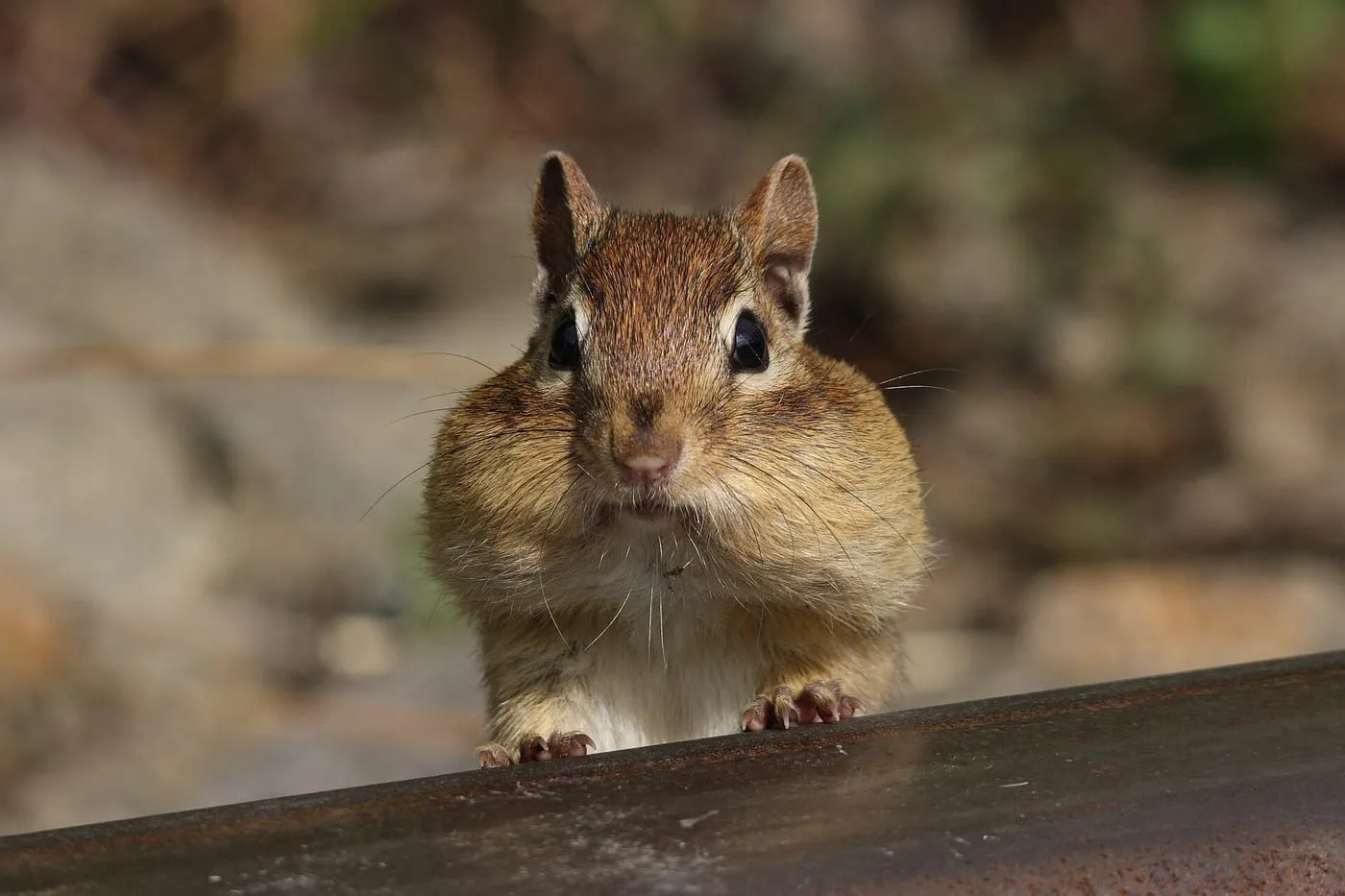
Key signs of chipmunks
- Clean, round holes about 2 inches in diameter with no dirt mound or spray around the entrance
- Holes tucked against structure: foundations, retaining walls, stairs, walkway edges, and tree roots
- Daytime sightings — a small striped rodent darting between cover with its tail straight up
- Dug-up or missing tulip and crocus bulbs, and seedlings nipped in beds and pots
- Piles of seed hulls on rocks, stumps, or downspout splash blocks (favorite feeding perches)
- Undermined pavers, walkway bricks, or small sinkholes above tunnel runs near walls
Compare chipmunks with other visitors in our animal tracks chart and yard hole size chart.
What the evidence looks like
| Sign | What it looks like | Where you'll find it |
|---|---|---|
| Clean 2-inch hole | A neat, round opening about the size of a golf ball to a billiard ball, with no soil piled around it — as if drilled | Along foundations, retaining walls, stone steps, walkway edges, and at the base of trees |
| No soil anywhere | Bare, tidy ground right up to the hole's edge; the excavated dirt was pouch-hauled away and scattered far from the entrance | Around every active entrance — the giveaway that separates chipmunks from rats and gophers |
| Seed-hull piles | Little heaps of sunflower hulls, acorn caps, and seed shells on a raised surface | On rocks, stumps, wall tops, and under bird feeders |
| Bulb and pot digging | Small excavations in beds and containers, bulbs unearthed or gone, seedlings clipped | Flower beds, vegetable gardens, and potted plants on porches and patios |
| Shifting hardscape | A paver, step, or wall block that settles or rocks over a hollow spot | Above tunnel runs beside retaining walls, stoops, and walkways |
Habits worth knowing
Chipmunks are small, striped ground squirrels — in most of the US that means the eastern chipmunk, about 5–6 inches of body plus tail. They're strictly daytime animals, most active in morning and late afternoon, so if you're hearing or seeing activity at night, think rats or mice instead.
Each chipmunk lives alone in a burrow system that can run 20–30 feet, with a nesting chamber and storage galleries for the seeds and nuts it hauls in its cheek pouches. They famously carry excavated soil away in those pouches too, which is why entrances stay clean and mound-free. Burrows favor edges and cover: foundations, retaining walls, stone piles, and root zones.
Chipmunks don't hibernate deeply; they retreat underground in late fall, wake through winter to eat from their caches, and reappear on warm late-winter days. Yards typically host only a few animals — 2 to 4 per acre is normal — because they defend the territory around their burrow.
Often confused with
- Squirrels — Tree squirrels are bigger, lack the facial stripes, and live in trees and attics rather than burrows; their digging is shallow nut-caching divots scattered across the lawn, not a tidy 2-inch tunnel entrance.
- Rats — Rat burrows are about the same size but look worn and greasy, with a fan of kicked-out dirt at the entrance, and activity is at night. A clean, mound-free hole plus daytime sightings of a striped animal means chipmunk.
What to do now
- Confirm the culprit: check the hole for a clean, mound-free edge and watch during daylight — chipmunks show themselves within a day or two of quiet observation
- Remove easy food: use squirrel-proof feeders with trays, sweep up spilled seed, and pick up fallen nuts and fruit
- Reduce cover along walls: clear brush piles, wood stacks, and dense groundcover from the foundation line so burrow sites feel exposed
- Protect bulbs and pots with 1/4- or 1/2-inch hardware cloth laid over the soil, and plant new bulbs in wire baskets
- Exclude, don't entomb: after confirming a burrow under a stoop or wall is empty, block re-entry with hardware cloth buried a foot deep and flared outward
- Keep perspective — a chipmunk or two is normal wildlife and rarely causes structural harm; if burrowing is genuinely undermining a wall or stoop, call a licensed wildlife control professional
What not to do
- Don't pour concrete, foam, or gravel into an active burrow — sealing an animal inside is inhumane, and it will often dig out anyway, right beside your patch
- Don't trap and relocate on your own; relocating wildlife is illegal or permit-restricted in many states, and relocated chipmunks usually die
- Don't put out rodent poison for chipmunks — most rodenticide labels don't cover them, and open bait endangers pets, children, and songbirds
- Don't flood burrows next to a foundation or retaining wall; you'll saturate the backfill and do more structural harm than the chipmunk ever would
Frequently asked questions
Will chipmunks damage my foundation or retaining wall?
Serious structural damage is uncommon — chipmunk tunnels are only about 2 inches wide. The realistic risk is localized: soil washing into tunnels beside a retaining wall, stoop, or walkway can cause settling over years. Persistent burrowing at a wall is worth excluding with buried hardware cloth.
How many chipmunks are in my yard?
Probably only a few. Chipmunks are territorial, and typical densities run around 2–4 animals per acre. Several holes don't mean several animals — each burrow system has a main entrance plus escape holes.
How do I tell a chipmunk hole from a rat hole?
Cleanliness and timing. Chipmunk holes are tidy with zero soil around them and daytime traffic; rat burrows have a fan of excavated dirt, a smooth, greasy-worn entrance, and nighttime activity, usually near garbage, compost, or a food source.
Do chipmunks get into houses?
Occasionally one wanders into a garage or basement through an open door or gap, but unlike mice they don't nest indoors on purpose. Open a door along its likely exit path and give it quiet, and it will usually leave on its own within hours.