Signs of Opossums in Your Yard (and Why That's Mostly Fine)
The giveaway opossum sign is the hind track: five toes with the inner one splayed out sideways like a human thumb — no other US yard animal leaves it. Opossums borrow existing dens rather than dig, so you'll find one under a deck or in an old groundhog burrow, not behind fresh excavation. Unlike raccoons, they rarely tear up turf or pry open trash, and they're largely beneficial — a single opossum eats thousands of ticks a season.
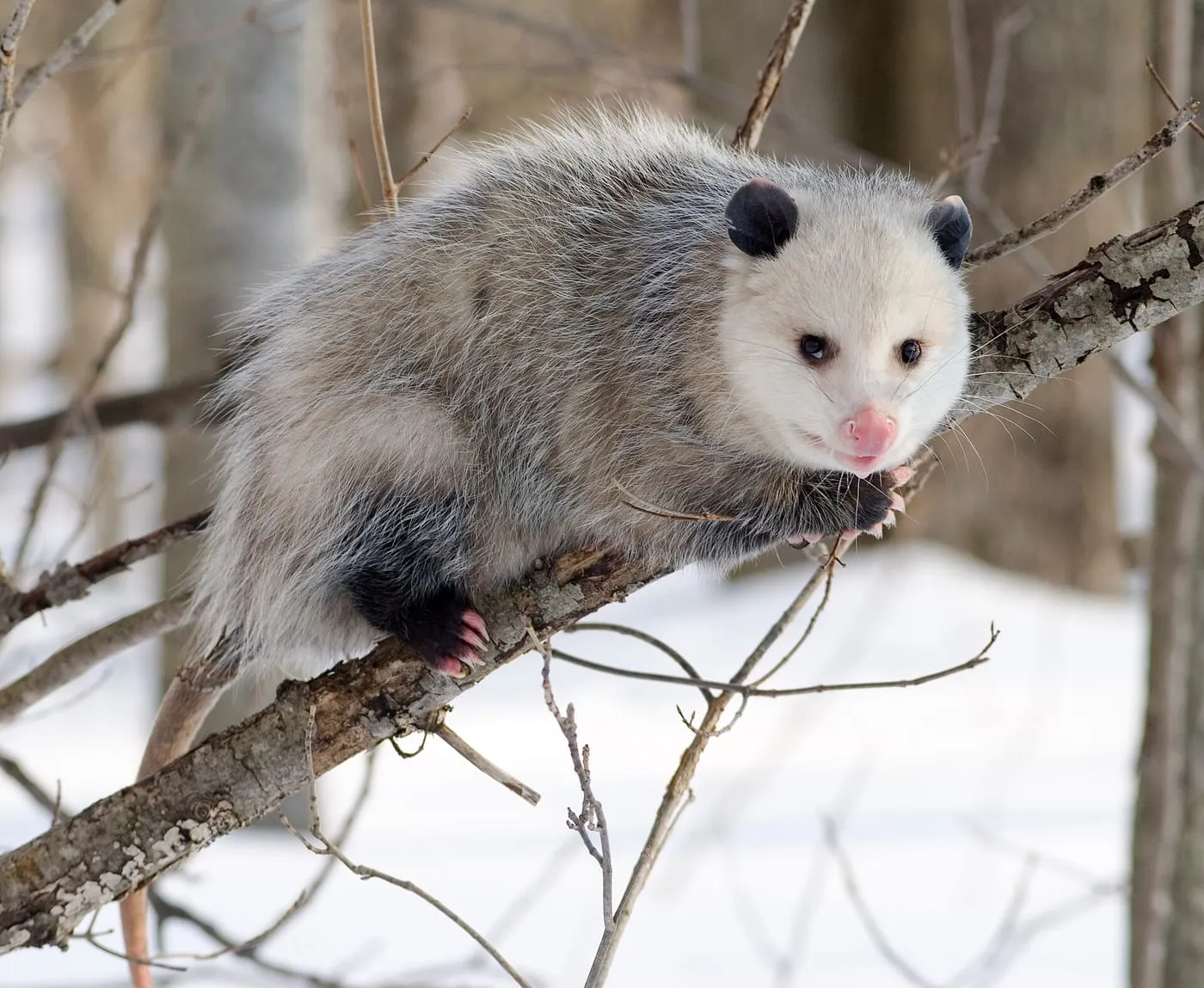
Key signs of opossums
- Hind footprints about 2 inches wide showing five toes, with the inner 'thumb' toe angled sharply sideways — unmistakable in mud or dust
- An animal denning under the deck, porch, or shed in a space it didn't dig — opossums borrow burrows and gaps rather than excavate
- Pet food bowls emptied at night and fallen fruit or birdseed cleaned up, with little other disturbance
- A slow, gray, cat-sized animal with a white pointed face and a bare, rat-like tail crossing the yard at night
- An opossum lying limp with bared teeth and a foul smell when startled — 'playing dead' is an involuntary defense, and the animal recovers and leaves within minutes to a few hours
- Irregular, tapered droppings 1–2 inches long left along travel routes, less concentrated than a raccoon latrine
- Occasional hissing or a mouth full of pointed teeth when cornered — a bluff display, almost never followed by attack
Compare opossums with other visitors in our animal tracks chart and yard hole size chart.
What the evidence looks like
| Sign | What it looks like | Where you'll find it |
|---|---|---|
| Opposable-thumb tracks | Five-toed prints; the hind foot's inner toe sticks out sideways like a thumb, often with front and hind prints overlapping | Mud near downspouts, garden beds, deck perimeters, and dusty garage or shed floors |
| Borrowed den | An animal in an existing cavity — old groundhog burrow, deck or shed gap, brush pile, hollow log — with no fresh digging or dirt fan | Under decks, porches, and sheds; in woodpiles and dense brush |
| Night scavenging | Pet food gone, fallen fruit and spilled birdseed cleaned up, compost lightly picked over; cans rarely tipped or pried | Patios, porches with pet bowls, under fruit trees and bird feeders |
| Playing dead | The animal collapsed on its side, mouth open, teeth bared, emitting a foul musky smell — appearing convincingly dead | Wherever it was startled — near pets, garages, and open trash areas |
| Droppings | Smooth, tapered droppings 1–2 inches long, sometimes curled, scattered rather than piled in one latrine | Along fence lines and travel routes, near dens and feeding spots |
Habits worth knowing
The Virginia opossum is North America's only marsupial — females carry young in a pouch. Opossums are nocturnal, solitary, and nomadic, typically using a den site for a few days before moving on, which means the one under your deck is probably a short-term guest rather than a permanent tenant.
They are opportunistic omnivores and genuinely useful ones: ticks, beetles, slugs, snails, cockroaches, mice, carrion, and fallen fruit all get eaten. Researchers estimate a single opossum can consume thousands of ticks in a season, and their carrion cleanup quietly reduces yard pests and disease sources.
Opossums don't dig. No burrows, no rolled sod, no cone-shaped grub holes — they borrow abandoned groundhog burrows, brush piles, and gaps under structures. If you see fresh excavation, something else made it.
Their famous defense is involuntary: when severely threatened, an opossum faints into a catatonic state — limp, drooling, foul-smelling, apparently dead — for anywhere from a few minutes to a few hours. A 'dead' opossum that was healthy-looking an hour ago should simply be left alone; it will get up and leave.
Often confused with
- Raccoons — Raccoon tracks look like small human hands with five finger-like toes but no sideways thumb, and raccoons cause real mischief — rolled sod, pried trash lids, attic dens. Opossums leave the thumb print, don't tear turf, and rarely defeat a closed lid.
- Rats — At a glance a young opossum's bare tail suggests a huge rat, but opossums are cat-sized with a white pointed face, move slowly, and leave thumb-print tracks. Rats are far smaller, fast, leave gnaw marks and greasy rub marks, and their droppings are pellet-sized.
What to do now
- Consider simply tolerating it — an opossum is transient, eats ticks, slugs, and mice, and will likely move on within days; most yards are better off with the visit
- Bring pet food in at night and secure trash lids — remove the food and the visits taper off on their own
- If you don't want one under the deck or shed, wait until it leaves for its nightly forage (dust or flour at the entrance shows fresh tracks), then screen the gap with hardware cloth buried 6–12 inches
- Check the pouch situation before excluding in spring and summer — a female may have young; if in doubt, give it a few weeks or get professional help
- Leave a 'dead' opossum alone for a few hours before assuming it's actually dead — playing dead is involuntary and very convincing
- If one has gotten into your garage or house, open the door, dim the lights, and give it a quiet exit route; they leave on their own
- For an animal that won't move on, appears sick or injured, or is denned somewhere you can't safely exclude, contact a licensed wildlife control professional — DIY relocation is illegal in many states
What not to do
- Don't handle an opossum, even one playing dead — any wild mammal can bite, and a startled 'corpse' waking up in your hands ends badly for both of you
- Don't let dogs harass one; opossums bluff rather than fight, but a cornered animal defends itself, and the encounter risks injury and parasites for your dog
- Don't poison or trap-and-dump — poisoning non-target wildlife is illegal, and relocating wildlife without a permit is prohibited in many states
- Don't seal a deck or shed gap until you've confirmed the animal (and any pouch young or weaned juveniles) is out — sealing one inside creates a dead-animal problem under your structure
- Don't panic over rabies — opossums' low body temperature makes rabies extremely rare in the species; drooling and hissing are normal bluff behavior, not symptoms
Frequently asked questions
Are opossums actually good for my yard?
Mostly, yes. They eat ticks by the thousands, plus slugs, snails, beetles, cockroaches, mice, and carrion, and they don't dig, tunnel, or tear up turf. For a nocturnal visitor, they're about the most beneficial one your yard can get, and they usually move on within days anyway.
Do opossums carry rabies?
Almost never — their body temperature runs too low for the virus to thrive, so rabies is extremely rare in opossums compared with raccoons, skunks, and bats. The hissing, drooling, teeth-baring display that scares people is a defensive bluff, not a rabies symptom.
Is the opossum in my yard dead or playing dead?
If it looked healthy recently, assume it's playing dead. The catatonic state — limp body, bared teeth, foul smell — is involuntary and can last minutes to a few hours. Keep pets away, check back later, and it will almost always be gone. Only treat it as dead after several undisturbed hours.
Will an opossum living under my deck cause damage?
Very little — opossums don't dig or gnaw, and they didn't create the gap they're using. The main concerns are droppings and fleas near the den. Let it leave on its nightly forage, then screen the opening with buried hardware cloth so the space doesn't attract the next tenant.
Do opossums attack pets or people?
It's rare. Their playbook is bluff (hiss, bare 50 teeth), flee, then play dead. A cornered opossum can bite in self-defense, so keep dogs from pinning one, but an unprovoked attack is essentially unheard of. Give it space and an exit and the encounter ends itself.