Signs of Skunks in Your Yard (and What to Do)
The classic skunk signs are shallow, cone-shaped holes 3–4 inches across that appear in the lawn overnight (grub digging), patches of sod rolled or flipped back, a musky odor that lingers near a deck or shed, and a 6–8 inch den opening under a structure. Raccoons cause similar grub damage but roll sod in large sloppy sections; skunks drill many small, tidy cones.
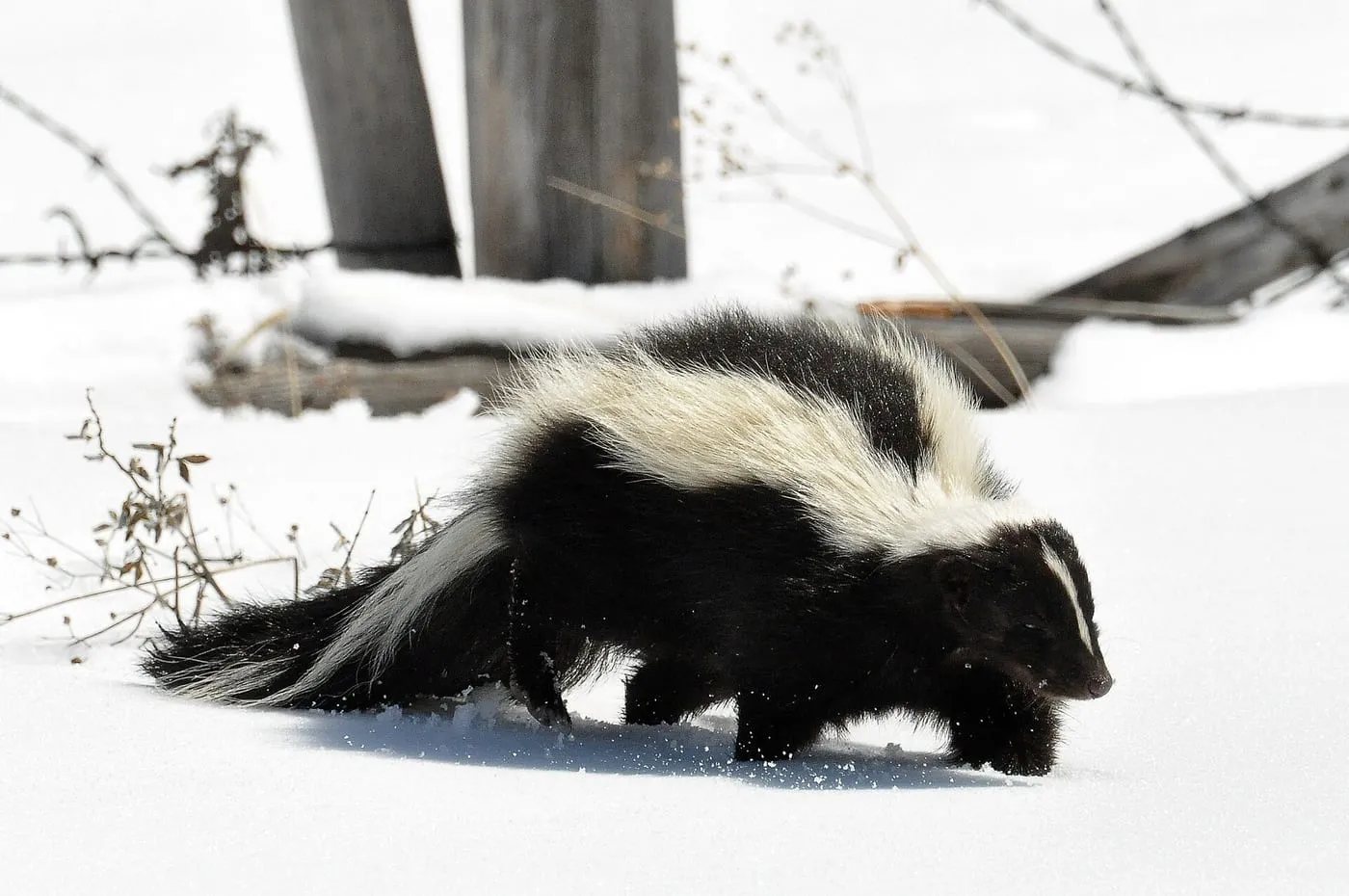
Key signs of skunks
- Cone- or funnel-shaped holes 3–4 inches across and 1–3 inches deep, drilled overnight in groups across the lawn
- Small patches of sod rolled, flipped, or torn back where the animal peeled turf to reach grubs
- A faint-to-strong musky skunk odor lingering near a deck, shed, or porch — strongest at dawn
- A single den entrance 6–8 inches across under a deck, shed, stoop, or woodpile, often with a slight soil fan
- Damage that appears only overnight — skunks are nocturnal and rarely seen working
- Pets that come home sprayed, or bark fixedly at one corner of the deck after dark
- Tracks with five toes and visible claw marks, like miniature bear prints, in mud or snow
Compare skunks with other visitors in our animal tracks chart and yard hole size chart.
What the evidence looks like
| Sign | What it looks like | Where you'll find it |
|---|---|---|
| Cone-shaped grub holes | Neat funnel-shaped digs 3–4 inches across, as if someone pushed an ice cream cone into the turf and twisted | Scattered in groups across the lawn, worst in late summer and fall when grubs ride near the surface |
| Rolled or flipped sod | Fist-to-dinner-plate patches of turf peeled back or overturned, roots exposed | Lawn areas with heavy grub infestations, often alongside the cone holes |
| Den under a structure | A single tidy opening 6–8 inches wide with smooth edges and a bit of excavated soil, sometimes with black-and-white hairs snagged at the entrance | Under decks, sheds, stoops, porches, and woodpiles — anywhere with a dark, dry cavity |
| The smell | Musky odor ranging from a faint skunky whiff around the den to overpowering after a nearby spray; it clings for days | Near the den entrance, along the animal's route, or wherever a dog found out the hard way |
| Five-toed tracks | Prints about 1–2 inches long with five toes and claw dots well ahead of the toe pads | Mud, sand, and snow along fence lines, garden edges, and the den approach |
Habits worth knowing
The striped skunk is found across almost all of the lower 48. Skunks are nocturnal, emerging around dusk to hunt grubs, beetles, worms, small rodents, eggs, and fallen fruit — a genuinely beneficial diet, if you can forgive the lawn damage. Grub-digging peaks in late summer and fall when beetle grubs are large and shallow.
Skunks are poor climbers but capable diggers. They den in cavities under decks, sheds, and stoops, or take over old groundhog burrows. A female raises 4–7 kits in spring (typically May–June); if you find a den in spring, assume babies are inside and plan the eviction around them.
Skunks spray only as a last resort, and they give warnings first: stamping front feet, raised tail, arched back. An animal that sprays wastes a limited defense, so a calm, slow retreat almost always prevents it. Most yard skunks pass through nightly without incident; a resident den is what turns a visitor into a problem.
Often confused with
- Raccoons — Raccoons doing grub damage roll sod back in large, sloppy sections — like a bad landscaping job — while skunks drill many small, tidy cone-shaped holes. Raccoons also climb (roofs, attics, trash cans); skunks stay on the ground.
- Groundhogs — A groundhog burrow is bigger — 10–12 inches — with a large dirt apron, and the animal is out grazing plants in broad daylight. A skunk den opening is 6–8 inches with little soil, activity is at night, and plants aren't being eaten.
What to do now
- Confirm skunks: check hole shape (small tidy cones, not big rolled sections), sniff around any suspected den at dawn, and dust the entrance with flour to check for five-toed, claw-forward tracks overnight
- Treat the grub problem if digging is heavy — peel back a damaged square foot of turf and count; more than 5–10 grubs justifies beneficial-nematode or other lawn grub treatment, which removes the reason skunks visit
- Make the yard less inviting: secure garbage lids, feed pets indoors, clean up fallen fruit and birdseed, and run motion-activated lights or sprinklers near problem areas
- Evict a den humanely and on the right schedule: wait until kits are mobile (mid-to-late summer), then harass gently for a few nights — a light and a talk radio at the entrance, rags with used cat litter nearby — until the skunks relocate
- Confirm vacancy before sealing: stuff the entrance loosely with newspaper or flour-dust the threshold for 2–3 undisturbed nights, then close it permanently with 1/4- or 1/2-inch hardware cloth buried 12 inches deep and flared outward in an L
- Prevent the next den by skirting decks, sheds, and stoops with buried hardware cloth before anyone moves in
- If a skunk is denning with young, acting sick or unafraid in daylight, or you're not confident about the eviction, call a licensed wildlife control professional — many handle skunks routinely and without anyone getting sprayed
What not to do
- Don't corner, chase, or try to grab a skunk — a stamping, tail-up skunk is telling you exactly what happens next, and bites from any wild mammal are a rabies concern
- Don't trap and relocate it yourself; relocating wildlife is illegal or permit-restricted in most states, especially for rabies-vector species like skunks, and relocated animals usually die
- Don't seal a den entrance until you've confirmed every animal is out — a skunk (or her kits) sealed under your deck is a tragedy you will smell for weeks
- Don't use poison — no legal poison exists for skunks, and secondary poisoning endangers pets and wildlife
- Don't send the dog to investigate; a sprayed dog is the most common way a yard skunk becomes a household emergency
Frequently asked questions
How do I know it's a skunk and not a raccoon digging up my lawn?
Look at the digging style. Skunks drill many small, neat cone-shaped holes 3–4 inches across; raccoons grab and roll back big ragged flaps of sod. Both work at night on the same grub buffet, so treating the grubs discourages both.
Will a skunk spray under my deck and make the house smell?
A denning skunk doesn't spray its own home — the persistent faint musk near a den is normal body odor, not spray. The real spray risk is a startled encounter or a dog charging the den. That said, if a skunk does spray under a deck (usually at a dog or another skunk), the odor can enter the house for days, which is a good argument for a calm, professional eviction.
How do I get skunk smell off my dog?
Skip the tomato juice. Mix 1 quart of 3% hydrogen peroxide, 1/4 cup baking soda, and a teaspoon of dish soap; work it into dry fur (avoiding the eyes), let it sit five minutes, and rinse. Use it fresh — the mixture can't be stored — and repeat as needed. If eyes were hit, flush with water and call your vet.
Do skunks dig deep burrows that damage foundations?
Rarely. Skunks prefer ready-made cavities — under decks, sheds, and stoops, or old groundhog burrows — and their own digging is shallow. The bigger structural concern is erosion at an entrance hole over time, which buried hardware-cloth skirting solves.
When do skunks have babies, and why does it matter?
Kits are born in May–June in most of the US and stay in the den for about 6–8 weeks. Evicting or sealing a den in spring risks separating a mother from dependent young — which is inhumane and leaves you with dying kits under the deck. Schedule evictions for late summer through winter, or have a professional verify the den is empty.